
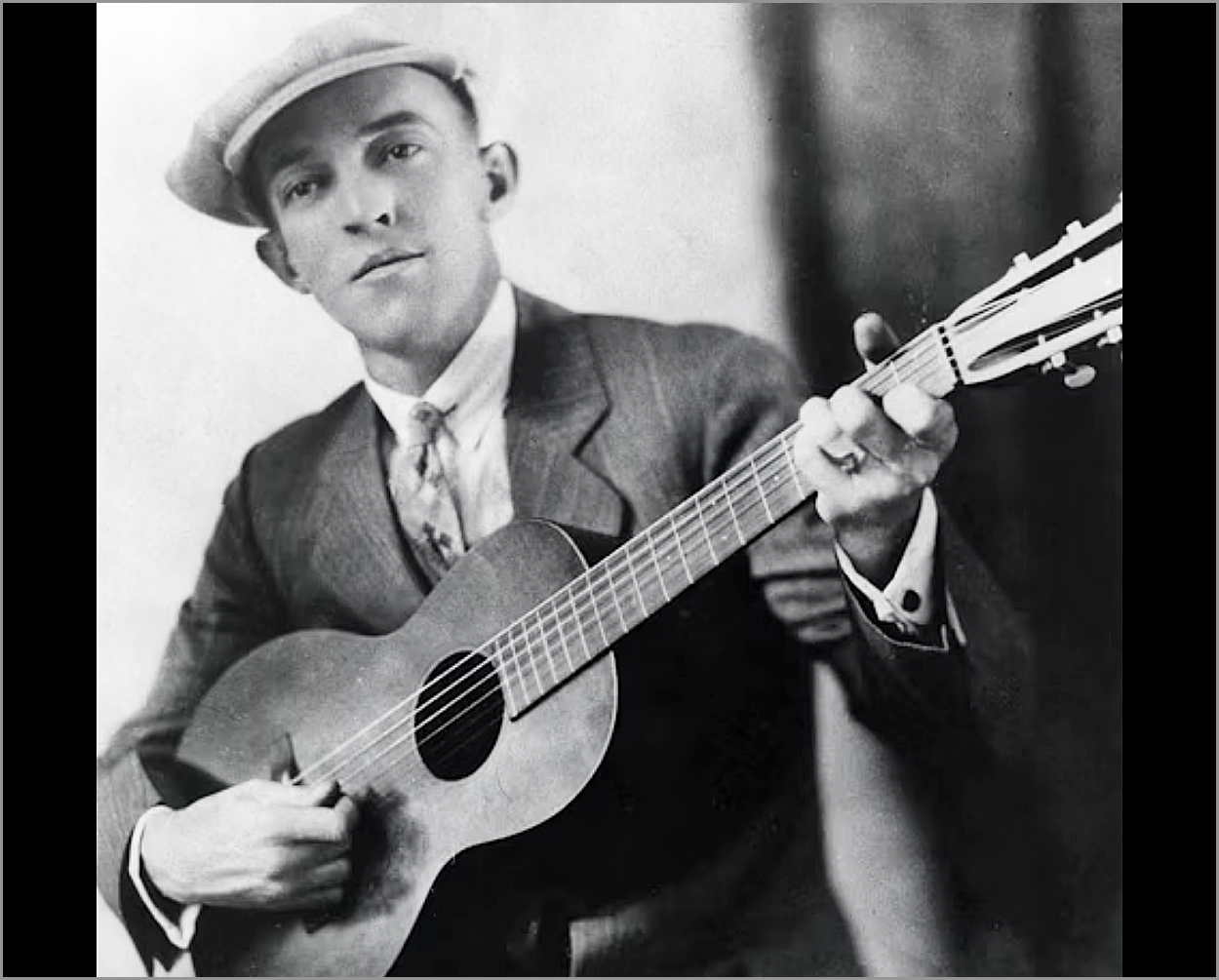

James Charles Rodgers: September 8, 1897-May 26, 1933
✪ James Charles Rodgers was an American singer, songwriter, and musician who rose to popularity in the late 1920s and is best known for his distinctive yodeling. Rodgers was known as “The Singing Brakeman” and “America’s Blue Yodeler.” He has been cited as a creative inspiration by many artists, and has been inducted into multiple halls of fame.
Rodgers is considered to be the “Father of Country Music.” The Country Music Hall of Fame inducted Rodgers among the inaugural class of 1961. According to the Hall of Fame, Rodgers “brought to the emerging genre of ‘hillbilly music’ a distinctive, colorful personality and a rousing vocal style” that “created and defined the role of the singing star in country music.”
The Rock and Roll Hall of Fame also inducted Rodgers as an early influence with the class of 1986. Rodgers was inducted by Jerry Wexler, as the Hall of Fame determined that the genre “owes an immeasurable debt” to the singer; and that, despite being a country music singer, “his fusion of blues, Appalachian ballads and spirituals was an early framework for rock and roll” that influenced “everyone from Bob Dylan to Lynyrd Skynyrd.”
The Blues Hall of Fame wrote about Rodgers induction: “His reworkings of the blues not only helped popularize the music with white audiences but were also performed by many singers from the African American community that produced the blues that inspired Rodgers in the first place.” Rodgers was the first artist inducted to the Songwriters Hall of Fame in 1970 for his influence on artists of “every genre” through music that “fused hillbilly, gospel, blues, jazz, pop and mountain folk music into timeless American standards.” That same year, he was inducted to the Nashville Songwriters Hall of Fame.
Rolling Stone magazine places Rodgers at number 11 on its 100 Greatest Country Artists of All Time list and at number 88 on their 200 Greatest Singers of All Time list.
Originally from Meridian, Mississippi, Rodgers was the son of railroad worker Aaron Rodgers. During his early childhood the family moved according to the needs of his father’s employment, or Rodgers’ own poor health. As a teenager he was musically influenced by the diverse vaudeville shows that he often attended.
At the age of 13 he won a local singing contest, and then traveled through the Southern United States with a medicine show. After his father took him back home to Meridian, Rodgers dropped out of school and joined the Mobile and Ohio Railroad, beginning as a waterboy on his father’s gang. Later he performed other functions on the railroad, eventually becoming a brakeman. During his time working with different railroad companies, the singer further developed his musical style; he was influenced by the gandy dancers and their impromptu blues performances. Rodgers was diagnosed with tuberculosis in 1924. By 1927, as a result of his declining health, he stopped working for the railroad and decided to focus on his music career.
The Rodgers family migrated to the United States from England and Ireland before the American Revolution. They settled around the Appalachian Mountains, and later moved to the Southern and Western United States. Both of Jimmie Rodgers’ grandfathers served in the Confederate States Army during the American Civil War.
Rodgers’ father, Aaron, worked for the Mobile and Ohio Railroad. He eventually became a foreman, and in 1884 he married Eliza Bozeman. The couple lived in the railroad work camps as Aaron Rodgers moved through different locations along the line. The Rodgers family then temporarily settled in the community of Pine Springs, north of Meridian.
Charles James “Jimmie” Rodgers was born on September 8, 1897. Rodgers’ mother, incapable of living in the unsanitary conditions of the camps, decided to stay in Pine Springs, while her husband frequently worked for long periods and returned home when he could. After two miscarriages, her health began to fail. She became sick, and Aaron Rodgers quit his job at the Mobile and Ohio Railroad to begin farming, so as to be closer to his wife. She died in 1903.
The then six year old Jimmie Rodgers was deeply affected by his mother’s death. Rodgers attended school irregularly during his early childhood; he did not attend at all for a time following the death of his mother. Rodgers and his brother often arrived late to school or missed it altogether as a result of road conditions and other distractions. Rodgers often missed classes during the winter due to his tendency to suffer from colds and respiratory issues.
His father remarried and the family moved to Meridian, where Rodgers was enrolled at the local high school. He and his siblings had problems with their new stepmother. When his father returned to work for the railroad, Rodgers again rarely went to school. Instead, he and his brother Jake went to the local theaters to see vaudeville shows and watch movies. As a result, Rodgers became interested in the entertainment industry. To support his expenditures he sold newspapers and molasses, or he panhandled.
Rodgers spent most of his free time outdoors. He started to attend school regularly and he was further assisted by his teacher, who rented a room at his aunt’s boarding house. Rodgers received most of his schooling while he lived there until he went back to Meridian in 1911.
Upon his return to Meridian, he went back onto the streets. He frequented the barbershop of his uncle Tom Bozeman and he often slept during the daytime in the upstairs apartment. He organized a neighborhood carnival that played the nearby towns. Rodgers’ appearances made enough money to pay for the sheets he used as a tent. He then organized a second show, which he financed with his father’s money, unbeknownst to him.
Rodgers then won a contest at the local Elite Theater for his performance of the songs “Steamboat Bill” and “I Wonder Why Bill Bailey Don’t Come Home.” Following his success, Rodgers started to perform with a medicine show. He quit the show some weeks later as they reached Birmingham, Alabama, claiming the proprietor did not treat him well. At the age of thirteen, he started working for a tailor in West Blocton, Alabama, until, months later, his father took him back to Meridian with the intention of enrolling him at a new school. Soon afterward, his stepmother died. Instead of attending school, Rodgers followed his father to learn his profession with the working crews of the Mobile and Ohio Railroad.
Rodgers started working for the railroad as a waterboy for the black gandy dancer crews, who introduced him to the railroad jargon, their work songs, and banjo playing. Eventually, he became a baggage handler and then finally a brakeman. He moved often while working on the lines from Mississippi to Texas. In January 1917, he was introduced by a friend to Stella Kelly in Durant, Mississippi.
Rodgers married Stella Kelly on May 1, 1917, when they were both 19 years old. They separated soon after due to what Kelly later described as Rodgers’ tendency to procrastinate and drink, and his lack of ambition. She believed that Rodgers spent too much money and that by playing music he “fool away his time and money.” After two years of living apart, their divorce became final in November 1919. Rodgers then married Carrie Williamson on April 7, 1920. Their first daughter, Anita, was born in January 1921. June, their second child, was born in 1923, but she died in December of that year. To return in time for her funeral and Christmas, Rodgers had to pawn his banjo. Both of his wives complained of Rodgers’ excessive expenditures, and later his lavish lifestyle. Rodgers frequently resorted to drinking to ease the pain caused by his tuberculosis.
In 1924, Rodgers was diagnosed with tuberculosis at the age of 27. The disease affected his ability to perform his work; following the medical advice of the time, which suggested living in elevated and dry locations to ease the symptoms, he chose to move with his wife and children to Arizona.
As he worked less on the railroads and his foreman complained of his extended absences, he returned to performing music. Rodgers formed a jazz-style band that performed pop standards with the inclusion of horns and the piano accompaniment of his new wife Carrie McWilliams’ sister, Elsie McWilliams. The group played on the road in tents, on city streets and in various other small locations without any commercial success.
In 1927, Rodgers completely left his work on the railroad. In Asheville he met the Grant Brothers, who led the mountain music string band the Tenneva Ramblers. Rodgers convinced the group to join him as the Jimmie Rodgers Entertainers, with him as the lead singer.
After the group was fired from a local radio show, they found a job performing at a resort in the Blue Ridge Mountains. There, Rodgers heard of the upcoming field recordings that engineer Ralph Peer of the Victor Talking Machine Company was to undertake in Bristol, Tennessee, in search of local talent.
Rodgers made an appointment for the band to record with Peer on August 4, 1927. Before the scheduled recording, the band had a dispute with the singer regarding the name to be used on the label of the recording. The Tenneva Ramblers then deserted Rodgers, who convinced Peer to go ahead and record him alone with his guitar.
The session produced “The Soldier’s Sweetheart,” an adaptation of an old vaudeville tune with new lyrics by Rodgers, and a version of the show tune, “Sleep, Baby, Sleep.”
When “The Soldier’s Sweetheart” / “Sleep, Baby, Sleep” record started selling well, Victor decided to advance the release of Rodger’s “Blue Yodel” As 1928 progressed, “Blue Yodel” became a major success. The song marked the first of a series of blue yodels. The unknown origin of Rodgers’ yodel has been attributed to several sources, including traditional alpine songs, its use by gandy dancers and its use in vaudeville and minstrel shows.
“Blue Yodel No. 1” became the singer’s most successful recording, with over a million copies sold during his lifetime. Soon, Rodgers’ show billed him as “America’s Blue Yodeler.”
▶️ 3 Minutes 20 Seconds
As the sales of his records continued to improve after the release of “In the Jailhouse Now,” Rodgers embarked on a tour of the United States: he appeared on the Southern Time circuit of Loews Theaters and the East Coast circuit of Publix Theaters.
In February 1929, Rodgers’ health began to worsen. Against his doctor’s consistent recommendations to rest, Rodgers proceeded with his tour. During a stop in Meridian, he suffered a high fever. Rodgers intended to perform at the show, but he collapsed on the dressing room floor shortly before its start. His doctor ordered an x-ray; an uncommon procedure at the time, and determined that the singer was suffering from pulmonary tuberculosis, which affected his lungs. Cavities were found on the top of both lungs, while the bottom of his right lung showed pleurisy.
As they traveled through Texas performing, Jimmie and Carrie Rodgers stopped in Kerrville. The town offered the dry air and mild weather that the medical authorities of the time considered necessary for the treatment of tuberculosis. Kerrville was home to multiple sanatoriums and a Veterans Hospital, which specialized in pulmonary disease. As Rodgers was badly affected by the weather in Washington, D.C., Meridian and Asheville, he decided to settle in Kerrville.
With his move to Texas, Rodgers’ on-stage attire changed. He had previously worn brakeman’s working clothes, which he replaced with regular clothes and a cowboy hat. On June 14, 1929, he performed at the inaugural event of San Antonio’s Majestic Theatre.
Rodgers was a Freemason. He was inducted to the order in Meridian on August 9, 1920. In 1930, he joined the Elks Lodge. In 1931, he reached the rank of Master Mason in Meridian. That year, he was moved to the San Antonio Scottish Rite Cathedral and received the local degree. He was also associated with the Alzafar Temple. In 1931, Rodgers was invited to Austin, Texas, and named an honorary Texas Ranger. To commemorate the occasion, the singer would later release the song “The Yodeling Ranger.”
At the height of this career in 1929, Rodgers made approximately $75,000 (equivalent to $1,373,000 in 2024) in royalties. After the Wall Street Crash that year, while his records continued to sell, his royalties dropped to approximately $60,000 (equivalent to $1,100,000 in 2024).
▶️ 9 Minutes 16 Seconds
Through a number of field recording sessions—made as his schedule and tour allowed it—Rodgers increased his catalog. By November 1929, he had filmed The Singing Brakeman at the RCA Victor studios in Camden.
Continuing his tour, in late February 1930, Rodgers collapsed again during a stop in Carthage, Mississippi. After he suffered a hemorrhage, Rodgers followed his doctor’s advice and canceled his third appearance at the local movie house. Despite his condition, Rodgers then joined a four-month tour with daily appearances on Swain’s Hollywood Follies. Rodgers and his musical troupe performed a total of 70 shows.
In the summer of 1931, Rodgers recorded two sides with the Carter Family. That year, his health quickly deteriorated and his sales fell to an average of 30,000 copies per record as the Great Depression progressed. Meanwhile, his excessive expenditures forced him to sell his Kerrville home.
As his health condition worsened, Rodgers reduced his appearances on tour schedules from five days to one per venue; he also camped in a tent, which allowed for better air circulation. A number of concerts were cut short because of his condition, while others were cancelled.
▶️ 3 Minutes 3 Seconds
Rodgers then returned to San Antonio, where he spent most of his time in bed until, in October of that year, he resumed his appearances on the local radio station. In the early winter of 1932, he made appearances throughout East Texas until he collapsed during a show in Lufkin and was placed in an oxygen tent.
Rodgers and his personal nurse, Cora Bedell, traveled to New York City on the SS Mohawk and arrived on May 14, 1933. A recording session, with Fred Maisch engineering, began on May 17 at RCA Victor’s New York Studios at 153 E 24th Street. During the first two days, Rodgers recorded six numbers. The singer sat on an easy chair and was propped up by pillows to reach the microphone; the sessions were often paused as a result of his health. A new session was scheduled for May 24, 1933. Rodgers produced four songs and lay on a cot between takes. At the end of the day, he was helped into a cab and returned to his hotel.
The next day, he recovered and then visited Coney Island with his driver. When returning, Rodgers decided to walk the last few blocks to the hotel, but he needed help to return to his room. He then suffered an intense cough, which eventually stopped. At midnight, he resumed coughing and began to hemorrhage. The hotel’s doctor could not be found. Rodgers fell in a coma and he died soon after.
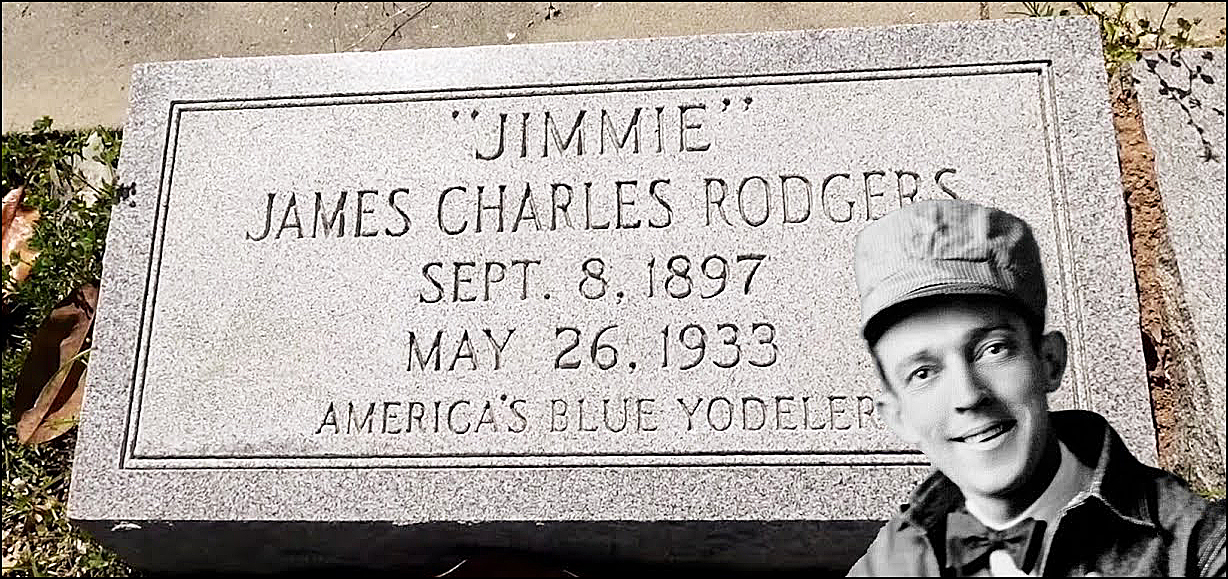
Rodgers’ pearl-gray casket was placed on a raised platform covered in lilies in a baggage car and taken back to Meridian by the Southern Railway on a trip operated by former workmates of Rodgers. On May 29, 1933, his body lay in state at the local Scottish Rite Cathedral. That afternoon, escorted by members of the Scottish Rite, the Hamasa Shrine Temple and the Knights of Pythias, his body was buried at Oak Grove Cemetery. During his lifetime, Rodgers reinvigorated the deflated sales record market for RCA Victor; and, despite the drop of sales during the depression, his records continued to sell well. At the time of his death, his sales represented 10% of the total for the label.✪



















▶️ DONATE VIA PAYPAL (DEBIT & CREDIT CARD)
ALL PayPal Transactions Are Encrypted For Card Holder Privacy & Security
▶️ DONATE VIA ZELLE (DIRECT BANK CASH TRANSFER)
ZELLE is the perfect online alternative to PayPal. It’s an incredibly simple, secure, easy, fast and FREE way to send or receive money to recipients directly from your online banking account without a middleman. Best of all, there’s NO fees.
ZELLE is a service provided by your bank and is already built in to your online banking account. You only need to activate it first before using. If you’ve already activated ZELLE in your online bank or credit union account, you can donate to The New Americanist by using our ZELLE address:
vip@thenewamericanist.com
To activate your ZELLE, follow these easy instructions (a simple two minute process):

▶️ DONATE VIA SNAIL MAIL