
⭐️ Huckfunn


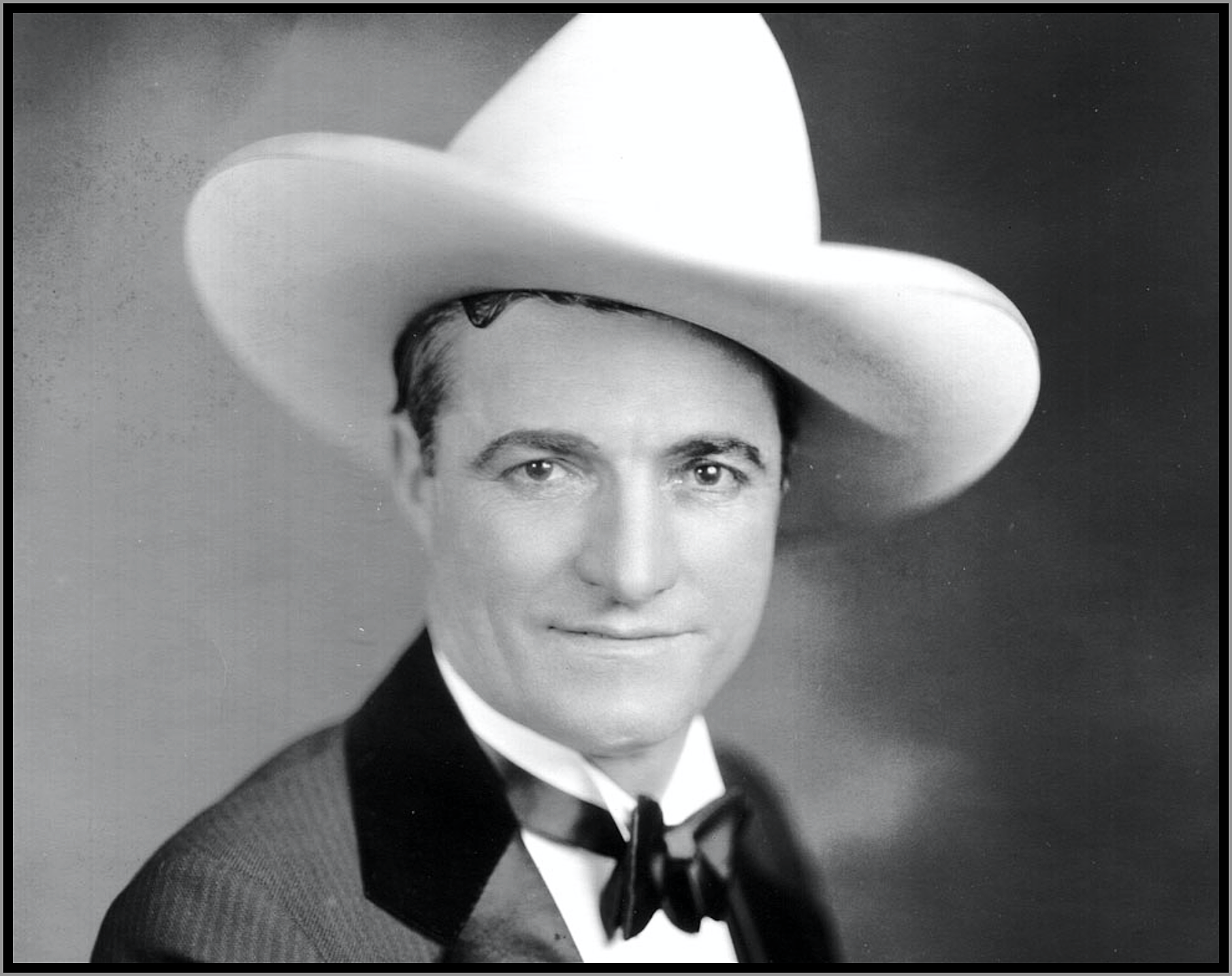

Thomas Edwin Mix: January 6, 1880–October 12, 1940
✪ Thomas Edwin Mix (born Thomas Hezikiah Mix) was an American film actor equestrian performer and the star of many early Western films between 1909 and 1935. He appeared in 291 films, all but nine of which were silent films. He was one of Hollywood’s first Western cowboy film stars who helped define the genre when it emerged in the early days of the cinema.
Tom Mix was already the acknowledged “King of Cowboys” when Ronald Reagan and John Wayne were still in their youth. The influence of his screen persona can clearly be seen in their approach to portraying cowboys. When an injury caused football player Marion Morrison (later known as John Wayne) to drop out of the University of Southern California, Mix helped him find work moving props on the back lot of Fox Studios. The beginning of Wayne’s Hollywood acting career.
Thomas Hezikiah Mix was born January 6, 1880, in Mix Run, Pennsylvania, approximately 62 miles (100 km) north of State College, to Edwin Elias Mix and Elizabeth Heistand. Mix grew up in nearby DuBois, where his father, a stable master who worked for a wealthy lumber merchant, taught him to ride and love horses. He also spent time working on a local farm owned by John DuBois, a lumber businessman.
In April 1898, during the Spanish American War, Mix enlisted in the Army under the name Thomas E. (Edwin) Mix. However, his unit never deployed or went overseas. Later, Mix later failed to return for duty after an extended furlough during which he married Grace I. Allin on July 18, 1902. Mix was officially listed as AWOL on November 4, 1902, but was never court-martialed. His marriage to Allin was annulled after only one year. In 1905, Mix married Kitty Jewel Perinne, and this marriage also ended within a year. He next married Olive Stokes on January 10, 1909, in Medora, North Dakota. On July 13, 1912, Olive gave birth to their daughter Ruth.
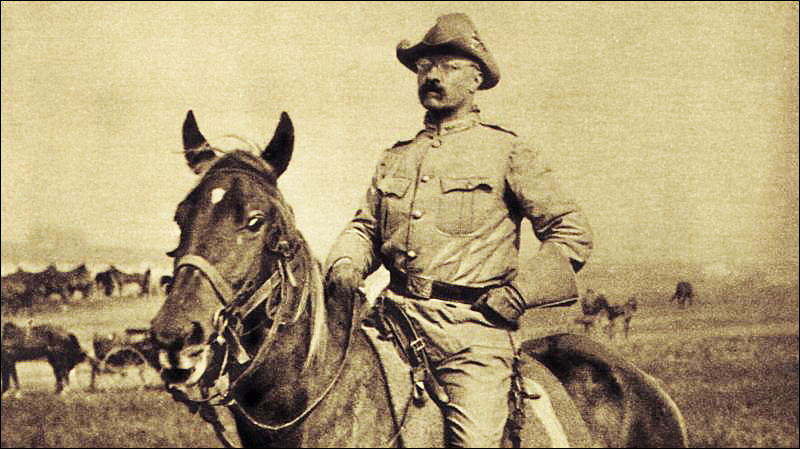
In 1905, Mix rode in President Theodore Roosevelt’s inaugural parade with a group of 50 horsemen which included several former Rough Riders. Years later, Hollywood publicists would muddle an ponder this event to imply that perhaps Mix had been a Rough Rider himself.
Mix next went to Oklahoma and lived in Guthrie, working as a bartender and other odd jobs. In 1911, he was briefly employed as the night marshal of Dewey. He worked at the Miller Brothers 101 Ranch, one of the largest ranching businesses at that time in the United States, covering 101,000 acres, hence its name. The ranch had its own touring Wild West show in which Mix appeared. He stood out as a skilled horseman and expert shot, winning national riding and roping contests at Prescott, Arizona, in 1909, and Canon City, Colorado, in 1910.
Mix began his film acting career as a supporting cast member with the Selig Polyscope Company. His first appearance was in a short film, The Cowboy Millionaire, released on October 21, 1909. In 1910, he appeared as himself in a short documentary film, Ranch Life in the Great Southwest, in which he displayed his skills as a cattle wrangler. Shot in Dewey, Oklahoma with Selig studio cameramen, the film was a huge success, and Mix became one of the earliest motion picture stars.
Mix would perform in more than 100 films for Selig, most of which were filmed in Las Vegas, New Mexico. While with Selig he co-starred in several films with Victoria Forde, and they fell in love. He divorced Olive Stokes in 1917. By then, Selig Polyscope was having severe financial difficulties. Mix and Forde both subsequently signed with Fox Film Corporation, which had leased the Edendale studio. They married in 1918 and had a daughter, Thomasina (Tommie) Mix, in February 1922.
Mix made more than 160 cowboy films throughout the 1920s. These featured action-oriented scripts contrasted with the documentary style of his work with Selig. In these films, heroes and villains were sharply defined and a clean-cut cowboy was the hero who always saved the day. Millions of American children grew up watching Mix films at Saturday afternoon matinees. His horse, “Tony the Wonder Horse,” also became a celebrity. Mix did his own film stunts and was frequently injured.
In 1913, Mix moved his family to a ranch he purchased in Prescott named Bar Circle A Ranch. Some of his movies were filmed in this Prescott home. During this time, Mix had success in the local Prescott Frontier Days rodeo, which still claims to be the “world’s oldest rodeo.” In 1920, Mix took first prize in a bull-riding contest. The Bar Circle A Ranch has since been sold and developed into a planned community called Yavapai Hills: however, there is a street there named Bar Circle A Road.
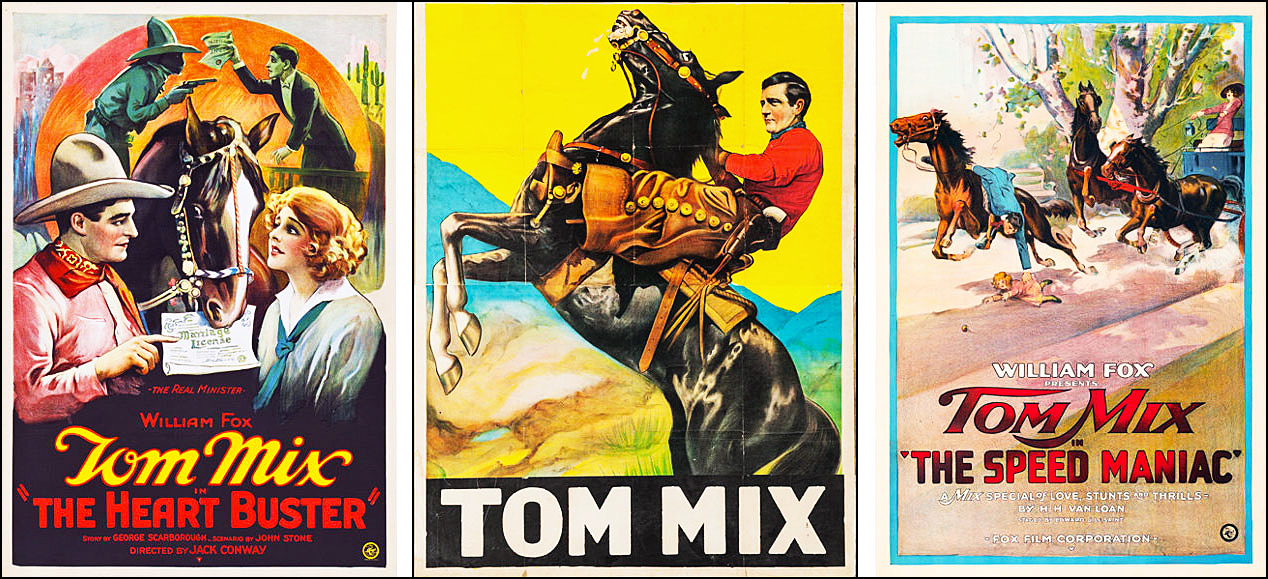
At the peak of his film career, Mix’s salary at Fox reached $7,500 a week. Gossip columnist Louella Parsons wrote that he had his initials in electric lights on the roof of his house. His performances were realistic and included action stunts, horseback riding, attention-grabbing cowboy costumes, and showmanship. At the Edendale lot, Mix built a 12-acre (4.9 ha) shooting set he called Mixville. Loaded with western props and furnishings, it has been described as a “complete frontier town, with a dusty street, hitching rails, a saloon, jail, bank, doctor’s office, surveyor’s office, and the simple frame houses typical of the early Western era.”Near the back of the lot an Indian village of lodges was ringed by miniature plaster mountains. The set also included a simulated desert, a large corral and (to facilitate interior shots) a ranch house with no roof.
Mix threatened to move to Argentina to make films or to join the circus, but eventually he signed with FBO, which he then left for Universal after salary disputes with FBO studio head Joseph P. Kennedy. He called Kennedy a “tight-assed, money-crazy son of a bitch”
Mix became friends with Wyatt Earp, who lived in Los Angeles and occasionally enjoyed visiting Hollywood western movie sets. in 1929, he was a pallbearer at Earp’s funeral in January 1929. The newspapers reported Mix cried during his friend’s eulogy service.
Mix also appeared with the Sells-Floto Circus during 1929, 1930, and 1931 at a reported weekly salary of $20,000 (equivalent to $355,000 in 2023). However, the Great Depression (along with the actor’s free-spending habits and many wives) eventually wiped out most of his savings.
Mix and Forde divorced in 1931, and in 1932, he married his fifth wife, Mabel Hubbell Ward.
Universal Pictures approached Mix in 1932 with an offer to perform in “talkies,” which included his script and cast approval. He would act in nine films for Universal, but because of numerous injuries he received while filming, he was reluctant to do any more.
Around 1933, Mix appeared with the Sam B. Dill Circus, which he reportedly bought two years later in 1935.
Mix’s last screen appearance was a 15-episode sound Mascot Pictures serial, The Miracle Rider (1935), for which he received $40,000 for four weeks of filming. Outdoor action sequences for the production were filmed primarily on the Iverson Movie Ranch in Chatsworth, California, on the outskirts of Los Angeles. The site was known for its huge sandstone boulders. One of them later became known as “Tom Mix Rock” when it was discovered it had been used in The Miracle Rider. In one episode, Mix was filmed descending from the top of the rock, with boot holes carved into it to assist him in making the descent. The rock and the boot holes, although unmarked, is now in the Garden of the Gods park in Chatsworth.
▶️ 3 Minute 19 Seconds
In 1935, Texas governor James V. Allred named Mix an honorary Texas Ranger.
Mix returned to circus performing, working with his eldest daughter Ruth Jane Mix, who also appeared in some of his films. In 1938, he went to Europe on a promotional trip, leaving Ruth behind to manage the circus. Without him, however, the circus soon failed, and he later excluded her from his will.
Tom Mix was often portrayed in comic books, primarily during the heyday of Western-themed comics, during the 1940s and 1950s. He was first featured in eleven issues of Dell Comics’ The Comics from 1937 to 1938. Fawcett Comics also published 61 issues of Tom Mix Western from 1948 to 1953.
Comics featuring Tom Mix were also published in Sweden, Germany, Canada, Australia, and Great Britain, including L. Miller & Son’s Tom Mix Western Comics, which ran 85 issues from 1948 to 1951.
During his entire film and performing career,Mix reportedly made over $6 million (equivalent to $133 million in 2023).
In 1933, Ralston Purina obtained his permission to produce the radio series Tom Mix Ralston Straight Shooters, which, but for one year during World War II, was popular throughout most of the 1930s through the early 1950s, well after Mix’s death. Mix never personally appeared on these broadcasts (his voice, damaged by a bullet to the throat and repeated broken noses, was not fit for radio) and was instead played by radio actors.
The Ralston company ran ads during the radio program for listeners to send in for a series of 12 special Ralston–Tom Mix comic books available only by writing the Ralston Company by mail.
Most of Mix’s radio work has been lost over the years; only approximately 30 scattered episodes remain, and no complete story archives now survive.
On October 12, 1940, Mix was killed when his car overturned while he was taking a detour 18 miles south of Florence, Arizona after visiting Pima County Sheriff Ed Echols in Tucson, Arizona. A large metal suitcase he was carrying in the backseat shot forward during the accident, breaking his neck and killing Mix instantly. He was 60 years old.
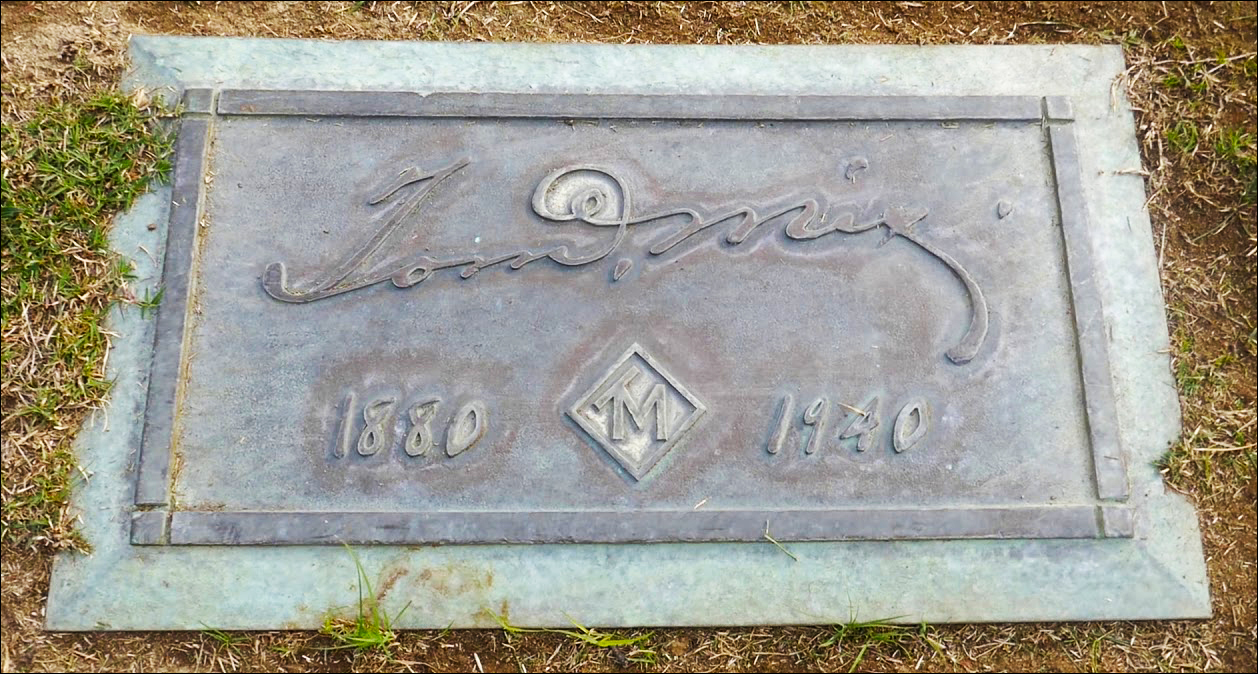
His funeral took place at the Little Church of the Flowers in Glendale, California, on October 16, 1940, and was attended by thousands of people. He is interred at Forest Lawn Memorial Park Cemetery.
A small stone memorial also marks the site of his death on State Route 79, and the nearby gully is known as “Tom Mix Wash.” The marker bears the inscription: “In memory of Tom Mix, whose spirit left his body on this spot and whose characterization and portrayals in life served to better fix memories of the old West in the minds of living men.”
The 1937 Fox vault fire destroyed almost all of Mix’s archived films he made with Fox. Only 10% of Mix’s silent film work survives today. The remainder have been designated as “lost films.” ✪




















▶️ CLICK HERE TO VIEW


▶️ CLICK HERE TO VIEW
▶️ 1 Hour 24 Minutes 52 Seconds
▶️ 1 Hour 12 Minutes 26 Seconds
▶️ 1 Hour 33 Minutes 49 Seconds
▶️ 1 Hour 7 Seconds
▶️ 1 Hour 36 Minutes 46 Seconds
▶️ 1 Hour 54 Minutes 35 Seconds
▶️ 5 Minutes 50 Seconds
▶️ 22 Minutes 49 Seconds
▶️ 14 Minute 26 Seconds
▶️ 24 Minutes 51 Seconds
▶️ 12 Minutes 16 Seconds
▶️ 14 Minutes 53 Seconds
▶️ 12 Minutes 7 Seconds
▶️ 35 Minute 49 Seconds
▶️ 19 Minutes 10 Seconds
▶️ 2 Minutes 22 Seconds
▶️ 22 Minutes 59 Seconds
▶️ 2 Minutes 15 Seconds
