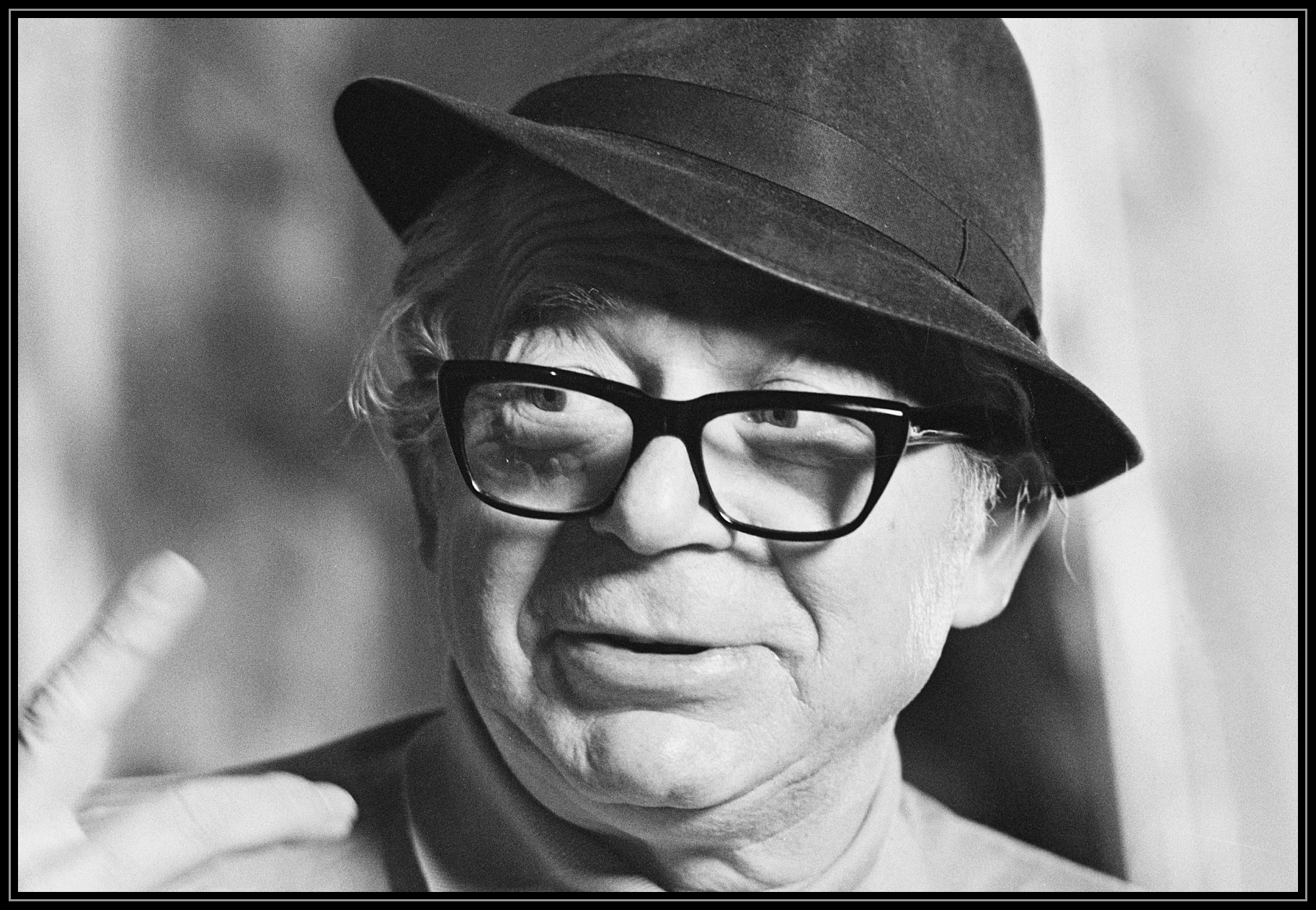

Billy Wilder: June 22, 1906 – March 27, 2002
✪ Billy Wilder (born Samuel Wilder) was an American filmmaker and screenwriter. Born in Sucha Beskidzka, Austria-Hungary (now in Poland), Wilder’s career in Hollywood spanned more than five decades. He is regarded as one of the most brilliant and versatile filmmakers of classical Hollywood cinema. He received seven Academy Awards (among 21 nominations), a BAFTA Award, the Cannes Film Festival’s Palme d’Or and two Golden Globe Awards.
Samuel Wilder was born on June 22, 1906 to a Jewish family in Sucha, a small town in Galicia, present-day Poland, then part of the Austro-Hungarian Empire. Years later in Hollywood, he described it as being “Half an hour from Vienna. By telegraph.” His parents were Eugenia (née Dittler) and Max Wilder.
His mother described Wilder as a “rambunctious kid;” who was inspired by Buffalo Bill’s Wild West shows, which she saw while living briefly in New York. She nicknamed him “Billie,” which he changed to “Billy” upon moving to America.
Wilder’s parents had a successful cake shop in the Sucha train station which flourished into a chain of railroad cafes. Eugenia and Max Wilder did not persuade their son to join the family business. Max moved to Kraków to manage a hotel before moving to Vienna. He died when Billy was 22 years old. Wilder’s original ambition was to become a lawyer; however, after the family moved to Vienna he decided to became a journalist instead of attending the University of Vienna.
In 1926, jazz band leader Paul Whiteman was on tour in Vienna where he was interviewed by Wilder. Whiteman liked young Wilder enough that he took him along with the band to Berlin, where Wilder was able to make more professional connections in entertainment. Before achieving success as a writer, he was a taxi dancer in Berlin.
After writing crime and sports stories as a stringer for local newspapers, Wilder was eventually offered a regular job at a Berlin tabloid.
In December 1925, Wilder’s editor told him to go to Sigmund Freud’s house at Berggasse 19 and ask him what he thought about the growing phenomenon of fascism, without any sort of arrangement or appointment; an impromptu, ambush-interview style that the British tabloids call “monstering” someone.
The journalistic work of Billy Wilder in Vienna and Berlin paints an amazing picture of improvisation and survival, excitement, cheek, and Schnauze. This was a young man who, with nothing much in the way of formal education, made a decent living in journalism’ and then, by cultivating a side hustle in screenwriting, created the parallel career in the movies that was to be his ticket out of the European inferno.
Developing an interest in film, he began working in earnest as a screenwriter. From 1929 to 1933, he produced twelve German films.
Wilder stayed on in Berlin, one of the most important movie industry cities in the world. It was from Berlin in the early 1930s, seeing how Nazism was to take over Germany, that Wilder joined the Jewish exodus, heading first for Paris and then, when Columbia Pictures bought his script for a comedy caper called Pam-Pam and even offered to pay the boat fare, Wilder set sail for Los Angeles.
Wilder’s mother, grandmother and stepfather were all victims of the Holocaust. For decades it was assumed that they were all murdered at Auschwitz; however, while researching Polish and Israeli archives, his Austrian biographer Andreas Hutter discovered in 2011 they were murdered in different locations: his mother, Eugenia “Gitla” Siedlisker, in 1943 at Plaszow; his stepfather, Bernard “Berl” Siedlisker, in 1942 at Belzec; and his grandmother, Balbina Baldinger, died in 1943 in the ghetto in Nowy Targ.
After arriving in Hollywood in 1934, Wilder continued working as a screenwriter. He became a naturalized citizen of the United States in 1939, having spent time in Mexico waiting for the government after his six-month card expired in 1934.
Wilder married Judith Coppicus on December 22, 1936. The couple had twins, Victoria and Vincent (born 1939), but Vincent died shortly after birth. They divorced in 1946. Wilder met Audrey Young while filming The Lost Weekend. They were married on June 30, 1949 and remained together until his death in 2002
Wilder’s first significant breakthrough success came with Ninotchka, a creative collaboration with fellow German immigrant Ernst Lubitsch. The romantic comedy starred Greta Garbo (generally cast as a tragic heroine in film melodramas), and was popularly and critically acclaimed. With the byline “Garbo Laughs!” it also took Garbo’s career in a new direction. The film was also Wilder’s first Academy Award nomination.
Wilder continued his screenwriting career with a series of box office hits in the early 1940s, including the romantic drama Hold Back the Dawn and the screwball comedy Ball of Fire. Both films earned him nominations for the 1941 Academy Awards in the categories of Best Adapted Screenplay and Best Story respectively. In 1952, Wilder made his Hollywood directorial debut with The Major and the Minor, a comedy starring Ginger Rogers and Ray Milland.
His third Hollywood film as director, the film noir Double Indemnity (1944), starring Fred MacMurray, Barbara Stanwyck and Edward G. Robinson, was a major hit. It was nominated for seven Academy Awards including Best Picture, Director, Screenplay and Actress. Wilder co-wrote the screenplay it with Raymond Chandler. The film not only set cinematic conventions for the noir genre (such as signature lighting, shadowing and voice-over narration), but was a landmark in the battle against Hollywood censorship. Based on James M. Cain’s novel, it featured two love triangles and a murder plotted for insurance money. While the book was popular with the reading public, it had been considered unfilmable under the Hays Code because adultery was central to the plot.
in 1945, Wilder adapted from Charles R. Jackson’s novel The Lost Weekend into a film of the same name. It was the first major American film with a serious examination of alcoholism, another difficult theme under the Production Code.
In 1945, the Psychological Warfare Department of the United States Department of War produced an American documentary film directed by Wilder. The film known as Death Mills, or Die Todesmühlen, was intended for German audiences to educate them about the atrocities being committed by the Nazi regime.
▶️ FULL MOVIE: 1 Hour 50 Minutes 17 Seconds
In 1950, Wilder co-wrote and directed the classic noir film Sunset Boulevard. The film was nominated for eleven Academy Awards; Wilder won the Academy Award for Best Original Screenplay
Wilder announced plans to direct and produce a film version of the Sophocles tragedy Oedipus Rex. Plans included shooting the film on location in Greece in Technicolor, but it never went into production.
Wilder also directed three adaptations of Broadway plays; the war drama Stalag 17, for which William Holden won the Best Actor Academy Award, a romantic comedy Sabrina, for which Audrey Hepburn was nominated for Best Actress, and the romantic comedy The Seven Year Itch, which features the iconic shot of Marilyn Monroe standing on a subway grate as her white dress is blown upwards by a passing train.
Wilder was interested in doing a film with one of the classic slapstick comedy acts of the Hollywood Golden Age. He first considered, and rejected, a project to star Laurel and Hardy. He held discussions with Groucho Marx concerning a new Marx Brothers comedy tentatively titled A Day at the U.N. However, the project was abandoned after Chico Marx died in 1961
In 1959, Wilder reunited with Monroe in the United Artists released Prohibition-era farce film Some Like It Hot. It was released without a Production Code seal of approval, which was withheld due to the film’s unabashed sexual comedy, including a central cross-dressing theme.
A box office success, the film was lightly regarded by film critics during its original release, although it did receive six Academy Award nominations, including for Best Director and Best Screenplay. But its critical reputation and appeal has since grown prodigiously. In 2000, the American Film Institute selected it as the best American comedy ever made.
In 1960, Wilder directed the comedy romance film The Apartment. The film was a critical success with The New York Times film critic Bosley Crowther, who called the film “gleeful, tender, and even sentimental” and Wilder’s direction “ingenious.” The film received ten Academy Awards nominations and won five awards, including three for Wilder: Best Picture, Best Director and Best Screenplay.
Wilder gained his final Academy Award nomination and a Writers Guild of America Award nomination for the screenplay of The Fortune Cookie, which he co-produced through his independent film company, Phalanx Productions. It was the first film pairing Jack Lemmon together with Walter Matthau.
Wilder’s final films, Fedora and Buddy Buddy, failed to impress critics or the public, although Fedora has since been re-evaluated and is now considered favorably. Wilder had hoped to adapt Thomas Keneally’s Schindler’s Ark as his final film, saying “I wanted to do it as a kind of memorial to my mother and my grandmother and my stepfather,” who were murdered in the Holocaust. He praised StevenSpileberg’s adaptation, Schindler’s List. To those who would deny the Holocaust, Wilder wrote in a German newspaper, “If the concentration camps and the gas chambers were all imaginary, then please tell me—where is my mother?“
Wilder’s directorial choices reflected his belief in the primacy of writing. He avoided, especially in the second half of his career, the exuberant cinematography of Alfred Hitchcock and Orson Welles because, in Wilder’s opinion, shots that called too much attention to themselves distracted the audience from the story. Wilder’s films are characterized by tight plotting and memorable dialogue. Despite his conservative directorial style, his subject matter often pushed the boundaries of mainstream entertainment. Once a subject was chosen, he would begin to visualize in terms of specific artists.
Wilder was extremely skilled at working with actors; even coaxing silent era legends Gloria Swanson and Erich von Stroheim out of retirement for roles in Sunset Boulevard. In total, he directed fourteen different actors in Oscar-nominated performances: Wilder mentored Lemmon, and was the first director to pair him and Matthau in The Fortune Cookie. Wilder and Lemmon worked on seven films.
Wilder was not affected by the Hollywood blacklist. Of the blacklisted ‘Hollywood Ten’ he said, “Of the ten, two had talent, and the rest were just unfriendly.” In general, Wilder disliked formula and genre films and he reveled in poking fun at those who took politics too seriously. In Ball of Fire, his burlesque queen ‘Sugarpuss’ points at her sore throat and complains “Pink? It’s as red as the Daily Worker and just as sore.”
Wilder received the American Film Institute (AFI) Life Achievement Award in 1986. He received the Irving G. Thalberg Memorial Award in 1988, the Kennedy Center Honors in 1990 and the National Medal of Arts in 1993. He has a star on the Hollywood Walk of Fame.
Wilder also became well known for owning one of the finest and most extensive art collections in Hollywood, mainly collecting modern art. As he described it in the mid-80s, “It’s a sickness. I don’t know how to stop myself. Call it bulimia if you want – or curiosity or passion.” Wilder’s artistic ambitions led him to create a series of works of his own.
Wilder holds a significant place in the history of Hollywood censorship for expanding the range of acceptable subject matter. Seven of his films are preserved in the United States National Film Registry of the Library of Congress after being designated as “culturally, historically or aesthetically significant.”
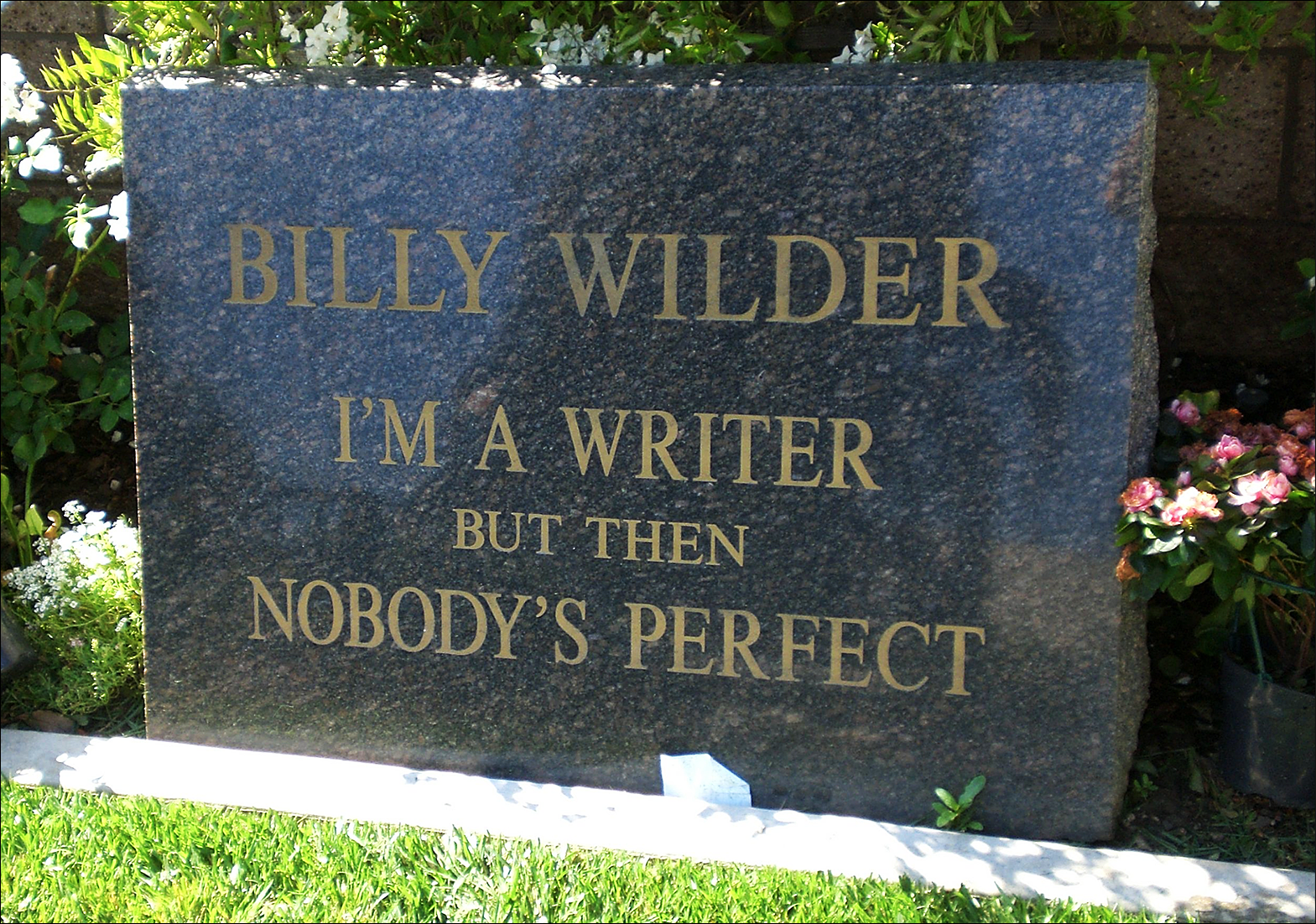
Wilder died of pneumonia on March 27, 2002. He was buried at Pierce Brothers Westwood Village Memorial Park and Mortuary in Los Angeles. A French newspaper, Le Monde, titled his front-page obituary: “Billy Wilder is dead. Nobody is perfect,” a reference to the last line of Some Like It Hot.✪















▶️ DONATE VIA PAYPAL (DEBIT & CREDIT CARD)
ALL PayPal Transactions Are Encrypted For Card Holder Privacy & Security
▶️ DONATE VIA ZELLE (DIRECT BANK CASH TRANSFER)
ZELLE is the perfect online alternative to PayPal. It’s an incredibly simple, secure, easy, fast and FREE way to send or receive money to recipients directly from your online banking account without a middleman. Best of all, there’s NO fees.
ZELLE is a service provided by your bank and is already built in to your online banking account. You only need to activate it first before using. If you’ve already activated ZELLE in your online bank or credit union account, you can donate to The New Americanist by using our ZELLE address:
vip@thenewamericanist.com
To activate your ZELLE, follow these easy instructions (a simple two minute process):

▶️ DONATE VIA SNAIL MAIL