



Hi Folks…And Welcome Again To FLAT OUT!
Our Celebration Of Two Years Of FLAT OUT Continues With PART TWO Of Our Three Part Series On…
The Ford Mustang (Part 2) – 1979-2004
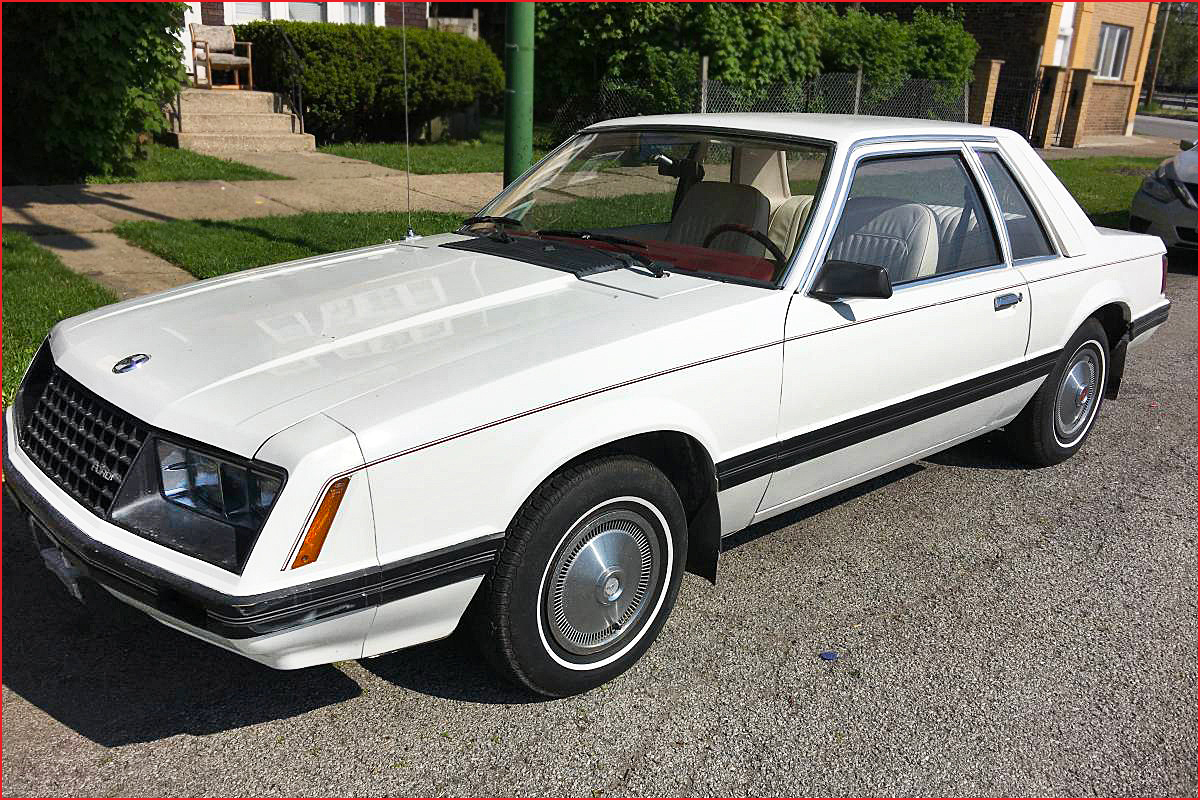
After the Mustang II, Ford abandoned the Pinto platform for Mustang and upgraded it back to compact size, basing it on the new Fox platform since the compact Maverick was gone and Pinto was on its way out. Mustang initially shared the Fox platform with the Ford Fairmont and Mercury Zephyr in order to keep costs down, but with a five-inch shorter wheelbase than those two. Aerodynamics were beginning to be a part of automotive design, and engineers thought that the Mustang needn’t be smaller to be more fuel-efficient if it was more aerodynamic and lighter, so a lot of thought went into weight-saving in the interior. The Fox-body Mustang would be 200 lbs. lighter then the Mustang II, and was sleeker-looking with a drag coefficient of 0.44, very good for the late 1970s. As the science of aerodynamics applied to automobiles got better most modern cars have a drag coefficient of between 0.25 and .030. At the same time more thought went into having more interior room than the Mustang II, and the interior was actually longer and taller despite the car appearing shorter from the outside. The new Mustang would be a clean slate, the only styling elements in common with previous generations were the long hood/short rear deck look. Even the iconic triple-taillights were gone, replaced with a taillight assembly that almost looked like it came straight off of its Fox-platform cousin Fairmont.
Third Generation: Fox Body 1979-1993
Like the Mustang II, the Fox body Mustang was available in two-door coupe or three-door hatchback form and was initially available in two trim levels, the base and the more luxurious Ghia. The base models came equipped with a 2.3 liter four-cylinder, while an optional turbocharged four-cylinder, 2.8 liter V6 and a 5.0 liter V8 were also available. The V8 was actually down one pony from the Mustang II‘s 302, but the weight differential and aerodynamic superiority of the Fox body meant that it actually accelerated better. It handled better than its predecessor as well; the front end featured MacPherson struts with coil springs wedged between the lower control arms and the subframe instead of being wrapped around the strut towers, and a coil-spring rear suspension replaced the leaf springs in the Mustang II. The Cobra made a comeback as well, with engine choices of the 2.3 liter 4-cylinder turbo or 5.0 liter V8. Surprisingly, the turbo four only gave up nine HP to the V8. A hood scoop, a Cobra decal on the door, Michelin tires, forged wheels and a tuned suspension were part of the $1,200 package, and for an extra $78 you got a Cobra hood graphic reminiscent of the previous year’s King Cobra.
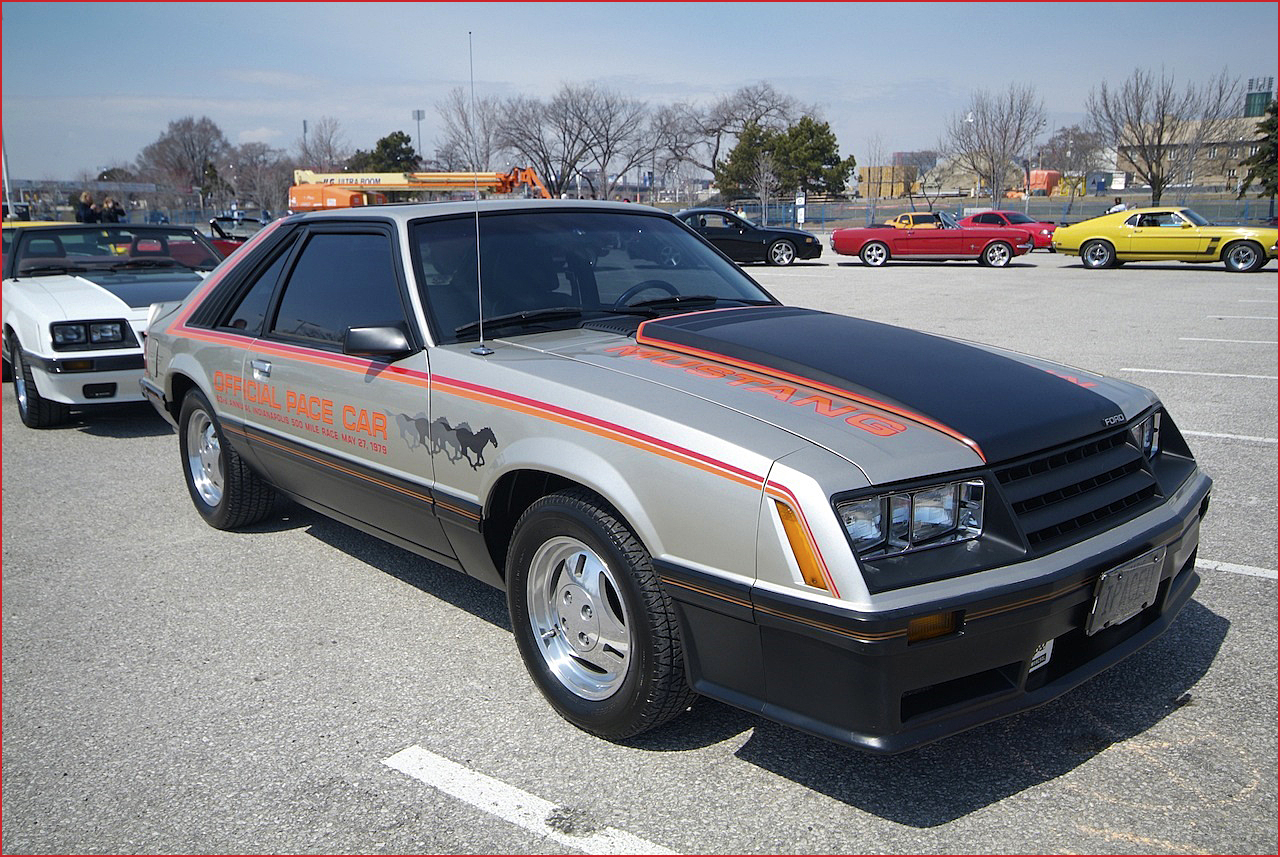
The new Mustang was the Indianapolis Pace Car in 1979 and 11,000 replicas were built with a black and silver paint scheme, Official Pace Car graphics, black Recaro seats and a leather-wrapped steering wheel. Engine choices were the same as the Cobra, but missing from the package was the more powerful Jack Roush prepared 302 in the actual pace car. Grand Prix driver (and Ford pitchman) Jackie Stewart drove the pace car at Indianapolis. The public apparently approved, the 1979 Mustang nearly doubled the sales of the 1978 Mustang II.
1980 was a carryover year with no styling upgrades, but the 2.8 liter V6 and 5.0 liter V8 were dropped in favor of a 3.3 liter straight-six with a paltry 89HP (because too few V6’s were available) and a 4.2 liter V8 with only 119 HP, 11 less than the turbo four.
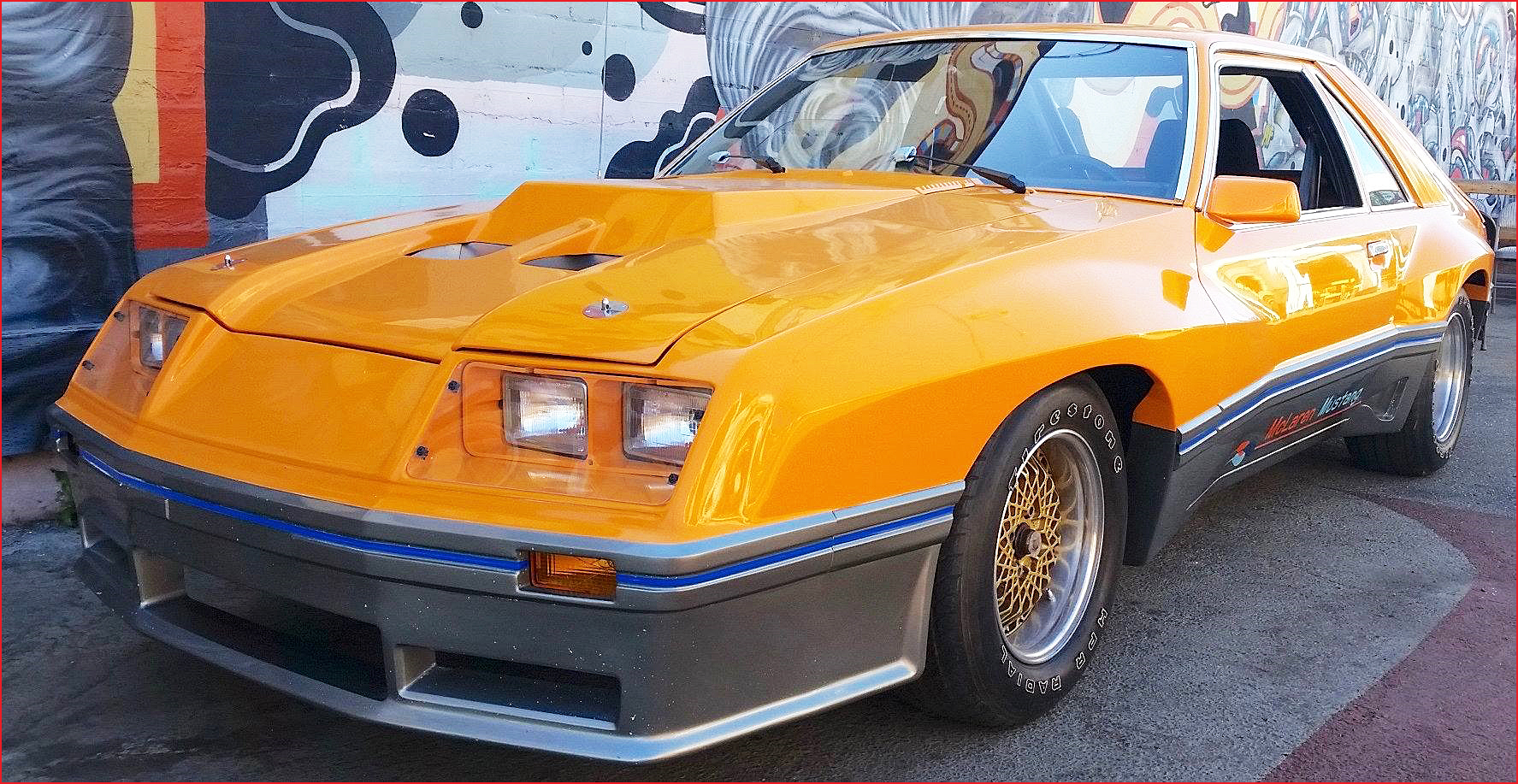
Ghia and Cobra returned and a new model from the Ford Special Vehicle Operations Division (SVO), the M81 McLaren Mustang, became available. This option had wide IMSA flares on all sides, a factory roll bar, BBS alloy wheels, functional brake ducts, Koni suspension with heavy-duty sway bars and high-rate springs, upgraded brakes and Recaro seats. Under the hood was a McLaren-built hot-rodded version of the 2.3 liter four-cylinder with increased boost that produced 175HP. It was a barn-burner for the time: 0-60 in 9.76 seconds and a 17.37 second quarter-mile. Sadly only 10 were produced because of the price tag: $25,000, or about five times the cost of a base 1980 Mustang.
1981 was the last year for Ghia, replaced in 1982 with the L, GL and GLX trim levels and Cobra, replaced in 1982 with the Mustang GT with the 5.0 liter V8 returning after a two year absence. The GT gained the HO (High Output) version good for 157HP. Grill and body paint were all that distinguished the GT externally, but under the skin lurked a new 3.08 limited-slip differential, a handling package, and power steering and brakes. 1981 was also the first year that hatchbacks would outsell coupes, a trend that would continue through the end of this generation. 1982 also saw the law enforcement Special Service Package emerge, based on the GT but with a more robust automatic transmission to keep officers’ hand free.
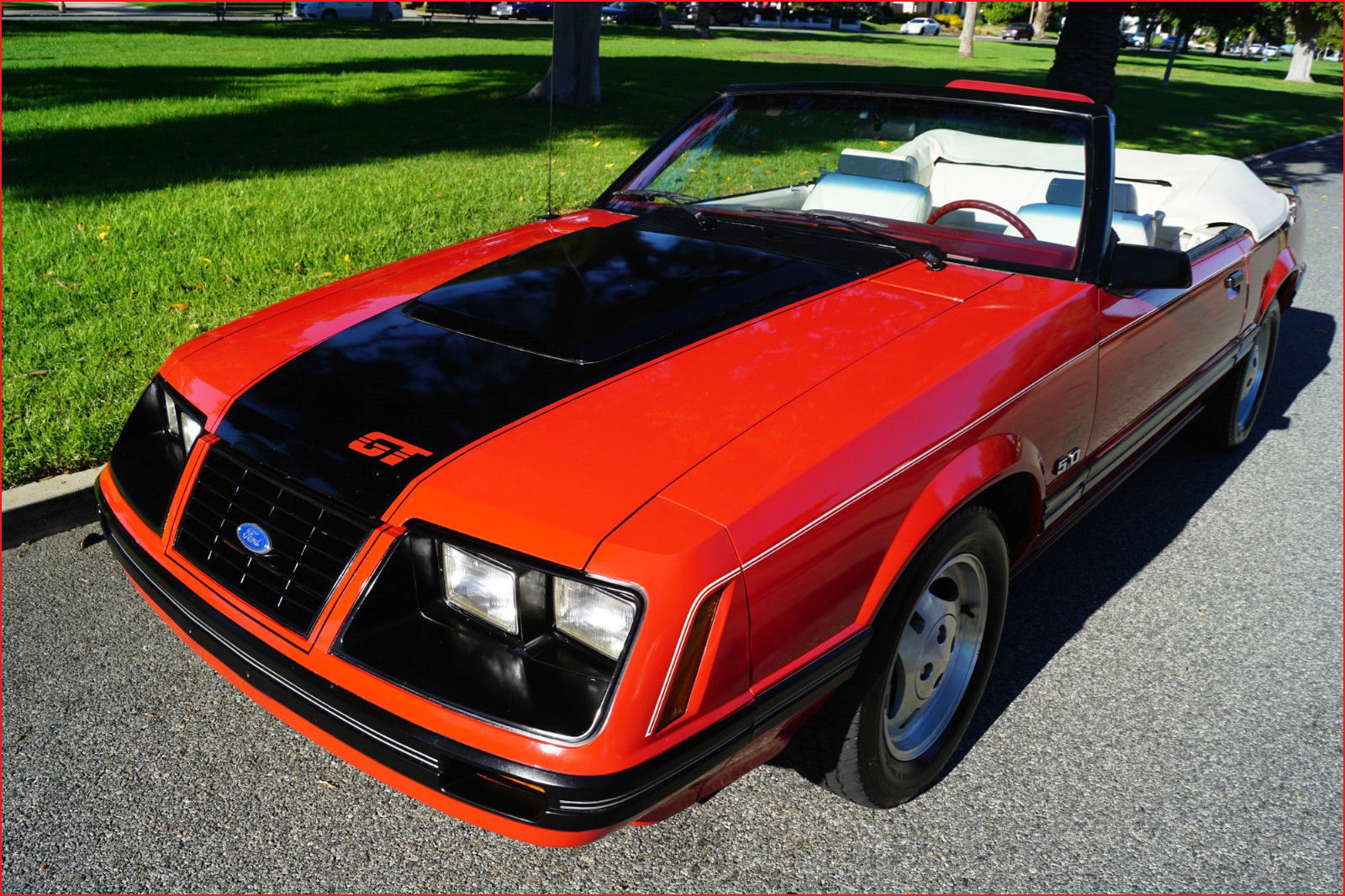
1983 saw the return of a true Mustang convertible, the first in a decade, and a smaller grill gave it a fresh look. Ford did not build them as convertibles; however, Cars & Concepts received coupes from the factory and converted them into convertibles, which were then shipped back to Ford. They were available in L or G trim. It also saw a major jump in V8 horsepower to 175 when equipped with a 4 barrel carb. The Turbo Four also got fuel injection and a HP bump to 145 and was the mill powering the new Turbo GT model. The Turbo GT could easily keep up with the 5.0 liter GT on twisty backroads, but the $250 premium over the V8 meant that Ford only sold 483 units. Most convertibles got the new 3.8 liter 105 HP V6 that replaced the wheezy 3.3 liter 87 HP inline six that lived under the hood since 1980. A new, more rounded front fascia and a re-shaped grill gave the Mustang a new face, and the new “Blue Oval” Ford logo appeared front and rear. Wider horizontal taillights with dedicated amber turn signals replaced the old vertically-segmented units that resembled its Fox-body cousins. The interior became a little more luxurious and there were suspension and tire changes, particularly for the GTs, which received a flat black stripe on the hood reminiscent of 1970s Boss and Mach I models.
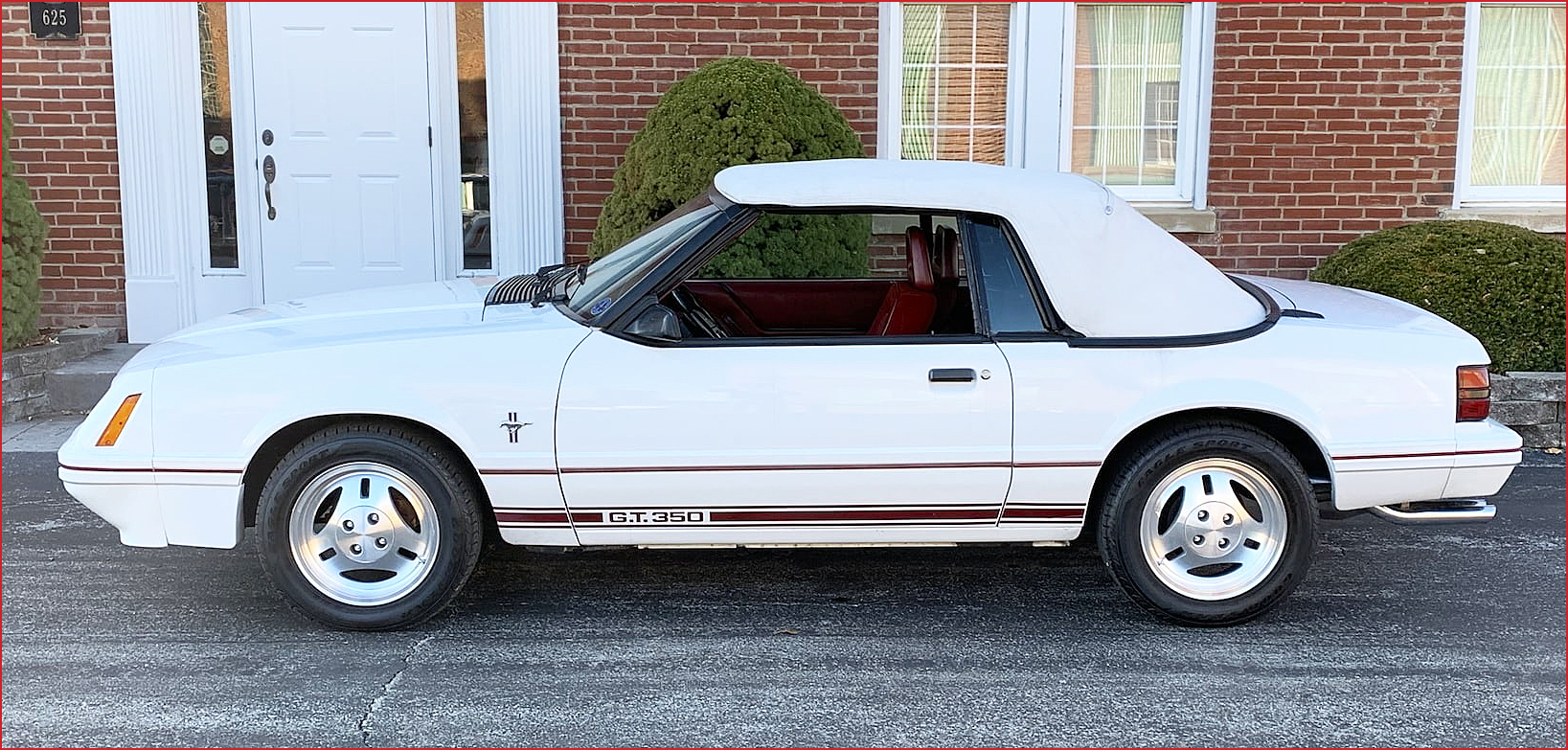
Mustang‘s 20th anniversary in 1984 produced an interesting lineup. In addition to the the L and LX, a consolidation of the previous GL and GLX, the GT and Turbo GT returned with the same options and HP, but two new models emerged; the 20th Anniversary GT and the SVO. The 20th Anniversary models were all painted Oxford White with red interiors and had a red stripe above the rocker panels with “GT350,” echoing GT350s of the past. It could be had with either the 2.3 liter turbo-four or the 5.0 V8. Other than the paint, interior and striping it was just a regular GT with no special features.
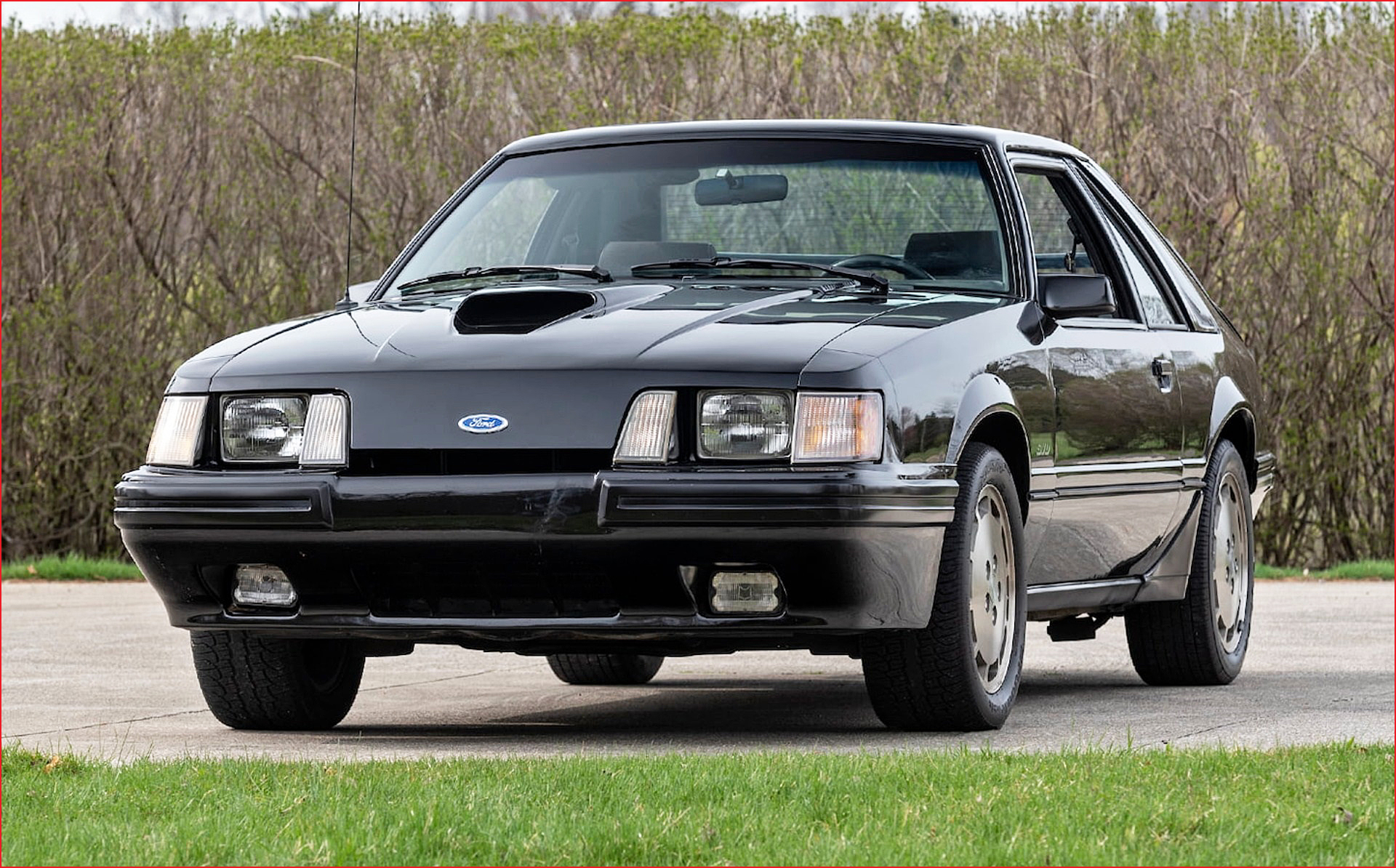
The SVO was another beast altogether. First, there was no conventional grill in front; air flowed in through the hood scoop and an opening under the bumper. Ford added an air-to-air intercooler to the 2.3 liter Turbo Four and pressure from the AiResearch Turbo was controlled by the first electronic adjustable boost control system on a passenger car. Boost could go as high as 14 psi and gave the little engine the same 175 horsepower as the GT‘s 4-barrel equipped V8 with 210 ft. lb. of torque. The performance goodies weren’t confined to the engine compartment; the SVO featured Koni shocks, 4-wheel disc brakes, a functional hood scoop, dual-plane rear spoiler, 16X7 inch aluminum wheels and a Hurst short-throw shifter. The power and handling were phenomenal for a small American four-cylinder car; journalists heaped praise on Ford‘s little 4-cylinder hot rod and glorified it as a viable competitor against sport coupes from Japan and Europe. Comparisons were made with Corvette, that’s how different this Mustang was. However, the $6,000 price jump over the GT meant that there weren’t a lot of buyers despite the well-deserved journalistic hype, and only 9,000 were produced in 1984.
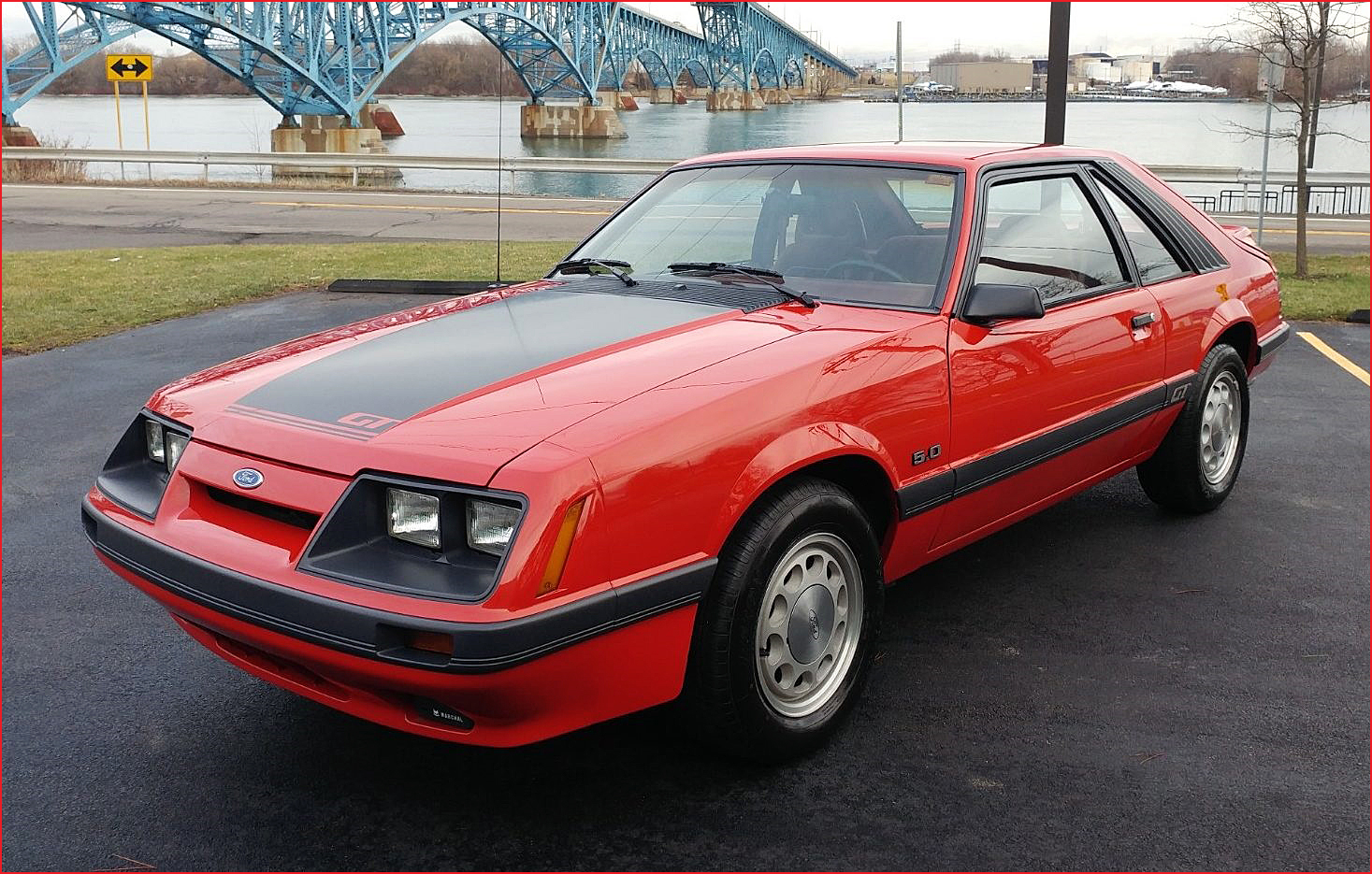
GT, LX and SVO all returned in the same form in 1985, the base L model was dropped. The GT turned in the conventional egg crate grill for a mail-slot in front and a massaged 5.0 liter V8 with roller lifters and factory shorty headers now produced 210HP with the four-barrel, while SVO got a bigger cam, reworked heads and a better exhaust system. Those upgrades and an extra pound of boost now gave it 205HP. This was the last year for the Turbo GT, which benefited from some of the SVO‘s upgrades and now produced the same HP as the previous year’s SVO. GTs also gained 15-inch cast aluminum wheels, larger tires, a new rear end setup and a larger stabilizer bar. The 2.3 inline 4 remained at 88HP while the 3.8 liter V6 got a bump to 120HP. Form-fitting cloth seats were now standard, leather was optional.
Minor styling changes came in 1986, but the most recognizable change, at least from behind, was the addition of a center high-mounted stop light. The 5.0 liter V8 was reworked for more strength and durability and although it lost 10 HP to the previous model the overall consensus was that it was a better engine, with a true dual exhaust for the first time. Other engine options remained the same, but this was the last year for the SVO due to disappointing sales because of the high premium over a GT.
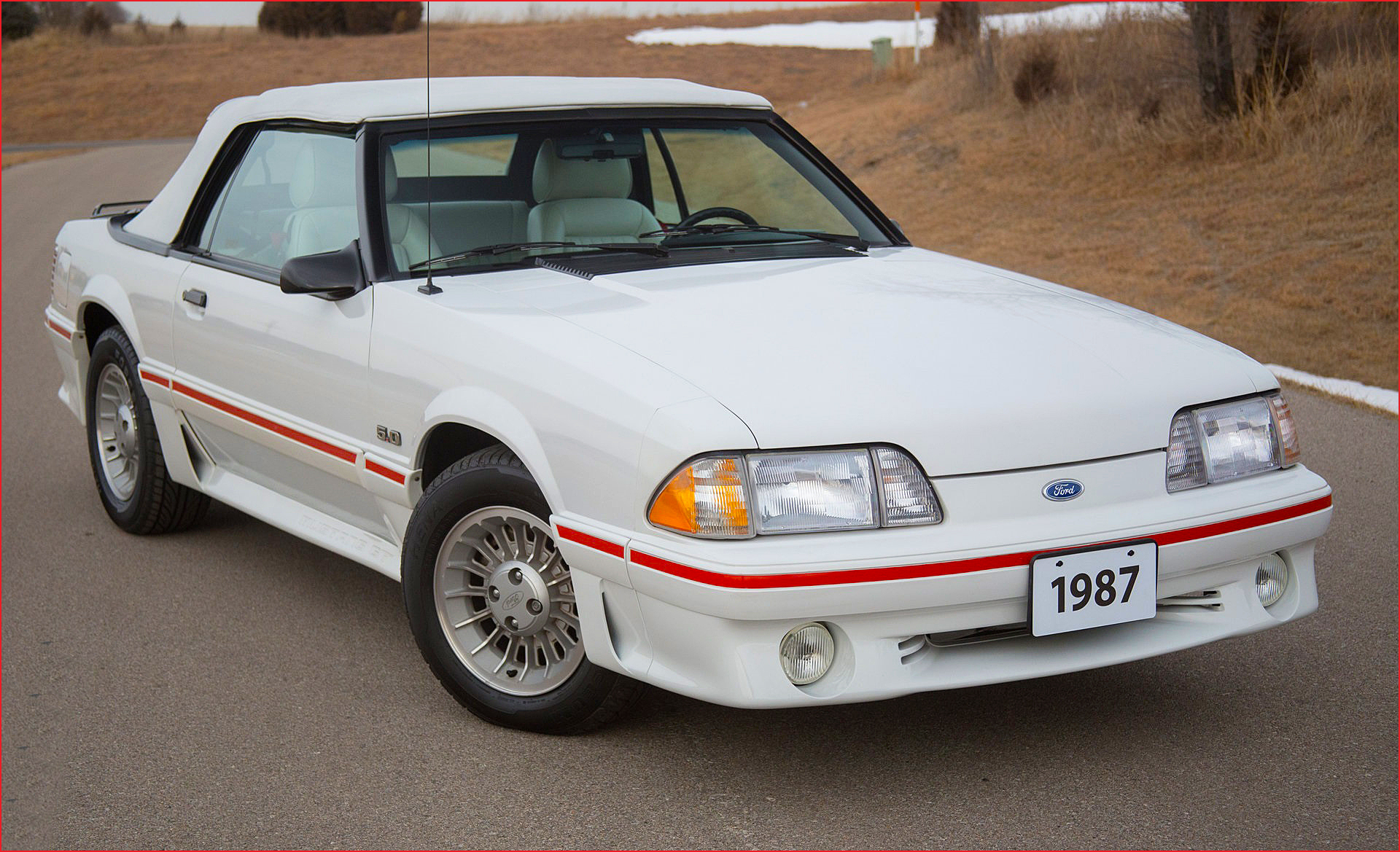
The Fox-body Mustang got a major styling update for 1987 inside and out, with the front end losing its grill for a more SVO-like appearance, minus the hood scoop. There was a new ground-effects kit with air scoops in front of each wheel and new “cheese grater” taillights appeared at the rear. They also removed the dated-looking side louvers and flush-mounted the rear quarter glass. Black body side moldings stretched along the side, wrapping around the new rear bumper with “MUSTANG” embossed in it. A rear spoiler was standard now on all hatchback models. There were side-mounted rocker switches on the new instrument pod for the lights, hazard flashers and rear-window defroster while column stalks operated the wipers and turn signals. A center console with climate control adjustments was lifted from the new Euro-style Taurus. This was a long-overdue refresh to keep the Mustang interesting until they could unveil the next-generation Mustang in 1989. Word leaked out that this was to be a front-wheel drive car based on a Mazda platform and was already under development, and Mustang enthusiasts revolted in a major way. They were furious that the pony car would no longer be rear-wheel drive and inundated Ford with over 30,000 angry letters. Ford relented and kept the Mustang rear-wheel drive until a suitable replacement could be found and the Fox-body soldiered on for another six years. There was already considerable development made on the Mazda platform, and rather than scrap all that hard work Ford turned it into the Probe.
Little changed for ’88 and ’89 despite the latter being the 25th Anniversary year. There were rumors of a high-performance engine for the anniversary, perhaps a 5.8 liter V8 or the supercharged 3.8 liter V6 from the Thunderbird, but neither would come to pass. In the end all that distinguished the 25th Anniversary Edition was a galloping-horse logo affixed to the passenger side dashboard. What an underwhelming marker of a momentous anniversary. The only bight spot was the LX 5.0L Sport model, which offered the performance of the GT in the smooth styling of the LX trim.
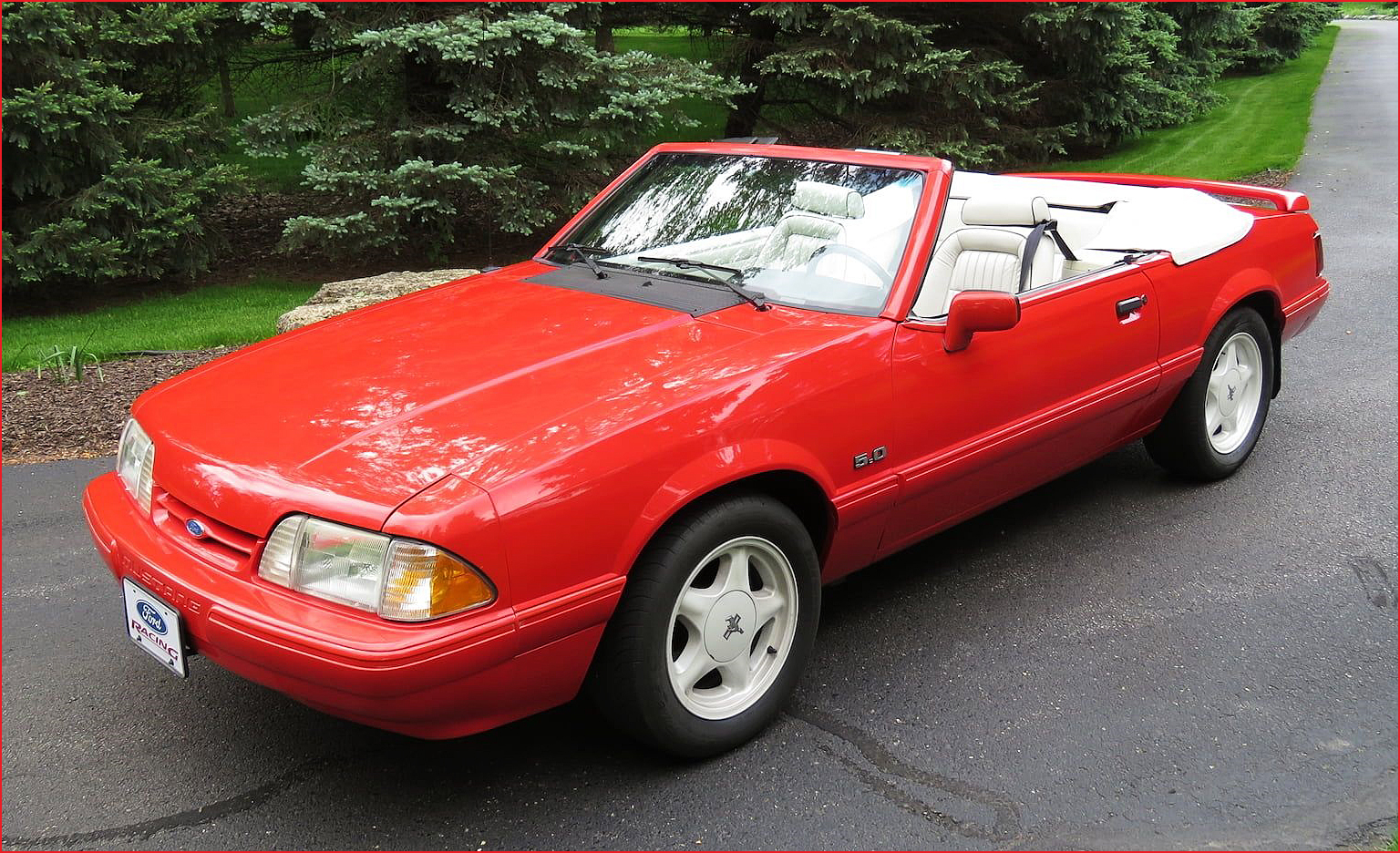
1990 through 1993 again saw no major changes as the new generation front-drive model had been slated for 1989. The only major change was the new 5-spoke 16 inch aluminum wheels in 1991 and the 1992 “Summer Special” LX 5.0 convertibles in red with a white leather interior, color-keyed door and window trim, color-keyed mirrors and a deck lid spoiler.
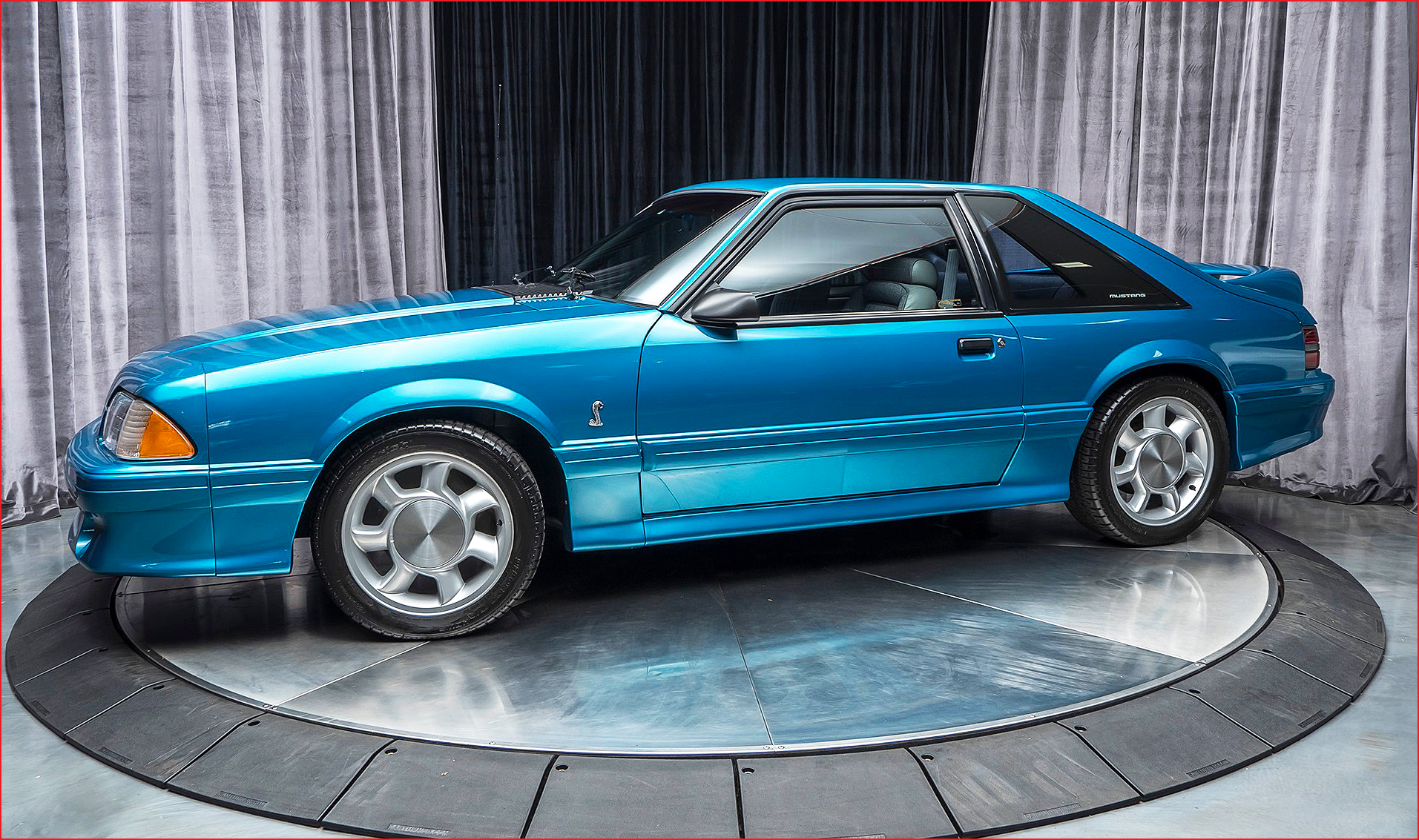
On the performance front was the 1993 SVT Cobra and SVT Cobra R. The SVT Cobra‘s front valance was re-styled and it wore unique 17-inch seven spoke alloy wheels. A small snake emblem was affixed to the front fenders, but the real news was underneath: a revised 235HP, 285 ft. lb. 5.0 liter engine with GT40 cylinder heads, Koni shocks, bigger brake discs and a Borg-Warner 5-speed manual transmission; there was no optional automatic. This Mustang would hit 60 MPH in 5.9 seconds and the quarter mile in 14.1 seconds, each two tenths quicker than the GT. The SVT Cobra R was optimized for racing and did away with the rear seat, radio and sound dampening to increase speed.
Mustang sales were falling due to no new updates for six long years and 1992 saw sales bottom out at 79,280, but recover to a respectable 114,228 for the final Fox-body year. Clearly it was time for a new Mustang, and Ford knew it.
Fourth Generation 1994-2004
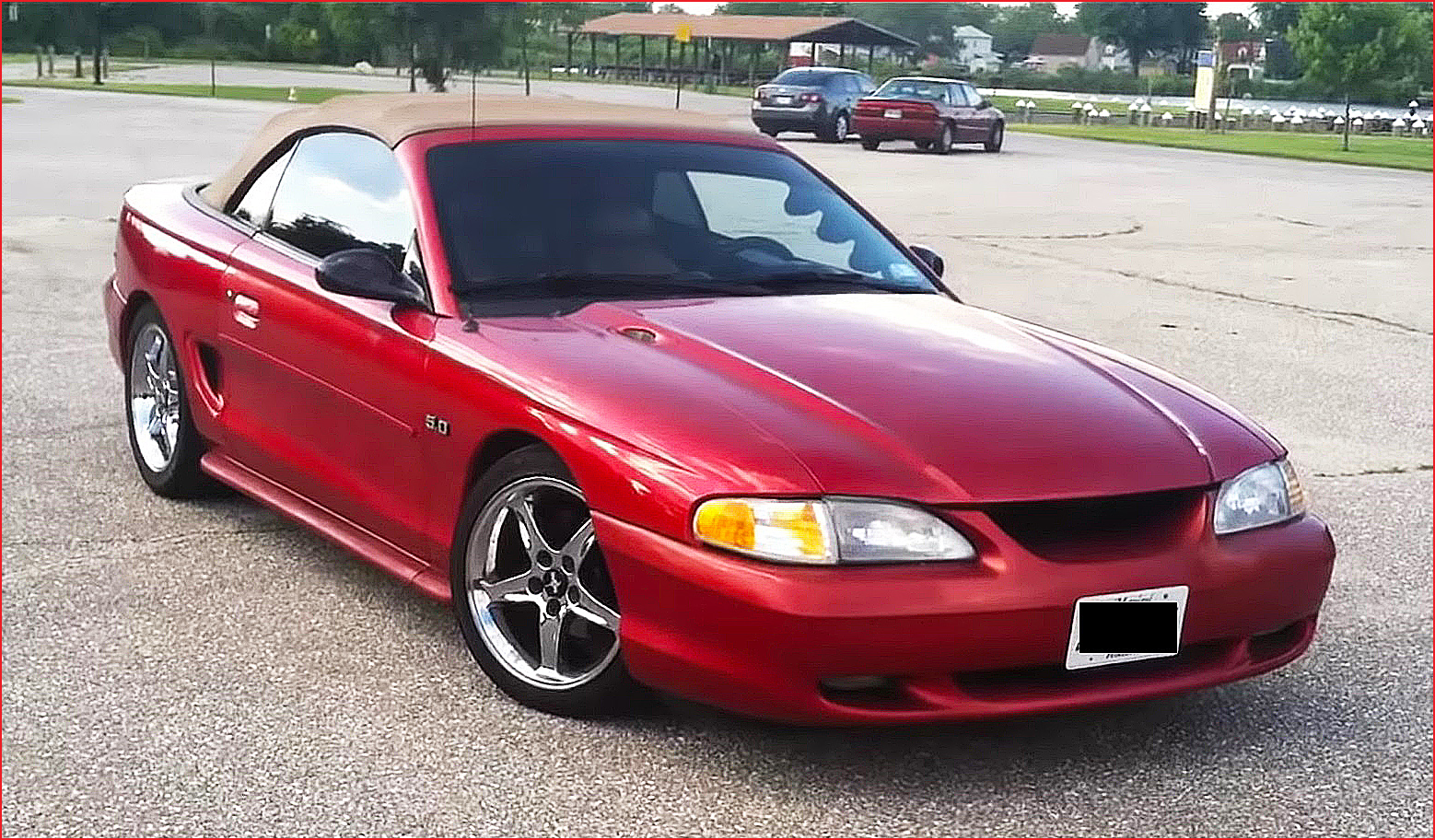
1994 saw the first major Mustang redesign in 15 years. The new “SN-95” design was based upon a modified Fox platform called “Fox-4” and the body incorporated more design cues from first and second generation Mustangs. Ford wanted the longer-wheelbase fourth generation Mustang to be sleek and modern, yet instantly recognizable as a Mustang. To that end, the galloping-pony emblem was front and center between the headlights in the grill-less opening. Body sculpting reminiscent of the first generation graced the front fenders and doors with an air scoop to the rear of it, just in front of the rear wheels. Tri-bar taillights graced the rear again, horizontal instead of vertical this time. The windshield was more raked than the previous generation at 60 degrees, further enhancing the aerodynamics. Larger rocker panels, roof rails and stronger joints overall improved handling and reduced noise, vibration and harshness. This generation felt remarkably more solid and composed on the road and through corners than the old Fox body, and remained rear-wheel drive to the relief of Mustang fans everywhere.
For the first time since its 1964 debut Mustang had no notchback coupe, nor did it have the hatchback of the previous Fox body. Fastback and convertible were the only two offerings, in either base or GT trim levels. The interior was re-designed as well, featuring a “dual cockpit” layout with a center console between the front seats and sweeping curves similar to Thunderbirds of the era. The car was well-appointed with tinted glass, a tilt steering wheel, power mirrors, more interior lighting, folding rear seats, a digital clock and a power driver’s seat standard even on the base model, and leather seats were optional. Sound system options were head and shoulders above any previous Mustang. This version won Motor Trend‘s Car Of The Year at its debut.
The base engine was a 3.8 liter V6 rated at 145 HP mated to either a 5-speed manual or a 4-speed automatic transmission, gone was the wheezy 2.3 liter four cylinder. However, a V8 was not an option on the base model; that was reserved for the GT. The front suspension was now a MacPherson strut type with longer lower control arms and anti-roll bars, with a solid rear axle still bringing up the rear end. 4-wheel disc brakes were now standard, with ABS optional.
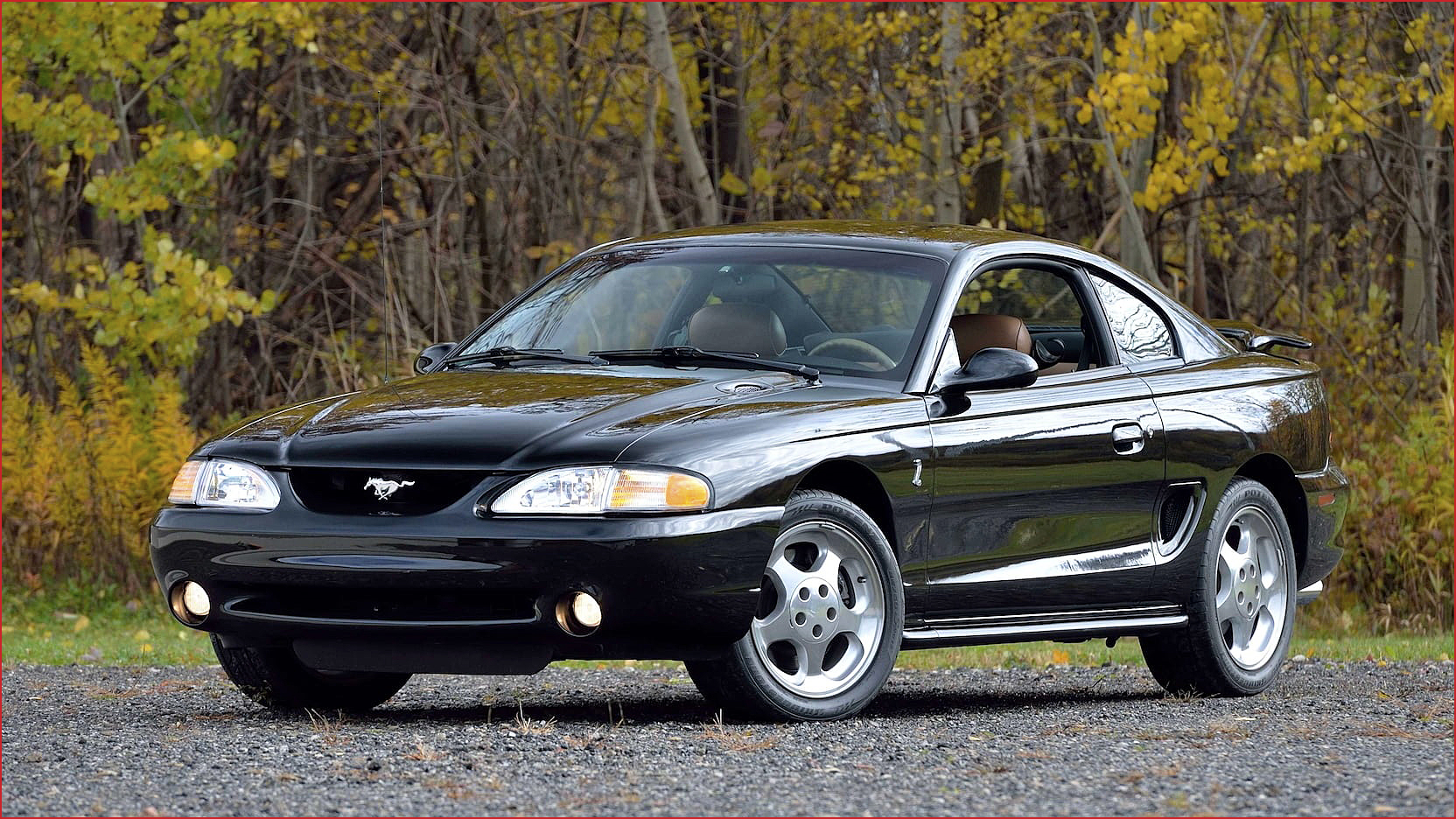
The GT was re-introduced mid-year in 1994 with the tried-and-true 5.0 liter (302 C.I.) V8 and better handling, making 0-60 in the high six-second range and 15 second quarter miles. Cobra made a re-appearance with a modified 5.0 liter with cast-iron heads from the GT40, different manifolds and injectors than the GT as well as Cobra-specific shocks, struts and springs and 13-inch front discs with calipers embossed with “COBRA,” courtesy of Ford‘s Special Vehicle Team (SVT). All this added up to a horsepower increase to 240 and 5.7 second 0-60 times with a 13.87 second quarter-mile and much better handling than even the GT. A unique front end with round fog lights, complex-reflector headlights, Cobra badging on the front fenders, a rear spoiler with integrated stop lamp, white-faced gauges with a 160 MPH speedometer, a leather-wrapped shift knob and parking brake handle and boot, magnesium front seat cushion frames and unique floor mats rounded out the Cobra Package. Ford announced a convertible version of the Cobra, a first since the 1970 Shelby model.
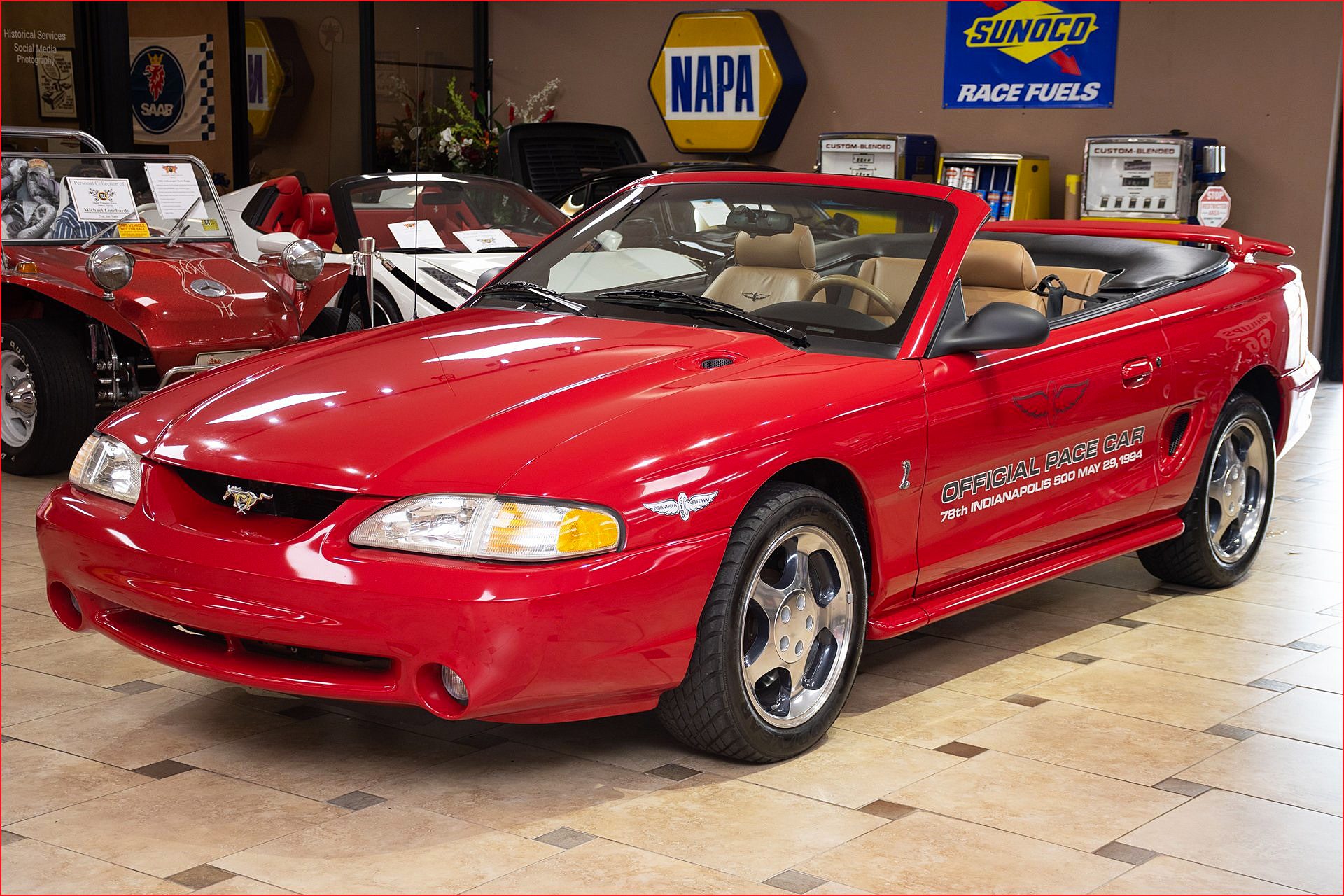
The first convertible Cobra produced was the pace car at the 1994 Indianapolis 500 and 1000 Indianapolis Pace Car replicas would be for sale later in the year.
The year after a major re-design usually brings few if any changes, and 1995 was no different. Very little changed in the base Mustang, the GT or the Cobra. Two new additions did come into play; the GTS was a stripped-down GT model without the handling package and 160 MPH speedometer, but with the sport seats and the V8 for those who couldn’t quite afford the now $4000 price gap between the base model and the GT.
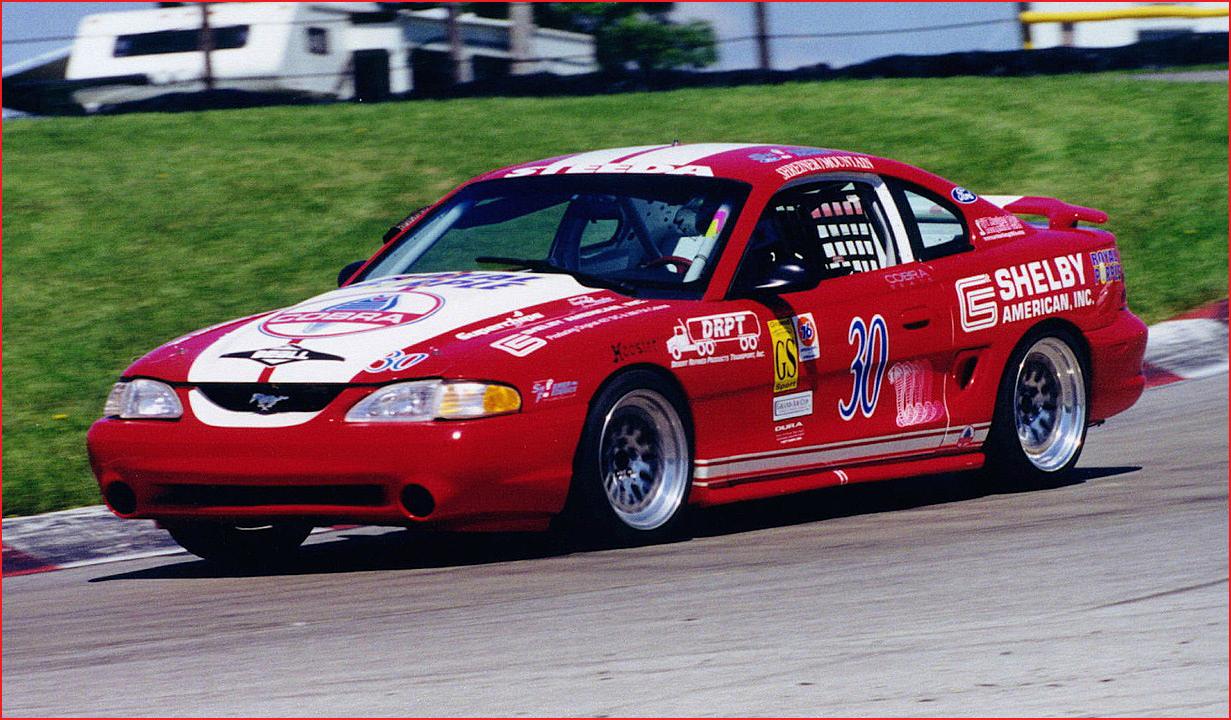
On the other end of the scale, the SVT Cobra R boasted a 5.8 liter (351 CI) V8 with GT40 heads like the Cobra which was good for 300 HP and 365 ft. lb. of torque with its 9.0:1 compression ratio. This engine required an updated transmission, and a toughened up Tremec 5-speed manual filled that role. The engine was so large that a special fiberglass hood was designed, the standard Mustang hood would not accommodate this powerplant. The “R” was for racing, and only owners with a valid NHRA or SCCA racing license could buy one like the 1993 SVT Cobra R. It was stripped town for that purpose and had no rear seat, radio, A/C, power windows, locks or mirrors, no sound insulation and no fog lights. What it had above the standard Cobra was heavier front and rear springs, larger anti-sway bars front and rear, Koni shocks and struts larger 17X9 wheels and tires and a 20 gallon fuel tank. The SVT Cobra R was a beast: 5.2 seconds 0-60, a 13.8 second quarter-mile and a stopping distance from 60 MPH of 109 feet, as tested by Motor Trend. Only 250 of these factory racers were produced in 1995.
1996 saw the demise of the 5.0 liter (302 CI) V8 that had powered Mustangs since 1969. The old 5.0 liter engine would not be able to keep up with ever-increasing emission regulations without extensive modifications, so Ford replaced it with a new, more technically advanced modular 4.6 liter (281 CI) V8 producing the same 215 HP as the 5.0. It also provided better fuel economy than the thirsty 302 with its chain-driven overhead camshaft and 65 mm throttle-body providing fuel, as well as having fewer emissions. A 32-valve, DOHC version of the new 4.6 producing 305 HP would now power the SVT Cobra. Exterior changes were subtle, a retro-looking honeycomb grill and vertical triple taillights differentiated it from earlier models. Interior appointments remained essentially unchanged.
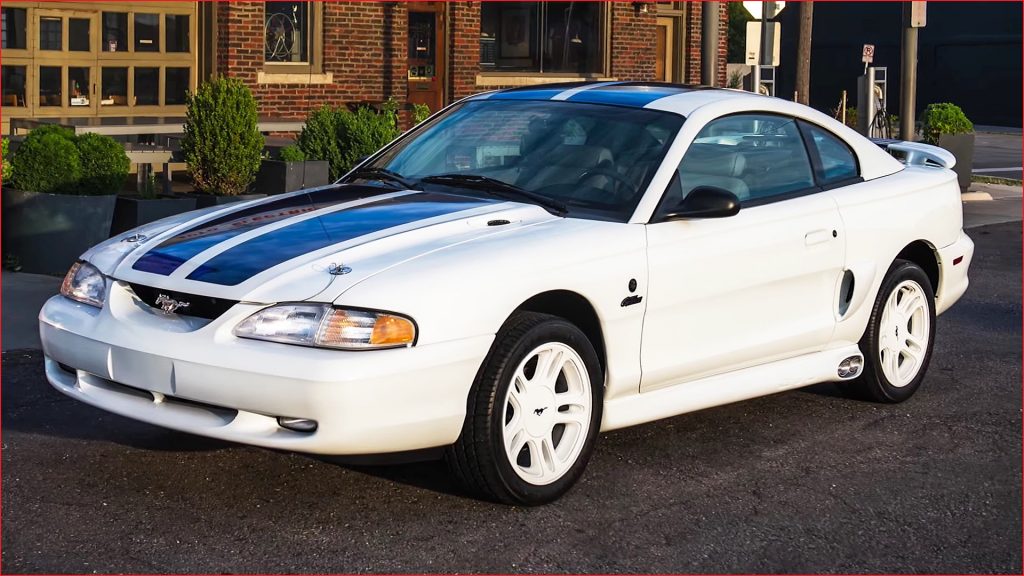
The only change for 1997 was the deletion of the honeycomb grill of the 1996 model. Ford did produce 58 SVO Woodward Dream Cruise Mustangs that year, essentially a Detroit-area Regional Special Edition model like so many others before (think California Special) to commemorate the 1995 Woodward Avenue Dream Cruise from Detroit to Pontiac, Michigan. This cruise attracted over a million spectators along its length and thousands of cars from street rods to factory muscle cars. These SVO Specials were all painted white with blue stripes echoing GT350s of the past. All had numbered plaques on the dash and special side badging, along with a special tuned BORLA stainless steel exhaust, Shelby-like air intakes on the rear quarter panels, chrome hood pins and white powder-coated 17-inch aluminum rims.
1998 again saw little change save for the deletion of the dash clock, now integrated into the radio, and new 5-spoke wheels for Cobra. Base Mustangs now had standard A/C, remote keyless entry and power windows, door locks and trunk release. The GT received an upgraded sound system as well as a standard rear spoiler, and the 4.6 liter V8 received a 10HP boost thanks to an updated exhaust system and changes to the headers. Two new Sport Group options were offered, a GT Sport Group with the 17-inch 5-spoke wheels, hood and wrap-around fender stripes, an engine oil cooler and a leather gearshift knob on the manual transmission. and a V6 Sport Group with 16-inch aluminum wheels, a rear spoiler, a lower body-side accent stripe and a leather-wrapped steering wheel. A new GT Spring Edition featured special black factory hood stripes and 17-inch wheels. This was also the last year for the so-called “Round Body Mustang” before the New Edge facelift the following year.
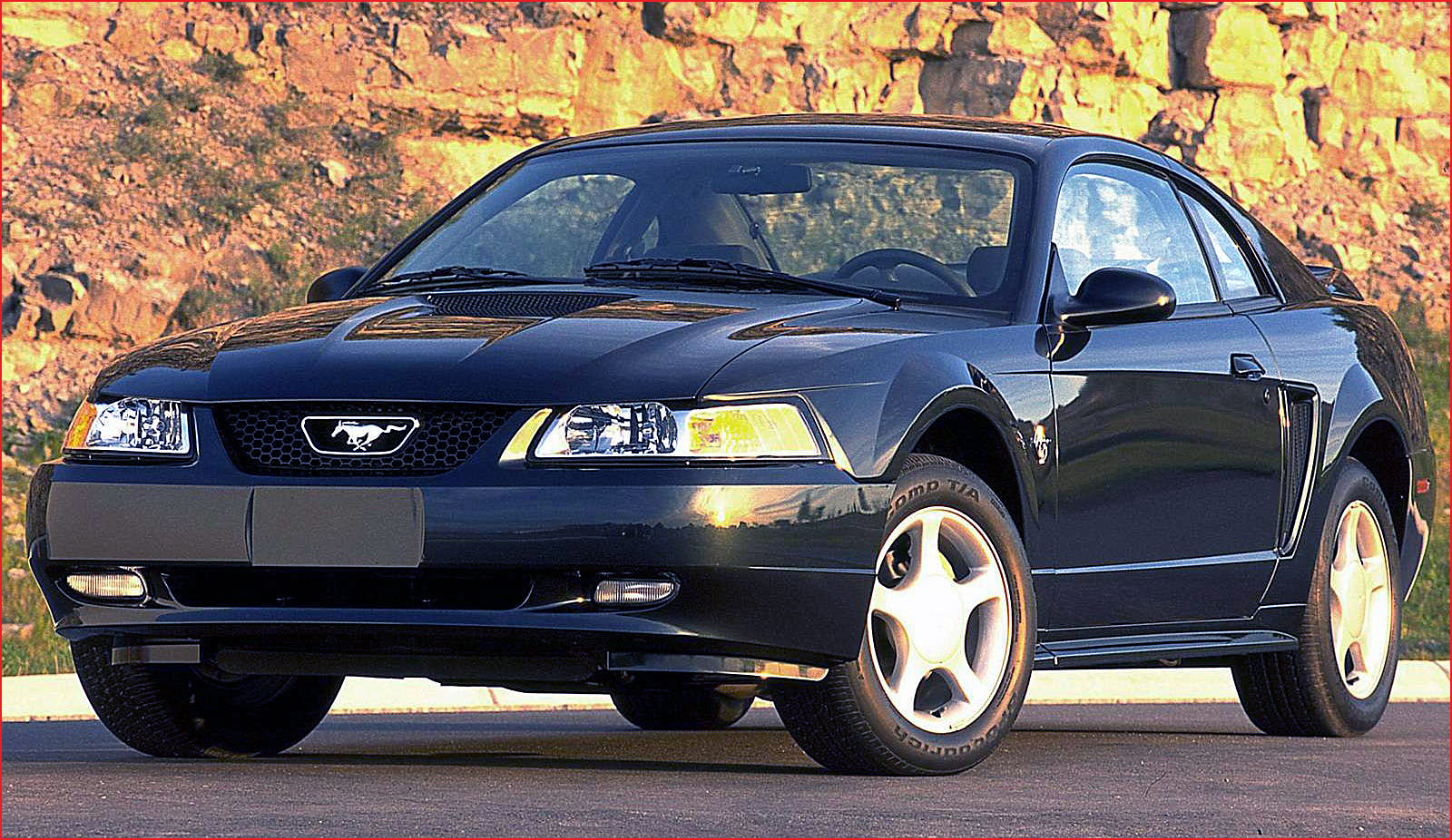
A new hood, side scoops and a general facelift greeted buyers in 1999. New, crisper looking headlights and a sharper, more angular side profile looked forward but also hearkened back to ’60s and ’70s Mustangs. The “corralled pony” design made its way back to the grill as well and a new take on the classic 3-bar taillights graced the rear. All Mustangs except the Cobra sported tri-color 35th Anniversary badging. The interior received a refresh which included dual cup holders. A new traction-control system was introduced and the suspension was revised for a better ride. The base V6 now produced 190HP and the 4.6 V8 got a huge jump to 260HP thanks to new coil-on plugs, a modified intake and combustion chamber and a higher lift and duration camshaft. The DOHC 4.6 in the Cobra now produced 320HP, up 15 from 1998. However, Ford had to recall all ’99 SVT Cobras in August for improved intake and exhaust manifolds because the advertised HP numbers did not match the actual HP. The Cobra R was back for racers with a 385HP DOHC version of the 4.6 liter V8.
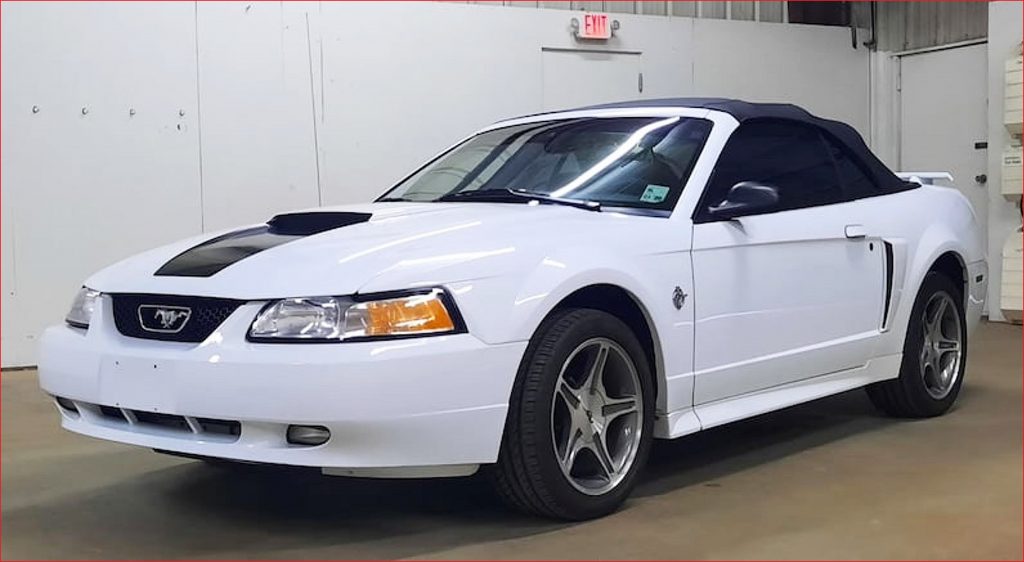
A Limited Edition 35th Anniversary appearance package was released with features that would later become available on the 2001 GT; a raised hood scoop, larger side scoops, a special hood stripe and blacked-out panel between the tail lamps and a raised rear spoiler. The inside featured black leather and vinyl seats with silver inserts and a pony logo, and aluminum shift knob, a unique instrument cluster with 35th Anniversary script, silver door trim inserts and silver and black floor mats with the 35th Anniversary logo. These were only available in red, black, silver or white.
Mustang entered the new millennium with very little change from the ’99 mid-cycle refresh. All that now distinguished the base and GT models from the outside were the dual exhaust cutouts in the rear of the GT. Dark smoked headlight surrounds replaced the chrome units on previous Mustangs.

There was no 2000 SVT Cobra, however the 2000 SVT Cobra R was the same except for a new front air dam, spoiler and a larger “power dome” hood, taller than a normal Cobra hood. Oh, and one more change: you no longer had to have a racing license to buy one!
2001 saw an new sub-model structure for V6 Mustangs. Coupe buyers now had a choice of Standard, Deluxe or Premium packages, while convertibles and GTs were offered with only the Deluxe or Premium trim. Buyers could add the Sport Appearance package in addition to the others. The raised hood scoop, larger side scoops and pedestal rear spoiler of the 35th Anniversary Edition made their way into the GT lineup. New 17-inch alloy wheels mimicking the five-spoke “Torq-Thrust” wheels of the ’60s quickly became a must-have item. Inside was a new center console with much improved cupholders, a power outlet under the center armrest cover and switches for the rear defogger, fog lights and traction control under the radio. A re-designed audio system with a 6-disc CD changer for the premium MACH 460 Sound System rounded out the new interior features. The Cobra was back after a one-year absence with the name now deeply engraved into the rear bumper. The V6 was tweaked to gain an additional 3HP while the GT‘s 4.6 liter V8 remained the same, except when installed in the new Bullitt Edition.
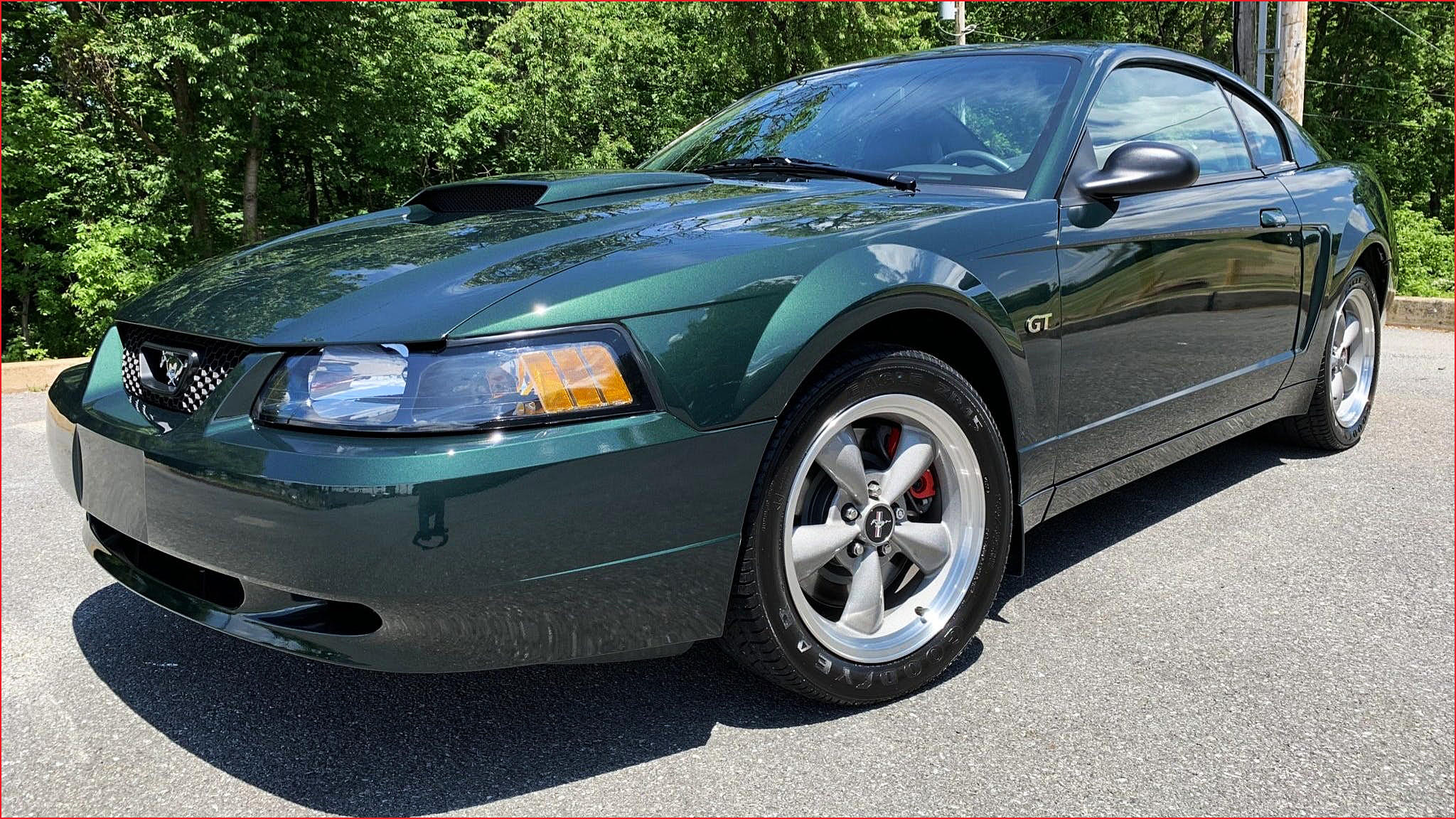
The Bullitt was a concept car in 2000, but made it into production in 2001 as an homage to the 1968 Highland Green GT 390 driven by Steve McQueen in the namesake film. Ford wanted to capitalize on the ever-growing popularity of the cult classic with car enthusiasts. It was a heavily modified Mustang GT meant to visually connect the viewer to the original from the outside, with unique side scoops, 17-inch 5-spoke wheels meant to evoke the wheels on the original ’68 and a suspension lowered by 3/4 inch for a firmer, better balanced ride and better handling. A bold, brushed-aluminum fuel filler door on the rear quarter-panel, polished exhaust tips and a special Bullitt badge complete the look. Modifications went well beyond the exterior appointments, however. The 4.6 liter V8 had improved airflow for a 10-HP gain over the standard GT’s 260 and 305 ft. lb of torque vs. the GT’s 302. This was achieved with a cast aluminum intake manifold, a twin 57mm throttle body and high-flow mufflers for better breathing as well as a more aggressive sound. In addition to the lowered suspension, the Bullitt had re-valved Tokico struts and shocks, unique stabilizer bars front and rear, frame rail connectors and 13-inch Brembo front disc rotors and calipers. The inside featured performance bucket seats in Dark Charcoal leather trim, a brushed aluminum shifter knob, bezel and door sill plates, aluminum pedal covers and a modern interpretation of the instrument cluster of the ’68 GT 390 with curved numeric speedometer graphics and a white-lit background. 5,582 units were produced in Dark Highland Green, Black and True Blue.
2002 was, well, boring for Mustang lovers. SVT Cobras were not available in the US and only a handful were made for the Australian market. GTs were the same as 2001, and the Bullitt did not return. New was the Mach 1000 570 watt audio system with the same 6-disc changer as the Mach 460, but with optional MP3 input. A special “Pony Package” for the base model with 16-inch polished aluminum wheels, mustang stampede decals on the doors black “MUSTANG” lettering on the rear bumper, the hood and scoop from the GT and a leather-wrapped steering wheel was created to try and drum up excitement and sales.
In a rather odd year, the 2003 Mustang had no major design changes but several special editions livened things up a bit from the lackluster previous year. SVT Cobra returned with a supercharged 4.6 liter producing 390HP, a new front fascia and a new spoiler. SVT Cobra buyers would now pay a new $1,000 gas-guzzler tax, courtesy of the US Government. A new 10th Anniversary edition of the Cobra featured 17-inch dark argent painted wheels, red leather seating surfaces front and rear, carbon fiber-look interior trim, red-painted brake calipers and SVT 10th Anniversary badging on the floor mats and rear deck lid; 2,003 models of this edition were built. A Centennial Special Edition of the GT for Ford‘s 100th Anniversary was produced with premium two-tone parchment leather seats, 17-inch wheels, anti-lock brakes and traction control, power driver’s seat with power lumbar support, a leather wrapped steering wheel and 100th Anniversary badges on the fender, deck lid, and embossed on the seats.
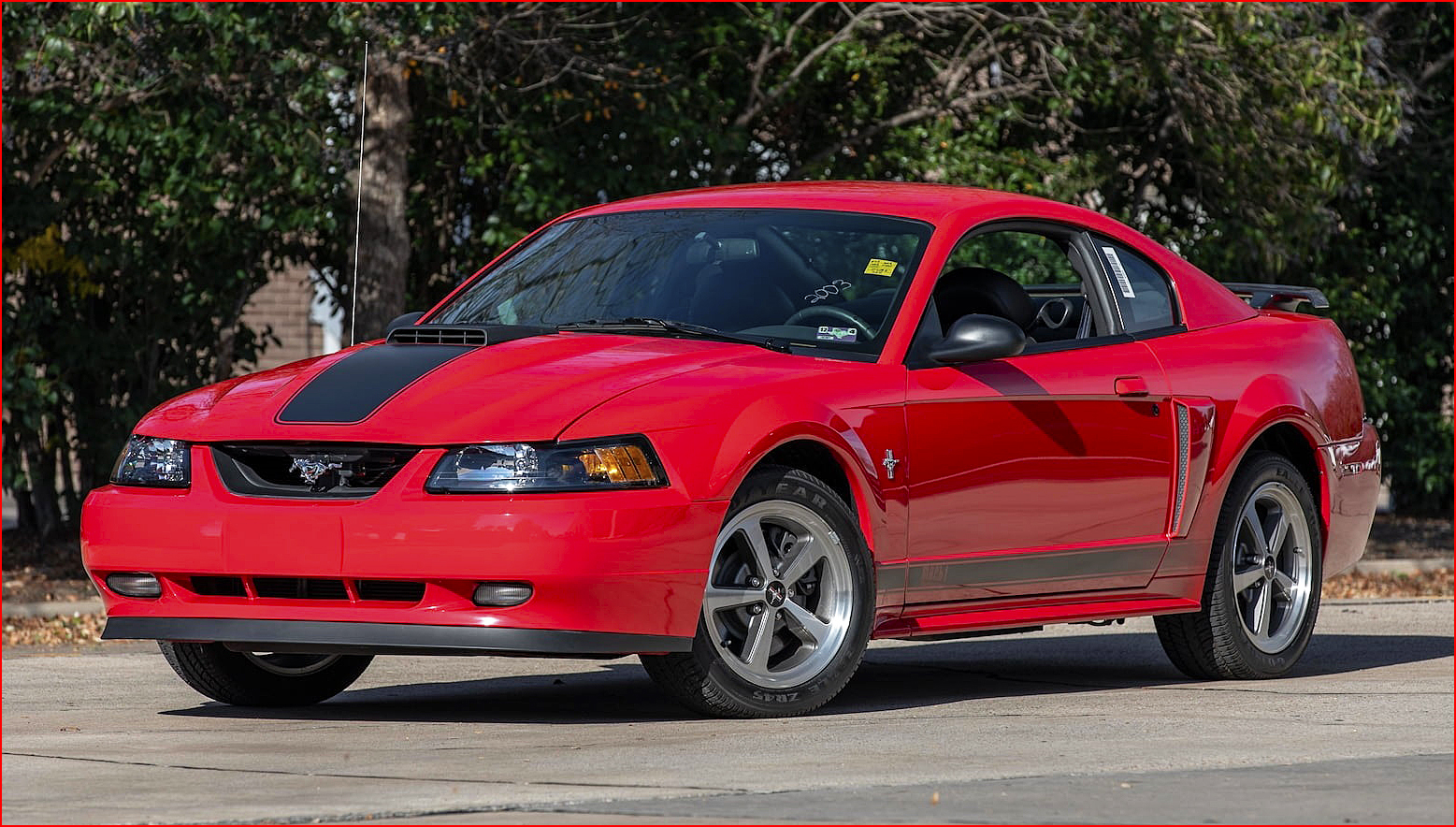
The cherry on top of all the special editions was the return of the Mach I, absent since 1978. With a 305HP version of the DOHC 4.6 liter V8 it was a step up in performance from the GT. The suspension was lowered half an inch and it got 17-inch Magnum 500 wheels in a nod to the original. More nods to the original were the Comfort Weave seats, flat black stripe from the hood to the rear deck, a functional shaker hood scoop and a stripe above the rocker panel with a “MACH I” graphic. It also got the rolled and polished exhaust tips from the Bullitt.
2004 was a milestone year for Mustang: 40 years in production. It was also the last year that Mustang would be produced in the legendary Dearborn plant, the last year for the New Edge styling and Fox body derivative. The base and GT models were very similar to the previous year, but the Mach I was back for one final year in the Fox based platform without much change, as was the SVT Cobra which had no gas-guzzler tax like the previous year due to an updated exhaust system which brought the gas mileage over the government threshold.
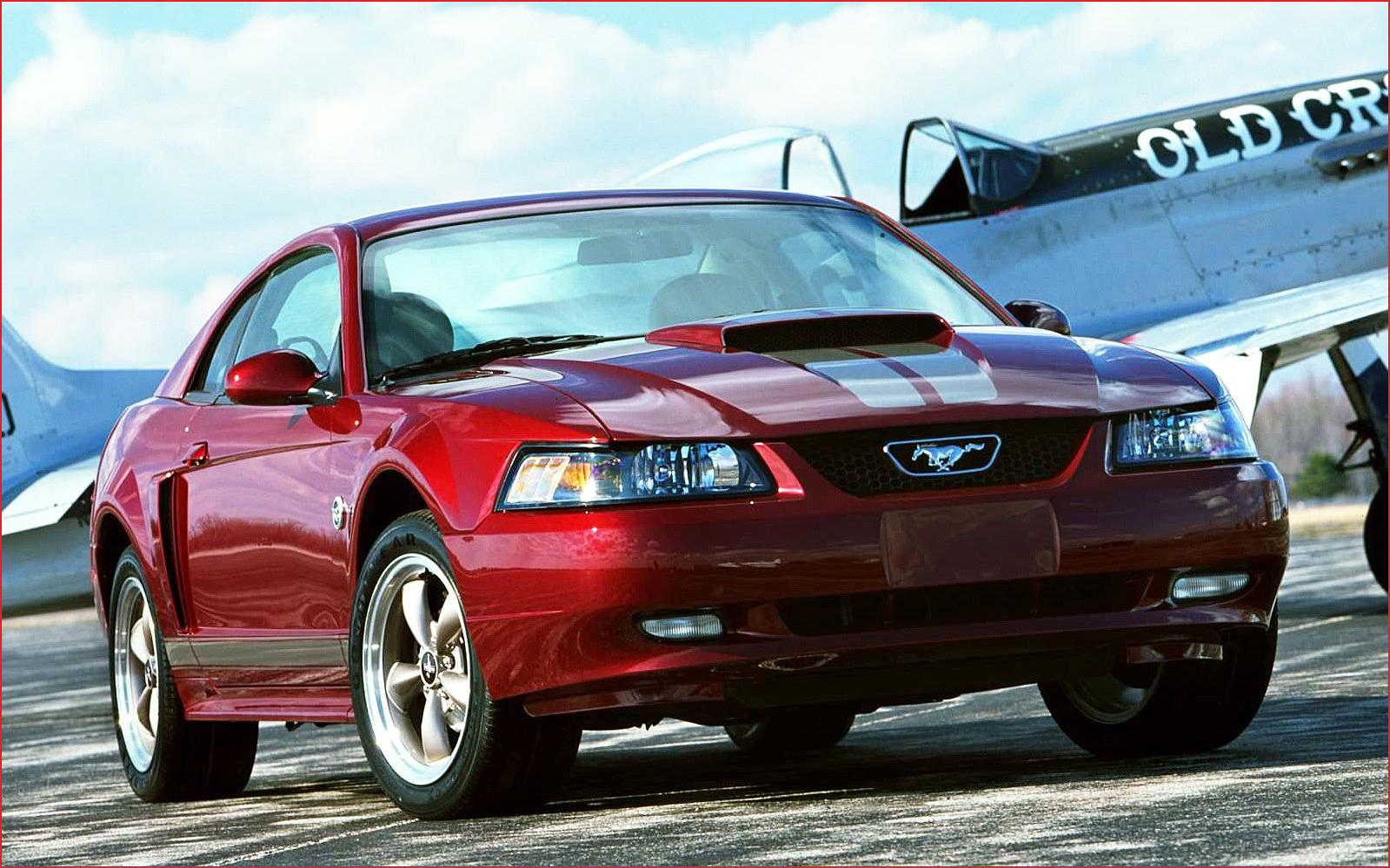
All Mustangs got the 40th Anniversary badging, but there was also a special $895 40th Anniversary trim package with silver dual hood and trunk stripes, matching rocker stripes, upgraded wheels, a deluxe parchment interior with painted center console surrounds, metallic gray shifter bezels, boot trim and door lock knobs and brushed aluminum pedals. This package could be had in only Black, Oxford White or Crimson Red, which was exclusive to the package.
After 10 years this version of the Mustang was getting long in the tooth and a radical new restyle was on the way. Stay tuned for next month’s write-up on the all-new retro-look Mustang makeover! ✪
Got a Great Car Story? Share it! Reminisce About Your Other Favorite Cars, Too!
Seeyas Again Next Time On FLAT OUT!
It’s President Jeff D. Boofer


