


Hi Folks…And Welcome Again To FLAT OUT!
More Trans Am Goodness Tonight. It’s…
The Pontiac Trans Am (Part 2): 1982-1992
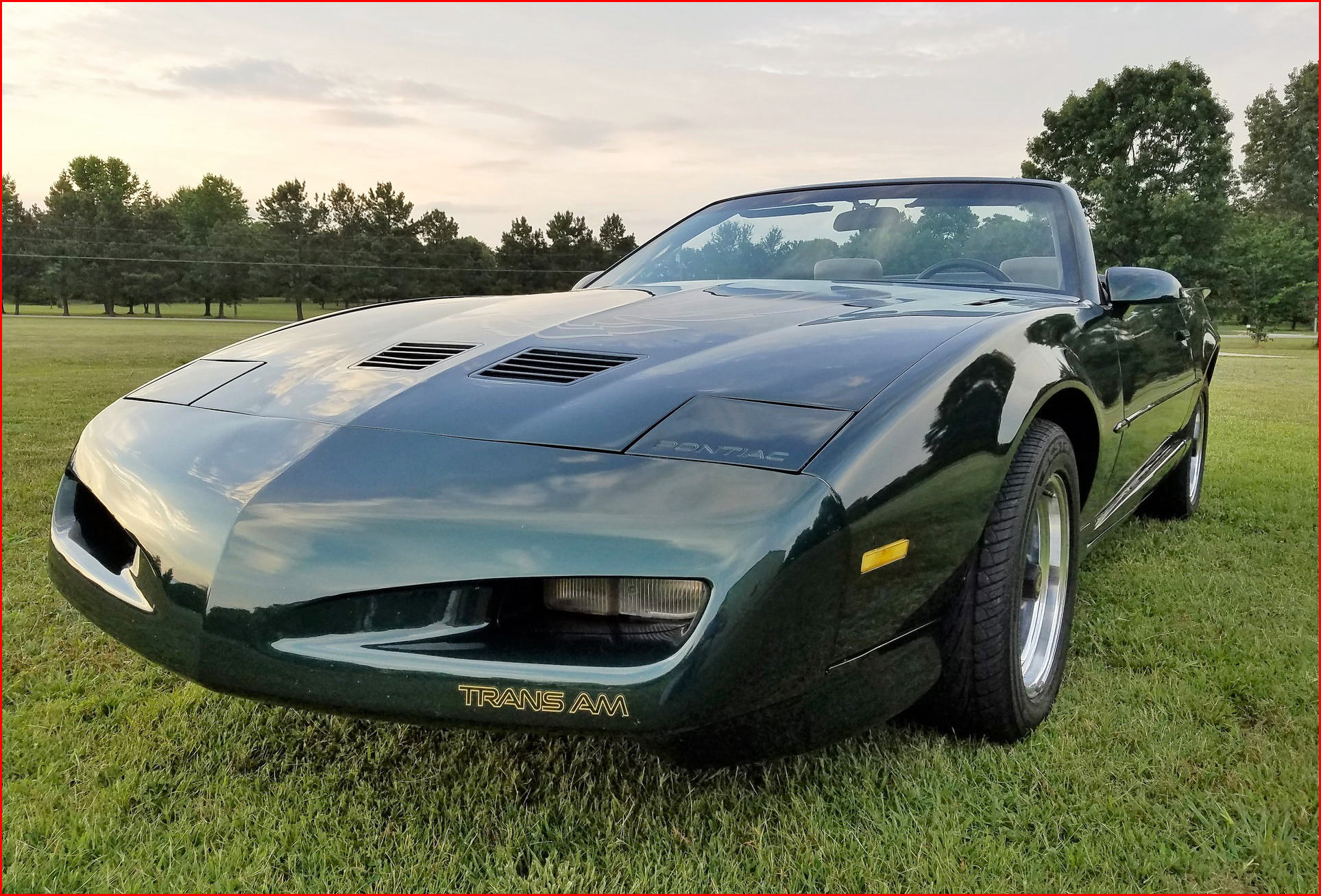
Pontiac re-styled the F-body yet again in 1982, giving Firebirds, Trans Ams and Camaros another aerodynamic makeover that was more evolution than revolution, unlike the shift from the first generation to the second. The makeover had a practical aspect as well, the gas crises of the ’70s and early ’80s made fuel efficiency a priority, even on the Trans Am. Chevrolet chose to retain the open headlights of previous models, while Pontiac opted for a front end reminiscent of the upcoming C4 Corvette released a year later. A sloping front end with hidden headlights differentiated it from its Camaro sibling, but it retained the wraparound rear glass of the second generation although it did not intrude on the B-pillar as much as later Gen 2 versions had. The rear glass was now in the form of a hatchback, with no metal structure to support it. Windshield glass slope was increased to 62 degrees, 3 degrees steeper than any GM windshield before. This design was the most aerodynamic that GM had produced up to that time, along with a well-balanced package with acceleration, braking and handling that could keep up with advancing engine technology. Pontiac wanted to drop the Trans Am name to avoid the royalties they had been paying to the SCCA for the use of the name, even going so far as to mark early promotional cars as “T/A,” but ultimately decided it would cause more problems and confusion than keeping it; the name remained.
Third Generation 1982-1992
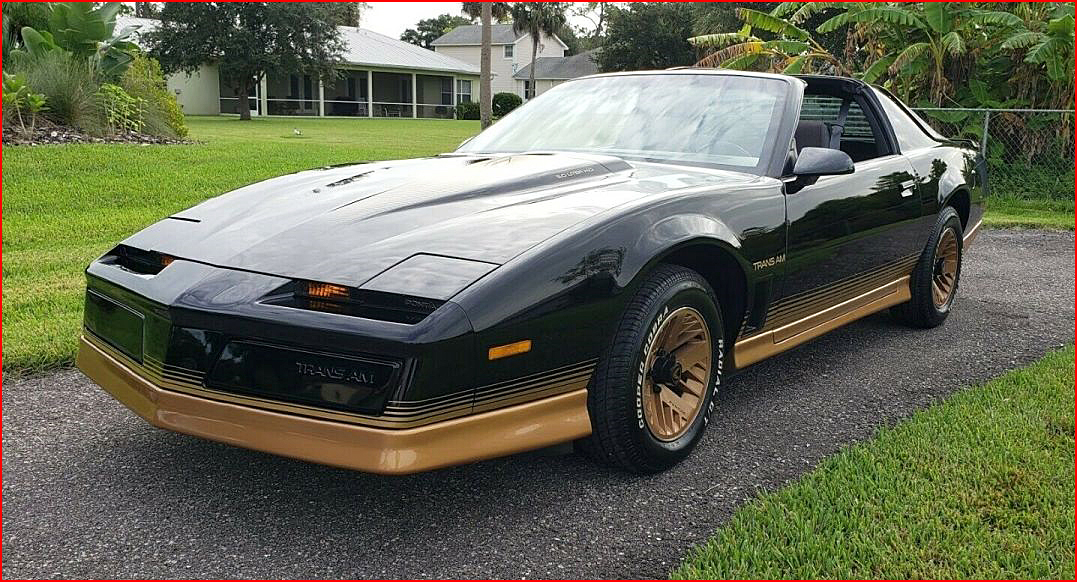
Trans Am was again the top-of-the-line performance model, with the Formula, the more luxury-oriented Firebird S/E and base Firebird beneath it. The now-hidden headlamps in the sloping front end were electronically retractable, the side glass was flush, the windshield wipers were hidden under the hood and the outside mirrors were almost cone-shaped, further improving aerodynamics to a 0.33 coefficient of drag. Wind-tunnel testing played a big part in making the new body that aerodynamic. Hidden headlamps would remain a Firebird staple until the end of its run. Smooth wheel covers designed to further enhance aerodynamics were available for the Trans Am, but most chose to show off the stock finned alloy wheels. The wheelbase was shortened to 101 inches and overall length was down to 189.8 inches, giving it a shorter wheelbase than and similar length to the original 1967 model Firebird. It was also down 500 lbs to its predecessor. New aircraft-inspired gauges graced the instrument console and Recaro seats were optional. Power came from the doggy 305 V-8, with either 145 or 165 HP to improve fuel efficiency. This resulted in an 8.3 second 0-60 and 16.3 second quarter-mile. Not very Trans Am-like, but still faster than Z/28.
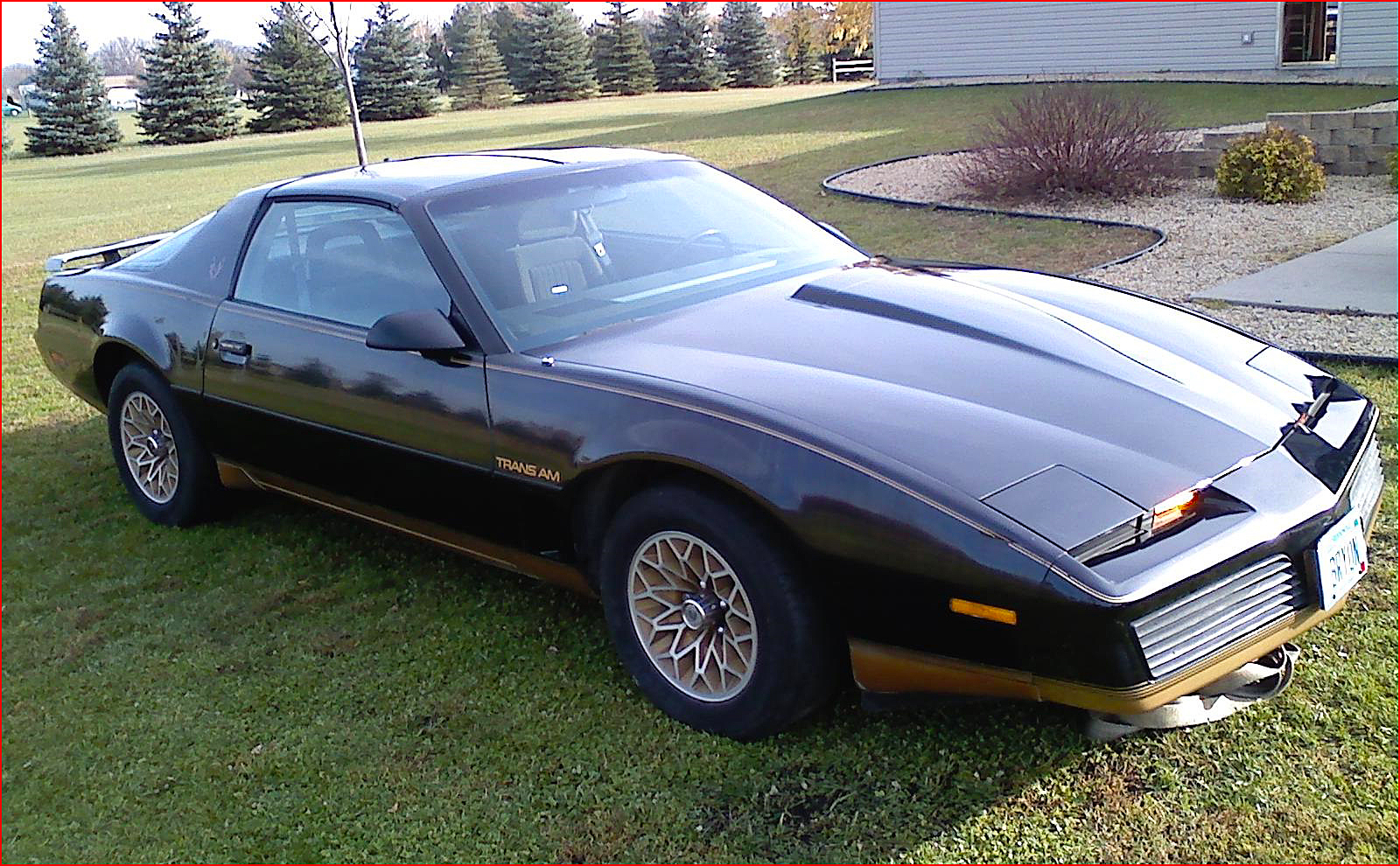
The black and gold special edition was back, not as the Bandit Edition but as a limited edition Recaro T/A with a 25% premium over the standard Trans Am. It was optioned with charcoal Parella cloth Recaro seats, T-tops, black “bowling ball” hubcaps with a gold Pontiac arrowhead on gold-painted 15-inch aluminum wheels. This was merely an appearance package as it still had the 305 under the hood, not quite worth the upcharge in my opinion.

A modified black ’82 Trans Am was used as the Knight Industries Two Thousand (KITT) in the TV series Knight Rider starring David Hasselhoff.
Few changes came for 1983 other than a T-handle shifter that was now standard across the Firebird line. A new “high-output” 305 was introduced with 175 HP and was essentially the same engine as the ’83 Camaro Z/28 except for a functional cold-air intake, while the standard 305 got a HP bump to 150. The Recaro T/A was back, optioned to the buyer’s tastes instead of being offered as a package. A similar Recaro Edition Firebird S/E with a high-output 2.8 liter V6 but without T-tops was also offered.

Trans Am was again the Daytona 500 Pace Car and 2500 replicas were sold in white and charcoal paint instead of red, with “Official Pace Car” decals on the doors, NASCAR decals on the rear quarter-panels and “PONTIAC” decals on the windshield and rear glass. The front fenders also sported “25th ANNIVERSARY DAYTONA 500″ emblems on the front fenders above the Trans Am decals. This edition came with a new full-body plastic ground effects package. 15-inch aero wheels with white “bowling ball” hubcaps or silver-finned wheels were offered, and red gauge lighting, a leather-clad steering wheel, shift knob and brake handle, two-tone gray leather/suede Recaro seats, “Daytona 500” floor mats and a special dash plaque rounded out the package.

The ground-effects package introduced on the ’83 Daytona 500 Pace Car edition was standard on the ’84 Trans Am, as were new “High Tech” 20-slot 15-inch concave aluminum wheels. The Recaro Edition was back with the 175 HP 305 HO as the only available engine and black paint as opposed to the black and gold. Special “RECARO T/A” door handle inserts, tan leather Recaro seats, black lower ground effects, gold “TRANS AM” decals on the front fenders, gold painted rims with a black plastic center cap featuring a gold Firebird medallion. and a gold “fade” decal and gold “5.0 Liter HO” script on the functional cold air induction hood bulge were included with the package.
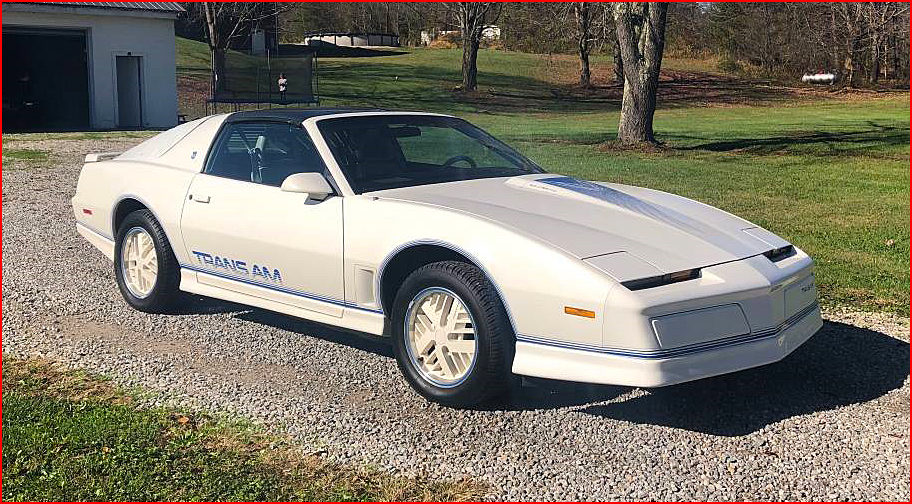
Pontiac released a 15th Anniversary Trans Am painted in white with blue striping on the entire body above the ground-effects package as an homage to the 1969 original. The package included special blue “TRANS AM” decals on the doors, 15th anniversary medallions on the B pillars, a blue “fade” decal and blue “TRANS AM” logo on the cold air induction hood bulge as opposed to the gold on the Recaro T/A, T-tops, new “Aero-Tech” 16-inch convex wheels painted white with blue pinstripes around the lip, a larger rear sway bar, off-white leather Recaro seats with gray cloth inserts featuring repeating “TRANS AM” script, off-white leather shift knob and parking brake handle and finally a blue and white 15th Anniversary insert in an off-white horn button. 1500 of these were produced with 500 Borg Warner T-5 5-speed manuals and the remaining 1000 sold with automatics.
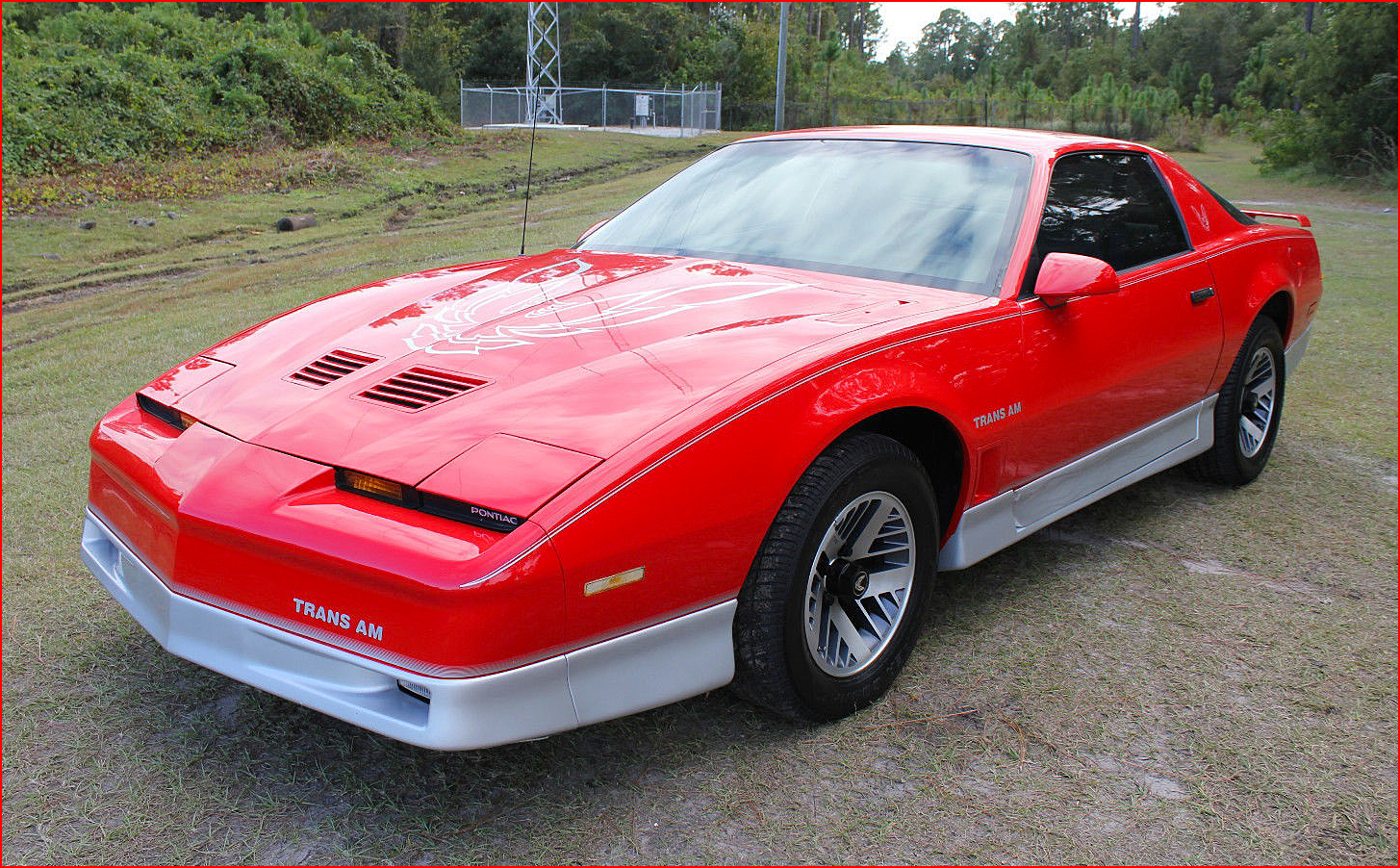
1985 saw a mid-cycle refresh for the Firebird line with a re-styled nose with integrated fog lights and twin functional “nostril” vents in the hood, on Trans Am these replaced the hood bulge. The “High Tech” wheels introduced on the ’84 Trans Am were now standard on all Firebirds, and would be until 1992, but optional “Aero Tech” 16-inch wheels lowered the drag coefficient from 0.32 to 0.29, making this the most aerodynamic GM car. The ground effects package was also re-designed and a wraparound “Aero Spoiler” was an option to replace the standard spoiler and gave it a more modern look. The Recaro T/A was dropped but Trans Ams could still be ordered with cloth Recaro seats. The 155 HP LG4 and 190 HP L69 305s were available but a new 205 HP LB9 305 with with Tuned Port Injection was an option. The 5-speed manual could not be ordered with this engine, a blow to enthusiasts.
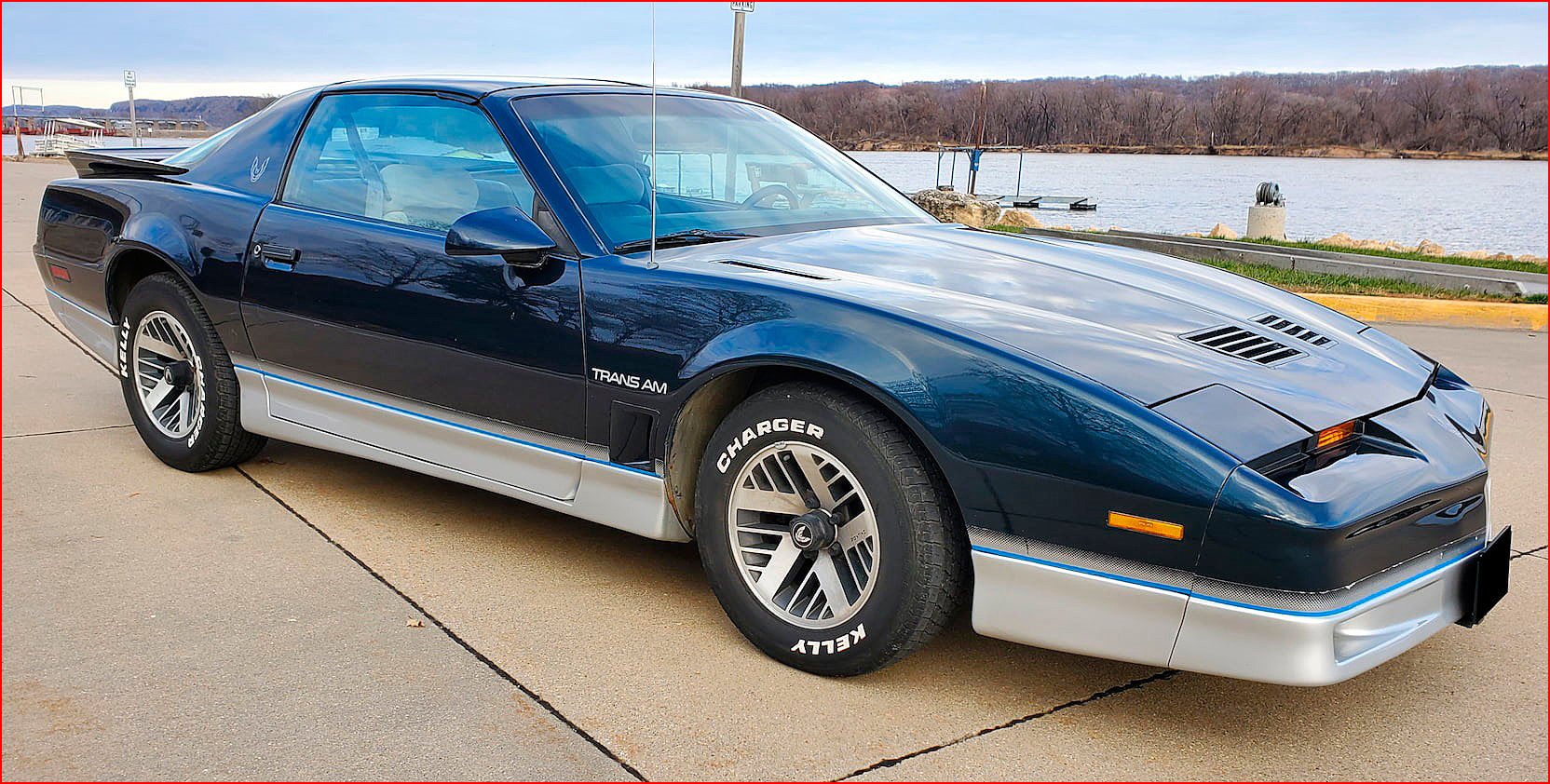
All Firebirds had center high-mounted brake lights in 1986 to comply with new Federal regulations. The gauge cluster was also updated to make it more modern-looking. The optional wraparound “Aero Spoiler” was now standard on Trans Am, however as the cars aged the rubber on the spoiler was prone to cracking. Only 26 cars left the factory with the Tuned Port Injection L69 305 due to fuel vapor lock problems. Opinions are mixed as to whether these were 205 HP like the ’85 or had a less aggressive cam and 190 HP.
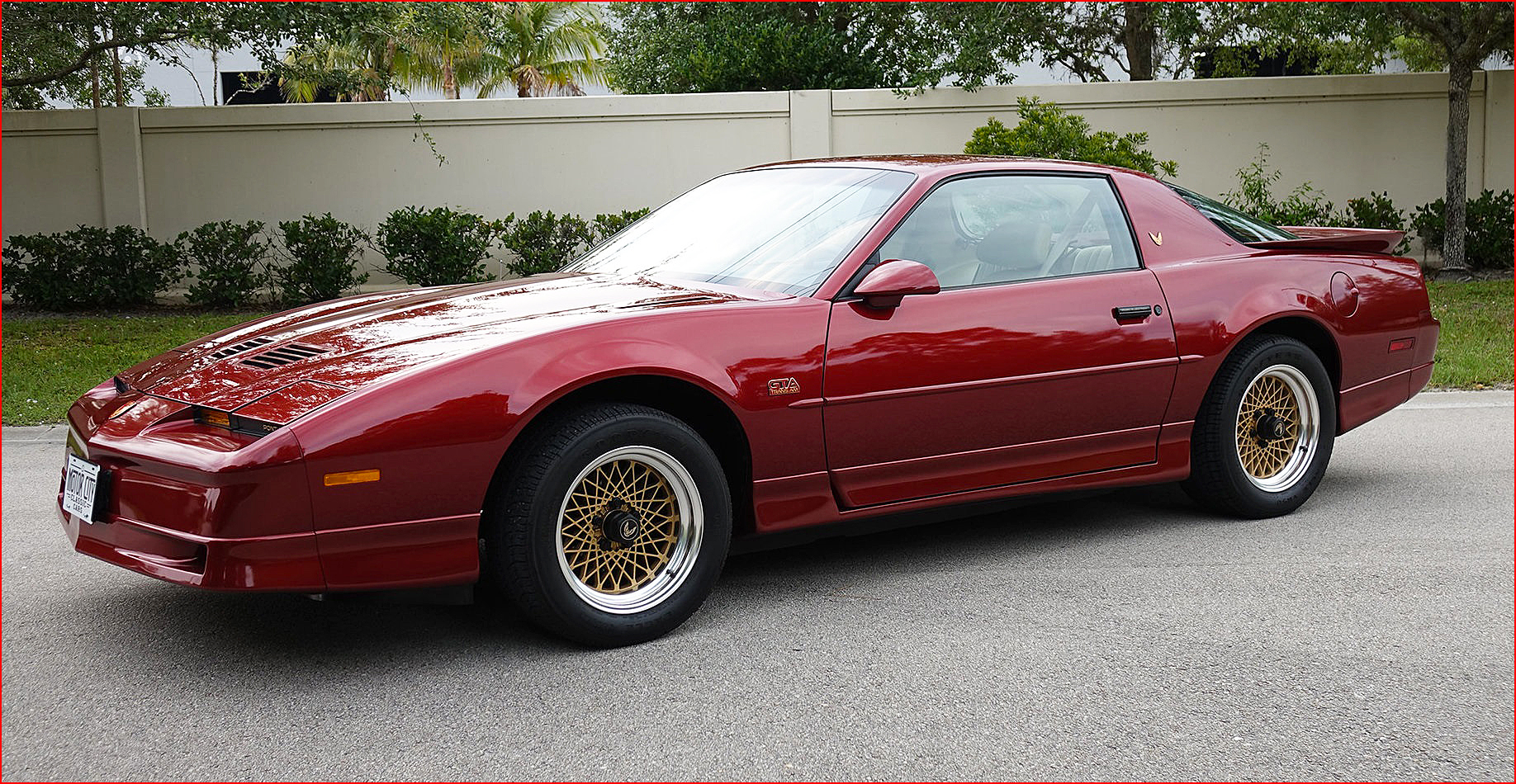
In 1987 the Trans Am GTA was released, and had a 215 HP Tuned Port Injection 350 engine under the hood rather than the vapor-locking L69 305 of the past 2 years; the catch was that if you bought one with the optional T-tops, you got the lowly 185 HP 305 because the lessened structural rigidity of the roof couldn’t handle the extra torque from the 5.7 liter mill. No, the initials did not stand for Grand Theft Auto, that video game didn’t debut until 10 years later. Rumors abounded that the 350 was the same as the Corvette, but the ‘Vette‘s heads were aluminum as opposed to Trans Am‘s cast-iron ones. It did give the big ‘Bird comparable performance to GM‘s flagship sports car; 6.9 second 0-60 and a 15.3 second quarter-mile with the ‘Vette clocking in at a 6.3 second 0-60 and .7 seconds less though the 1/4 mile. It also got a TH-700R4 automatic transmission, new seats with inflatable lumbar and side bolsters, special door panels, body-colored ground effects a special GTA horn button and the WS6 performance handling package. The 305’s in lesser Trans Ams got a performance bump as well, to 185 and 205.
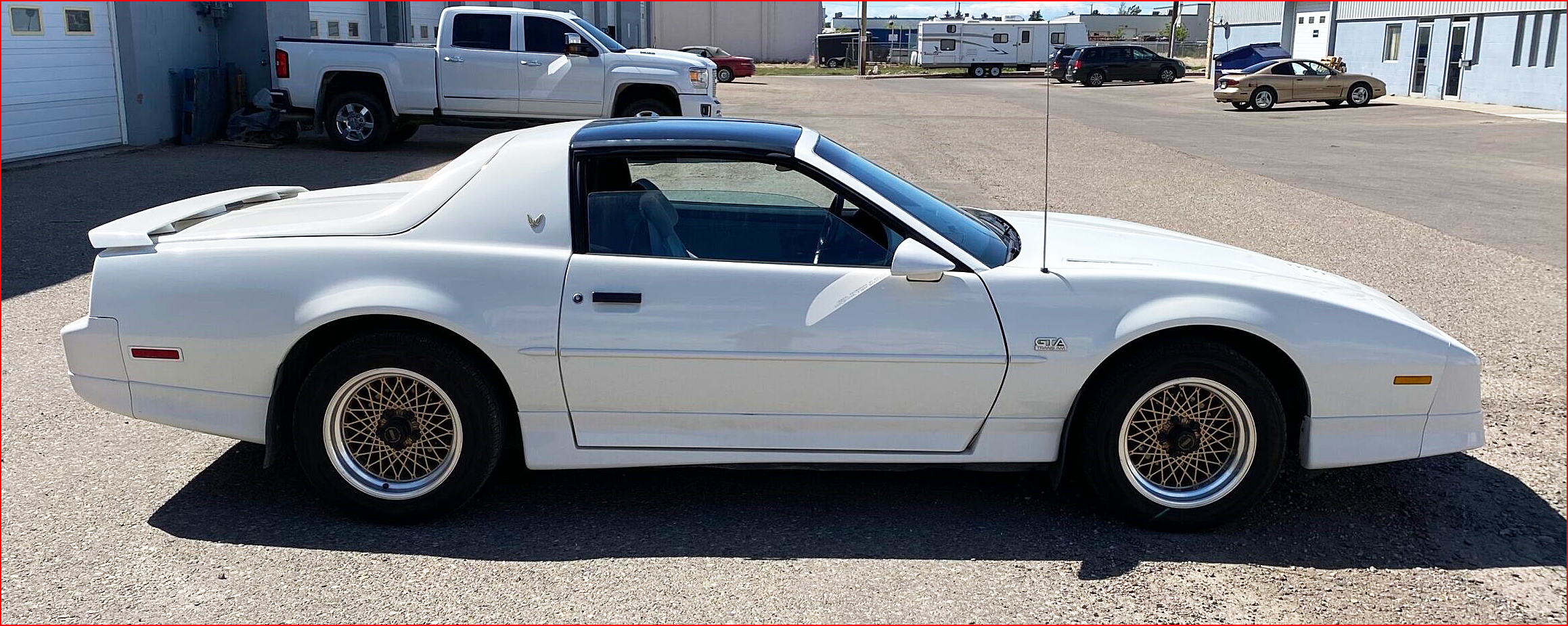
Trans Am was essentially unchanged for 1988, but a new GTA option was a notchback design which did away with the sloping rear glass, making it look less like a Camaro from the side and more like an elongated Pontiac Fiero…although owners insisted that the notchback made it look like a Ferrari. Some buyers were unaware that this model was even available as sales literature was not well disseminated to Pontiac dealers. 718 of these were built, but buyers suffered months-long waits for their cars due to incorrect fitting of the notchbacks. Even then Pontiac had to fix rippling and deforming of the fiberglass rear deck under warranty, sometimes several times. Perhaps they should have asked GM sibling Chevrolet for tips on how to properly work with fiberglass. Barely a handful of notchback GTAs were produced for the 1989 model year due to the poor quality and expensive warranty repairs of the fiberglass rear deck.
A bright red Daytona 500 Pace Car Edition was also released in 1988 with decals similar to the 1981 Pace Car and a black interior. It’s unknown how many were made or how they were optioned. Few originals exist today and a picture was unavailable.
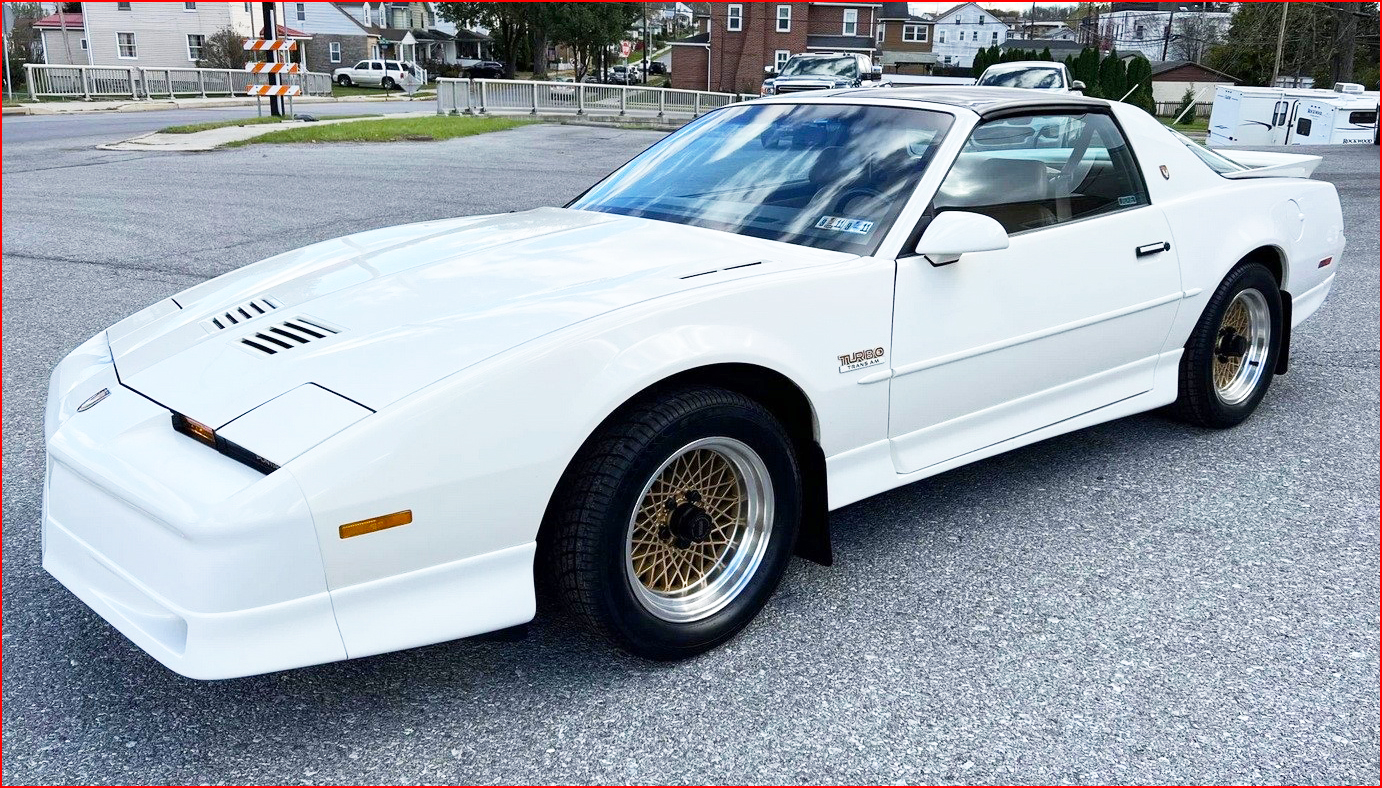
1989 was Trans Am‘s 20-year anniversary, and the commemorative Turbo Trans Am was a special GTA model fitted with the turbocharged Buick 3.8 liter V6 originally developed for their Regal Grand National, courtesy of a partnership between Pontiac and the engineering firm Prototype Automotive Services (PAS). This mill out-performed even the 350 V8, making an advertised 250 HP, although Car and Driver magazine called that figure “exceedingly modest” and estimated the actual output at closer to 300 HP. That would make it the highest-output Trans Am engine since the 310 HP 455 Super Duty of 16 years prior. PAS was sub-contracted to engineer the engine modifications, which included different heads to fit in the narrower Trans Am engine bay. These heads also just happened to have better flow characteristics than the stock Buick heads. Car and Driver put the TTA through its paces with a 4.6 second 0-60 and a 13.4 second quarter-mile at 101 MPH. Motor Trend magazine ran a top speed test in the article “Flat-out Fastest American Cars II – the Sequel” and the TTA was clocked at 162 MPH, the fastest production car in the test. However, it lost the overall crown to the prototype Corvette ZR-1. A one-off High Output TTA produced by PAS with a ZF 6-speed manual transmission, a different rear axle, upgraded pistons and head gaskets, with the turbo tuned for much higher boost and running on 100 octane racing fuel reached a then-astounding 181 MPH. The rarest 20th Anniversary TTAs are the 40 hardtops and three convertible models built by ASC, the rest were made with T-tops. You could also order a stock Trans Am with the Tuned Port Injection 305 in either 170, 190 or 215 HP spec or a 235 HP 350.
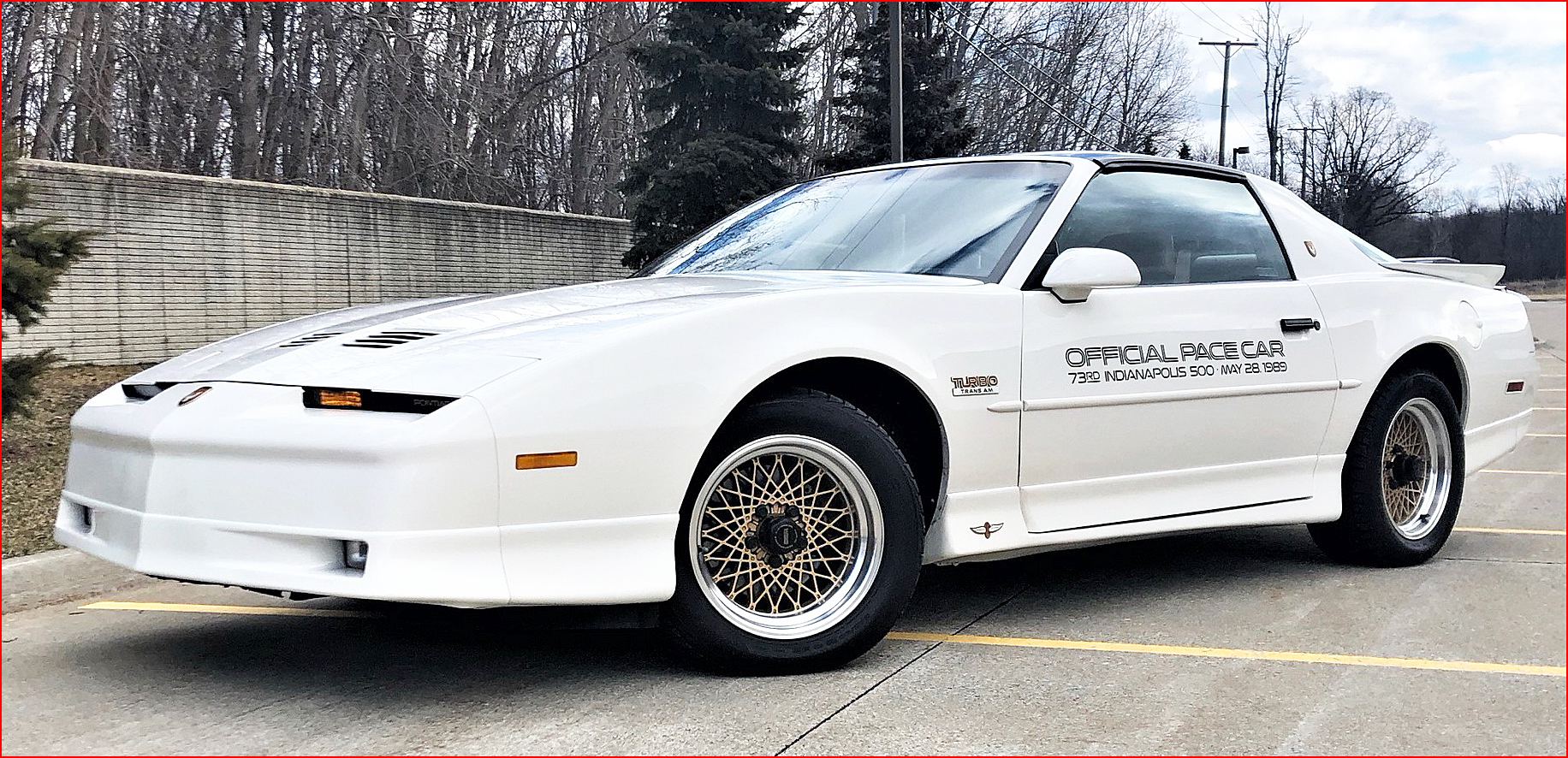
The 20th Anniversary TTA was also chosen as the Indianapolis 500 Pace Car, the last time a Pontiac would have that honor. 1555 replicas were produced for sale.
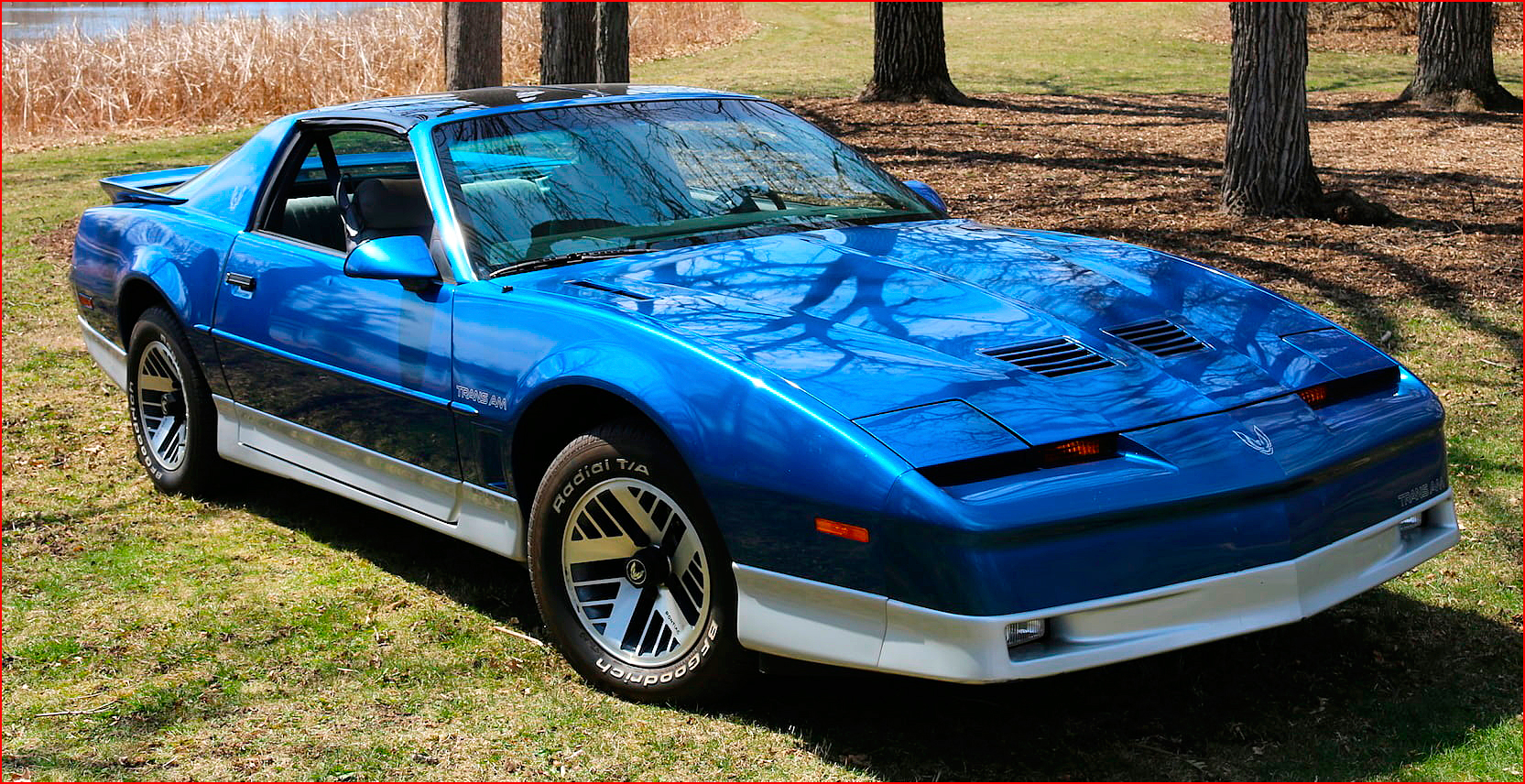
A much less drastic interior re-design came about in 1990, with lower dash and under-dash panels being altered and accessory switches move to above the heater controls. A driver’s side airbag was now standard. The standard in GTAs (and optional in stock Trans Ams) deluxe contoured interior door panels were dropped in favor of the rather cheesy carpeted door panels of lesser Firebirds, which looked completely out of place next to the exotic-looking articulated seats. Pontiac only produced Trans Ams for half the year (and also Chevrolet with the Camaro) as another re-style of the F-Body was on the way. The 305 TPI engines got a horsepower bump to 205 and 225, while the 350 remained at 235 HP. Sadly the Turbo Trans Am with the high-HP V6 was not available as it was a one-year only offering for the 20th Anniversary.
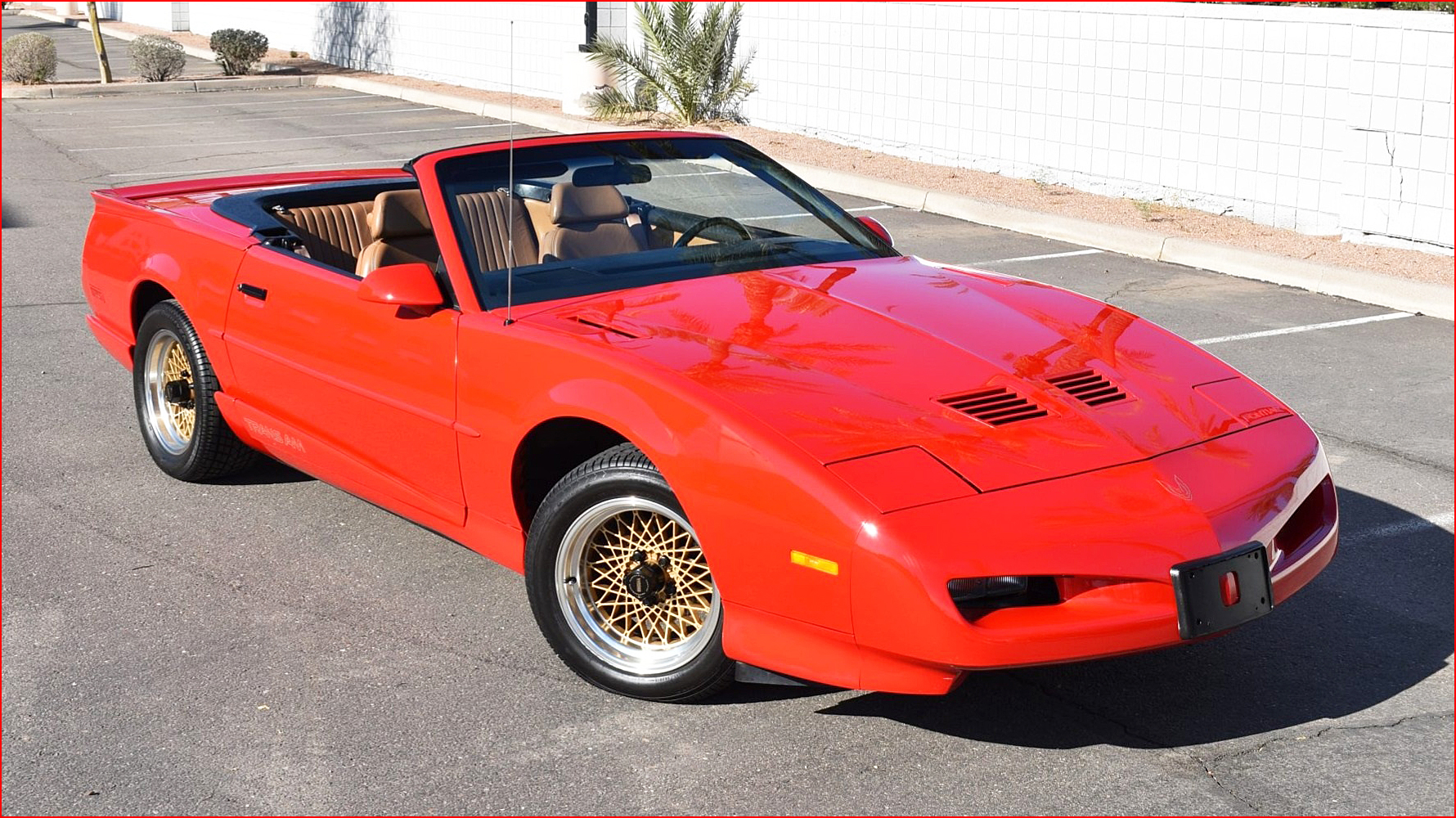
The nose was re-styled for 1991, making it more droopy like the “Banshee IV” show car and flattening the rear wing. This was an interim measure ahead of the major 4th Generation re-style to keep buyers interested in Firebirds. Trans Am‘s ground effects were re-done as well and could be ordered as an appearance package on the base Firebird, but not the Formula. All Firebirds also received new T-tops with better gaskets to reduce leakage. The base 305 remained at 205 HP but the HO version bumped that up to 230, and the 350 finally got more ponies, but only 5.
No major changes were in store for 1992 as the 4th generation F-body was looming on the horizon. This would be the last year for the GTA, hidden wipers, full leather front seats, “High Tech” wheels and the aerodynamic body with the long hood and low roofline. Very few Trans Ams and GTAs were produced as buyers waited for the next generation. The 350 V8 was dropped but the 205 HP 305 and 230 HP HO version remained.
The fourth generation Trans Am would be the most aerodynamically styled yet. Tune in next month to see how the final Trans Am evolved! ✪
Got a Great Car Story? Share it! Reminisce About Your Other Favorite Cars, Too!
Seeyas Again Next Time On FLAT OUT!


