


Hi Folks…And Welcome Again To FLAT OUT!
We’ve Already Covered Chevrolet & Ford In Multi-Part Installments.
To Celebrate Three Years Of Flat Out, It’s Time To Give Pontiac Some Love.
The Pontiac Trans Am (Part 1) – 1969-1981
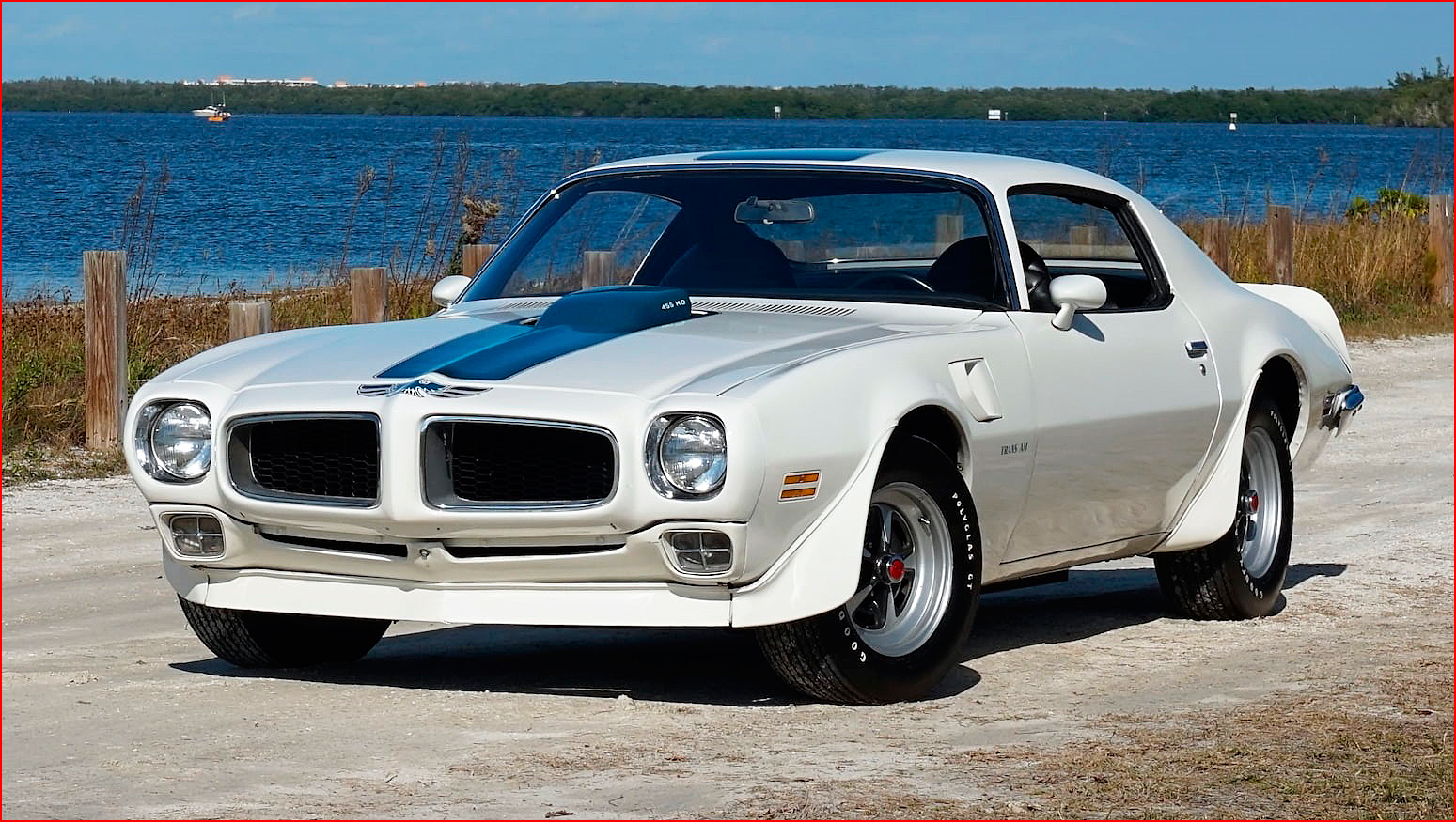
The Trans Am was a specialty performance and appearance package for the Firebird, starting with the third year of Firebird production in 1969. The package upgraded the handling and suspension as well as upping the horsepower of the ‘Bird’s optional 400 cubic inch engine from 325 to 335, or 345 with the Ram Air IV option. Despite the name the car was not initially used in the Trans Am race series because even the Firebird‘s 326 cubic inch engine was over the SCCA‘s 5 liter (305 CI) limit for the series. They were still built on the same F-body platform as their Chevrolet stablemate the Camaro, with similar profiles but distinct front and rear ends.
First Generation 1969
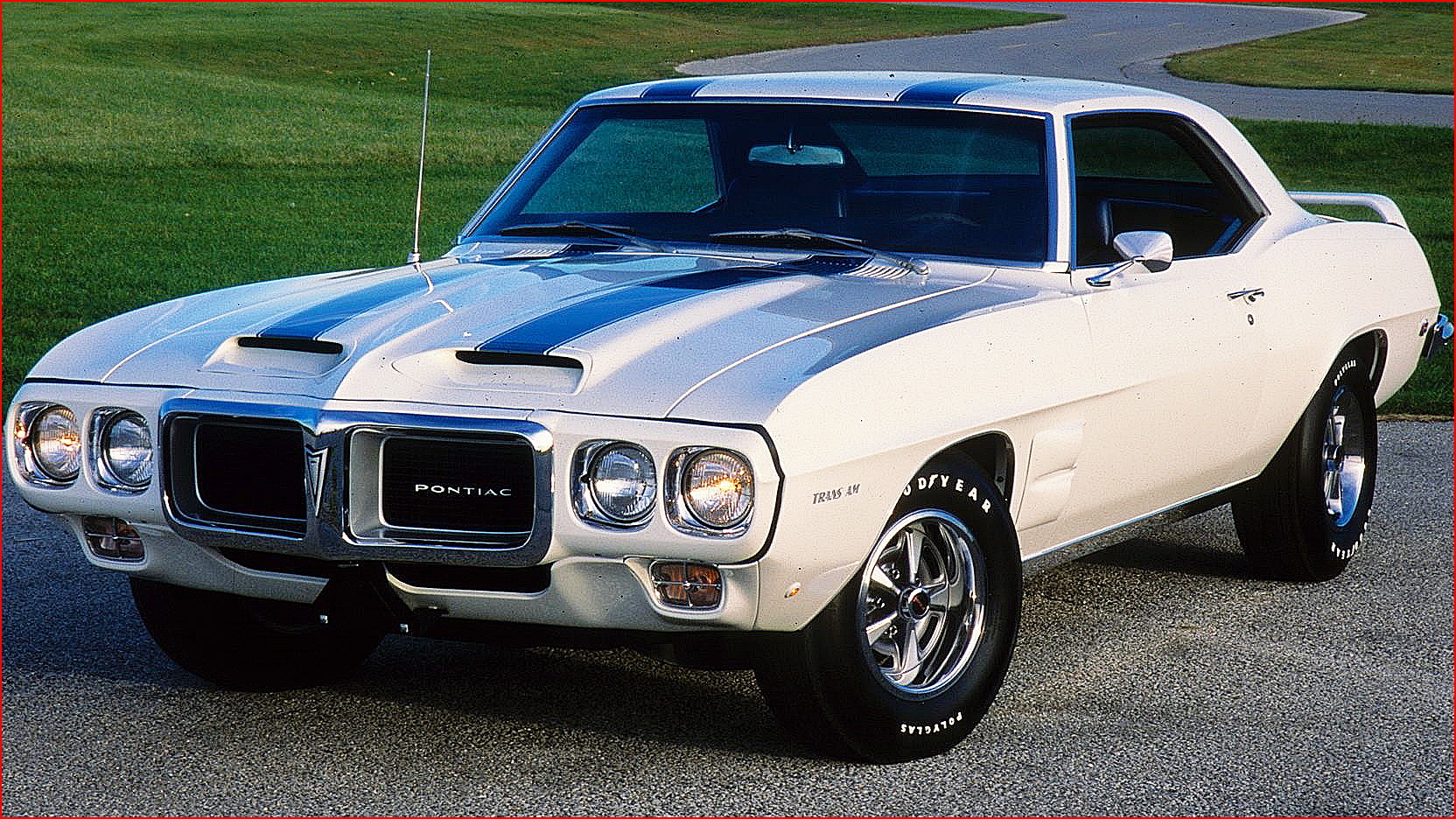
The package included twin racing stripes and twin hood intakes mounted near the leading edge of the hood as opposed to the mid-hood scoops of lesser Firebirds, as well as a rear spoiler that ran the full width of the trunk lid. The intakes could be opened or closed by the driver. The ducting ended near the back of the hood and rear-facing air scoops there helped vent the car’s engine bay. Behind the 400 cubic inch engine was a four-speed manual or three-speed Turbo-Hydramatic automatic transmission and a “Safe-T-Track” (Pontiac‘s version of posi-track) rear end. The 400 also boasted a whopping 430 ft. lb. of torque, giving it a 5.2-second 0-60 time, a 13.8 second quarter-mile and a top speed of 116 MPH. A one-inch front stabilizer bar, heavy-duty suspension system, variable-ratio power steering and seven-inch wide rims featuring Polyglas 14 inch 70-series tires rounded out the package. Unlike their Camaro cousins, first-year Firebirds, including the Trans Am, had body-integrated front bumpers. All 1969 Trans Ams were painted Polar White with blue stripes and had small, very subtle “Trans Am” decals on the front fenders ahead of the wheel arches, unlike the gaudy excesses of the next generation Trans Am decals. The Trans Am package initially received little media hype and no advertising, resulting in dismal sales of only 689 hardtops and 8 convertibles in the first year.
Second Generation 1970- 1981
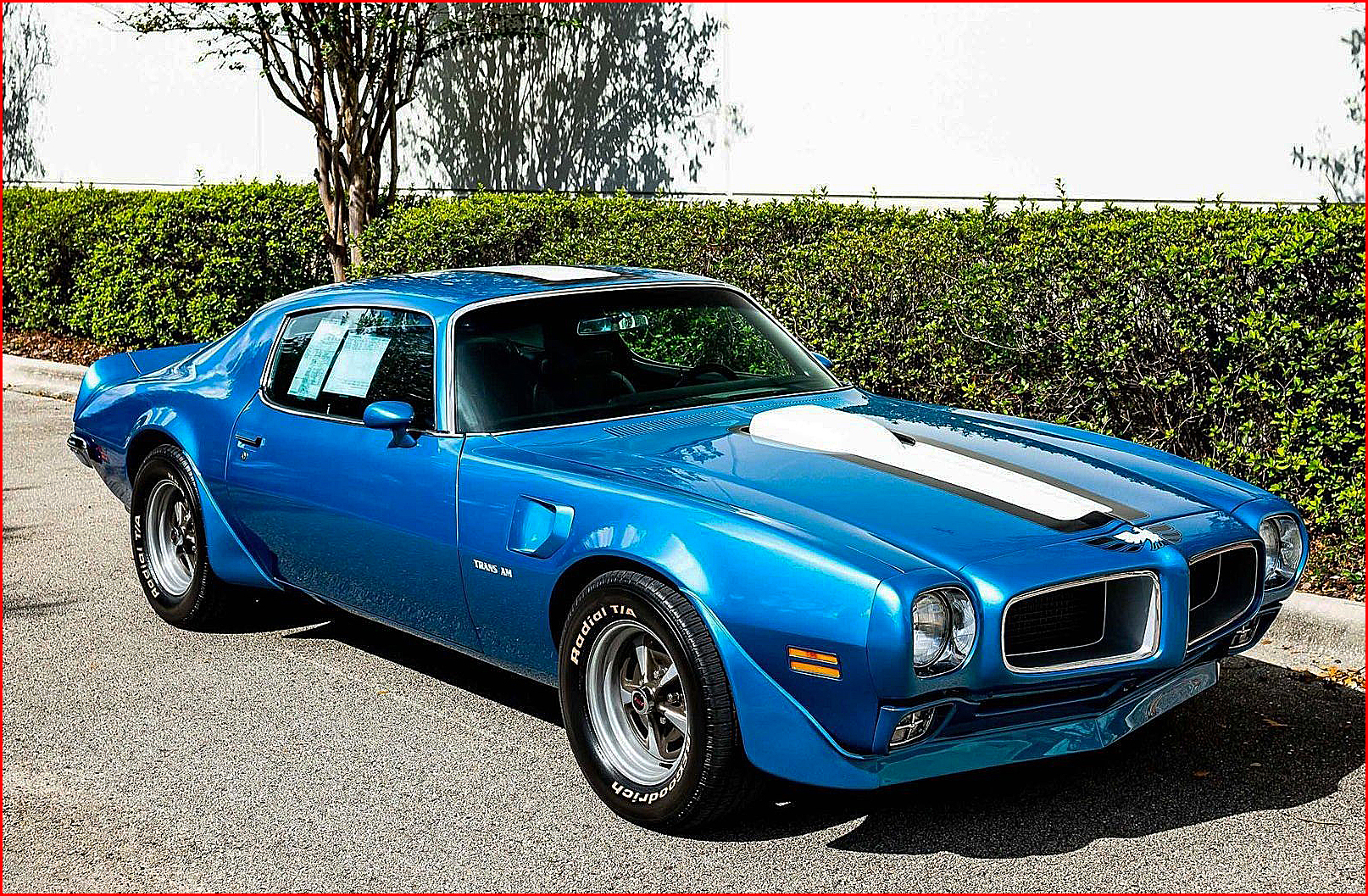
Pontiac and Chevrolet radically changed the F-body for 1970, with Pontiac lengthening the wheelbase by a tenth of an inch but lengthening the car by 8 inches. It gained nearly an inch in width and dropped over 3 inches in height. The “Coke–bottle” styling of the previous generation was replaced by a swoopy, more aerodynamic body. Trans Am remained the top of the line, but new Espirit & Formula models bridged the gap between the base model and the mightiest ‘Bird. Fender flares, a shaker reverse hood scoop and front fender reverse ducts for heat extraction marked the Trans Am from the outside as well as larger “Trans Am” decals on the front fenders (behind the wheel arches this time) and on the rear of the trunk lid…and The Trans Am still lagged behind the GTO in horsepower; however, carrying over the 335 HP 400 (now called Ram Air III) and the 345 HP Ram Air IV engines while the same 400s in the GTO put out 366 and 370 ponies. The disparity in HP was due to a restrictor in the Trans Am‘s throttle linkage which prevented the secondary rear barrels’ throttle plates from opening completely. A simple linkage adjustment would make the big ‘Bird match the GTO‘s horsepower. This would change mid-decade as the GTO faded into obscurity, while the Trans Am remained. The Ram Air IV was exclusive to the Trans Am in the Firebird line and could not be ordered for lesser Firebirds. A functional shaker hood scoop over the air cleaner that poked through a hole in the rear of the hood also differentiated the Trans Am.
The 1971 models were rated in SAE Net horsepower, taking into account the transmission and drivetrain, resulting in lower apparent HP numbers. The Firebird Formula was now available with the Pontiac 455 and 455 HO engines, rated at 325 and 335 Net HP respectively, but the 455 HO was standard on the Trans Am. Not much differed from the 1970 model except new bucket seats in the interior. All 1970 and 1971 Firebirds had their radio antennas mounted in the windshield.
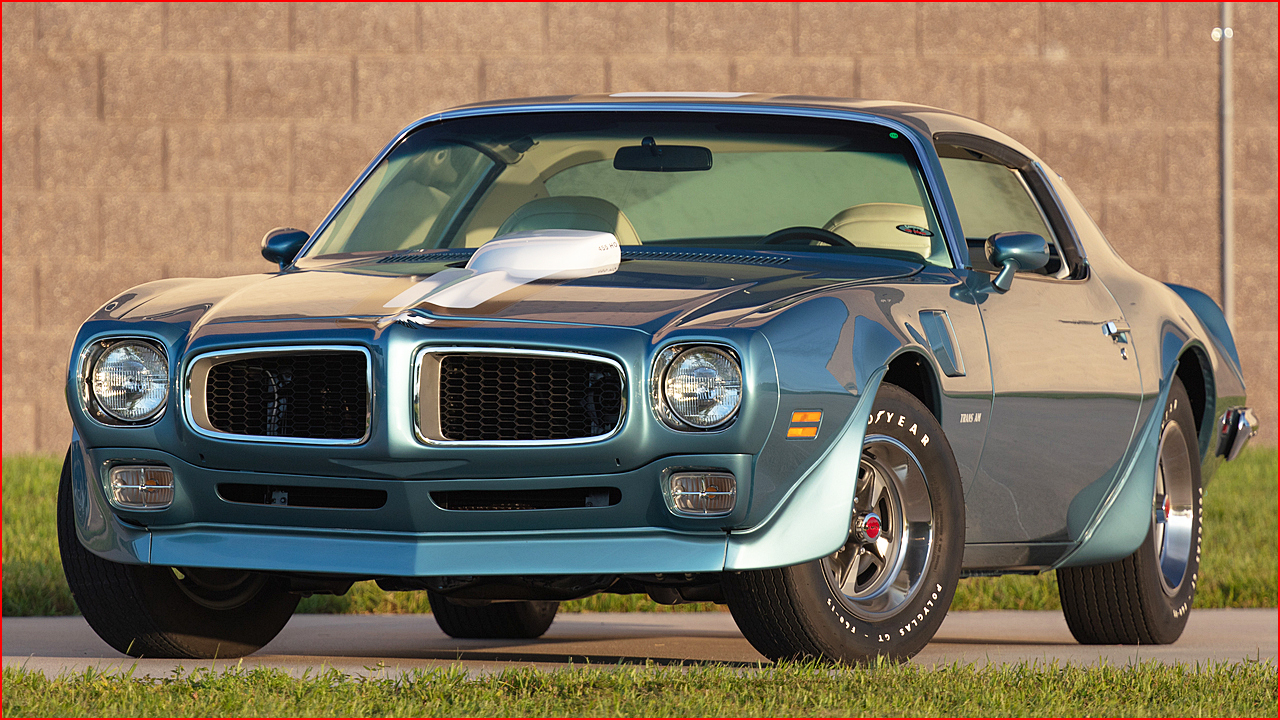
During the 1972 GM strike the F-body twins were nearly dropped from the lineup, but managed to soldier on. A hexagonal grill insert on the nose was all that was different from the ’71 on the exterior. The base L75 455 was dropped, but the 455 HO was still standard on the Trans Am and optional on the Formula. Insurance companies were starting to charge more for high-output engines and consumer interest was starting to wane a bit, so Pontiac advertised that the 455 HO was de-tuned to 300 HP. The actual HO output was the same 335 HP as the ’71, and insurance companies were none the wiser. Starting in 1972 the Firebird was only produced at the Norwood, Ohio plant.
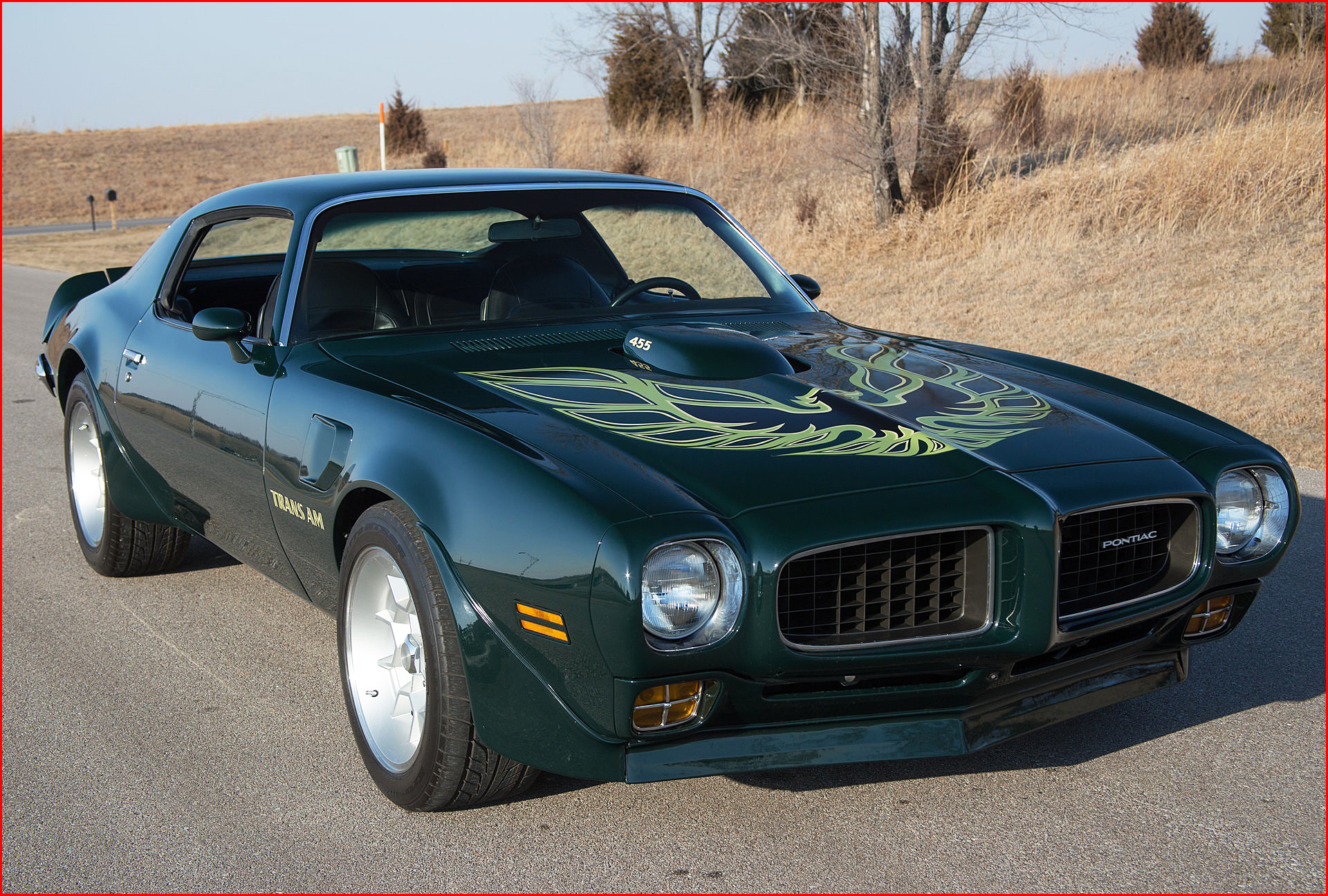
The 1973 model introduced the enormous, completely UN-subtle Firebird decal on the hood as a $55 option, derisively nicknamed the “ScreamingChicken.” Pontiac officially called it the “Trans Am Hood Decal” and the brochure referred to it as “the available giant Firebird hood decal.” Either way it was as hard to miss as a spotlighted disco ball and just as gaudy, and it became yet another glaring symbol of ’70s excess. Previous Trans Ams had a much smaller Firebird decal in front of the hood as an option.
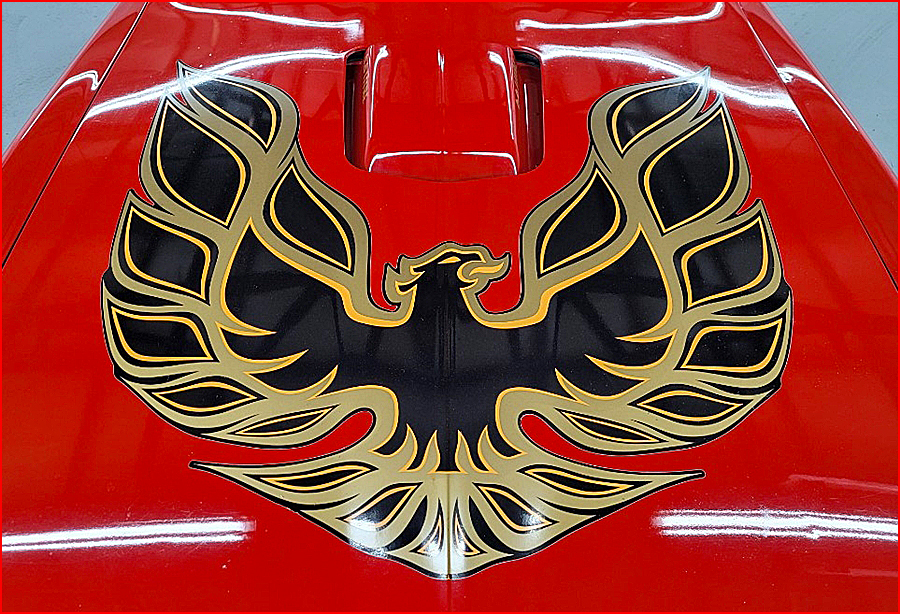
From the rumble of the big-block 455 engine to the “Screaming Chicken” on the hood, everyone knew when a Trans Am came down the street. Unfortunately the shaker hood scoop was now blocked off and non-functional. The 455 was down on horsepower like all 1973 engines, putting out a mere 250 HP in standard form or 310 HP in the new SD “Super Duty” guise that replaced the HO. The SD-equipped Trans Am would still out-accelerate pretty much anything 1973 Detroit hard to offer, with a 0-60 time of 6.2 seconds and a 14.3 second quarter-mile. For comparison, the 1973 top-of-the-line F-body sibling Camaro Z/28 accelerated from 0-60 in 7.4 seconds with a 15.5 second quarter-mile from its 245 HP 350 V-8.
To meet new safety regulations the front bumper had extra steel reinforcements. Two new colors were added, Buccaneer Red and Brewster Green. Better cornering and a more comfortable ride was achieved through the new “Radial Tuned Suspension” which included 15-inch wheels.
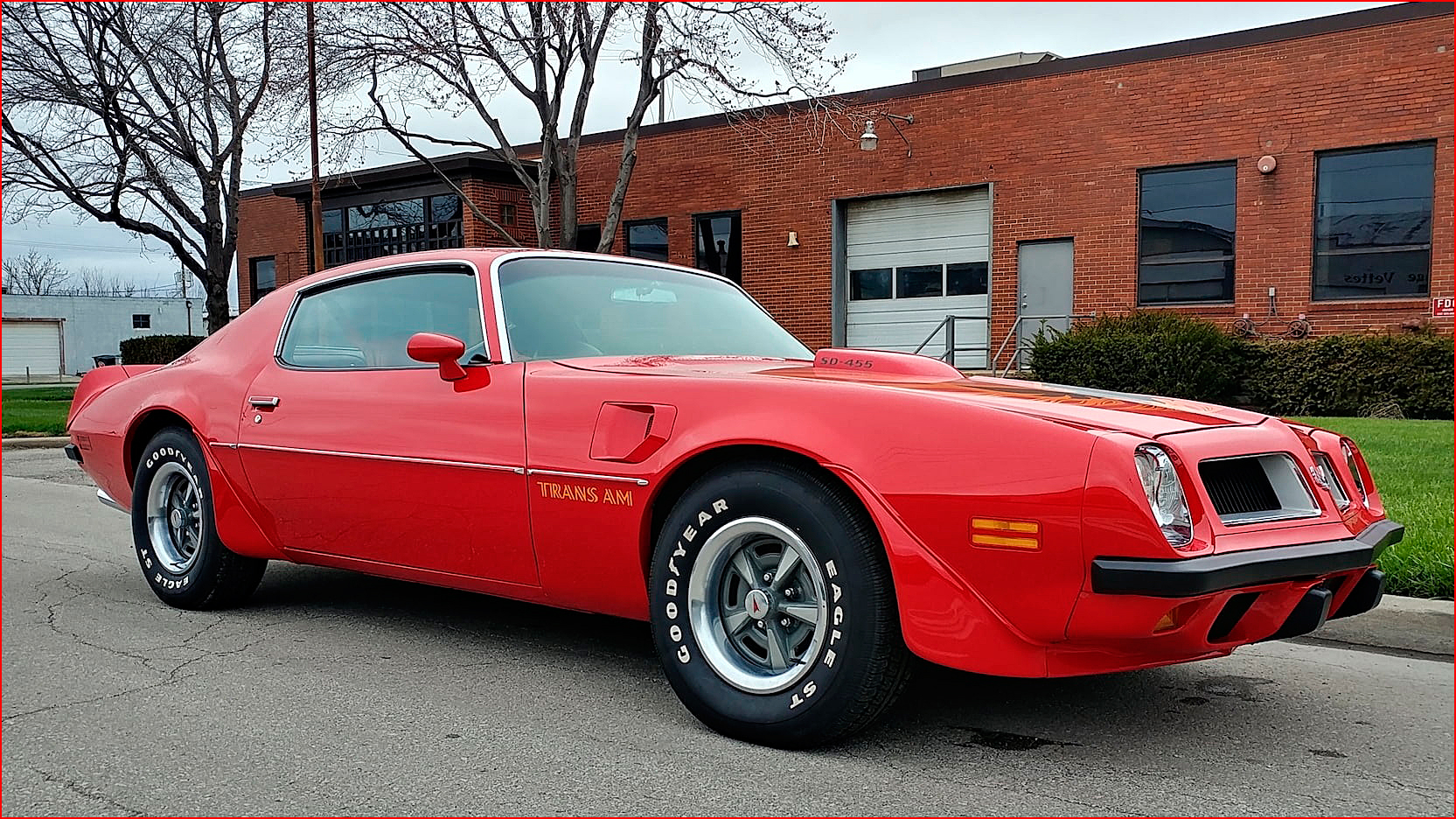
Weight was up for 1974 due to the new, ugly, Federally-mandated 5 MPH telescoping bumpers. These jutted out from the front end requiring a new forward-angled “shovel-nose” grill and headlight surrounds to compensate, replacing the previous vertical front end. The ’73 model was not exactly svelte at 3,790 lbs., but the new bumpers added another 60 lbs. to the ’74. Wider slotted taillights appeared at the rear. The 455 SD was also down 20 HP from the previous year.
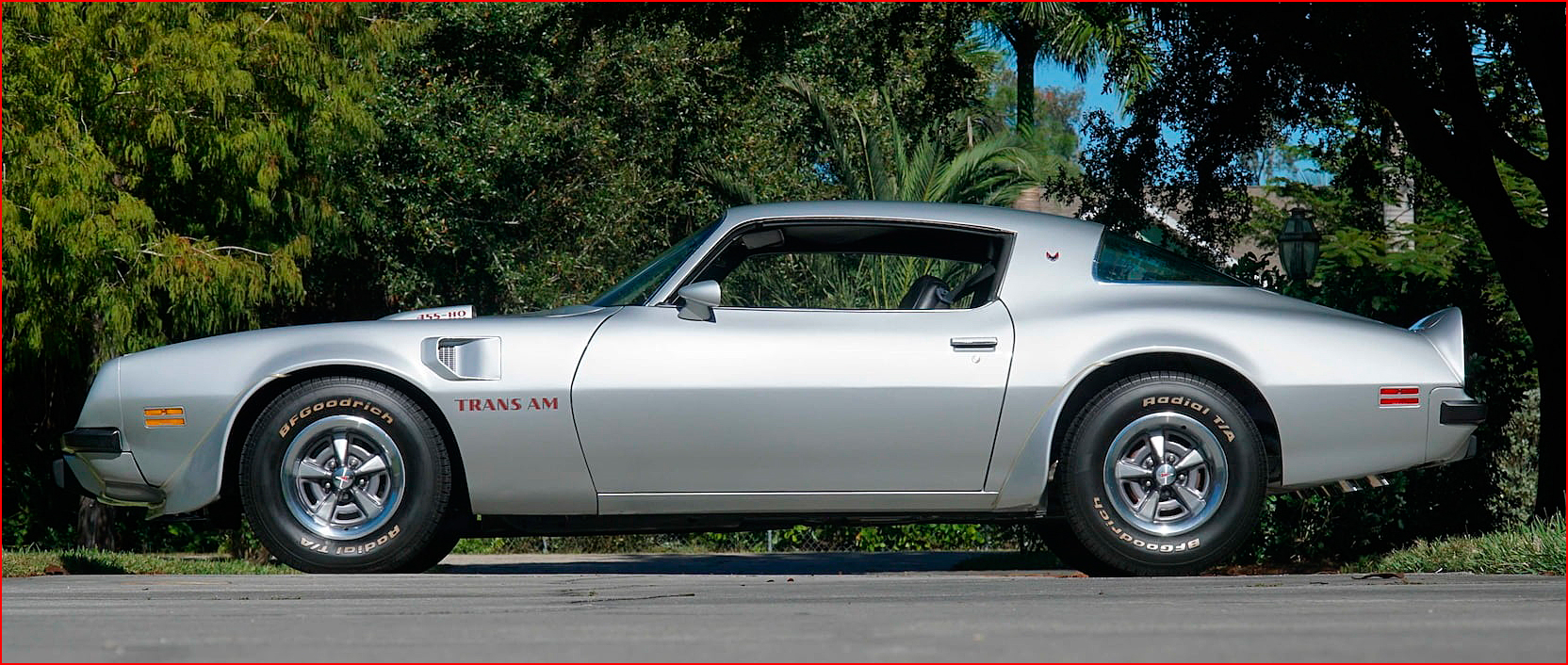
1975 saw new wraparound rear windows that cut into the B-pillar more than previous models. The front turn signals were moved from below the bumper to the grills, this is the only visual indicator of a ’75 from the front. The SD engine and Turbo-Hydromatic 400 transmission were dropped this year as the TH400 transmission would not fit alongside the new Federally-mandated catalytic converter that also robbed horsepower. The 400 engine with a weaker cast block was the only engine available until mid-year when the 455 HO was made available, but with the 4-speed Borg-Warner Super T-10 manual as the Turbo-Hydromatic 350 transmission mated to the 400 would not handle the torque of the 455. This was not the HO engine of 1971-’72, it had a low-profile camshaft and a restrictive exhaust system like in larger body Pontiacs, putting out a mere 250 HP as opposed to the 225 HP of the 400. The advantage was torque, 380 ft. lbs. vs. the 400’s 330. The 15.4 second 1/4 mile time was not that far off from an L82-equipped Corvette at 15.1 seconds, but the L82 was a 350 V-8 in a much lighter car than the porky 3,849 lb. Trans Am.
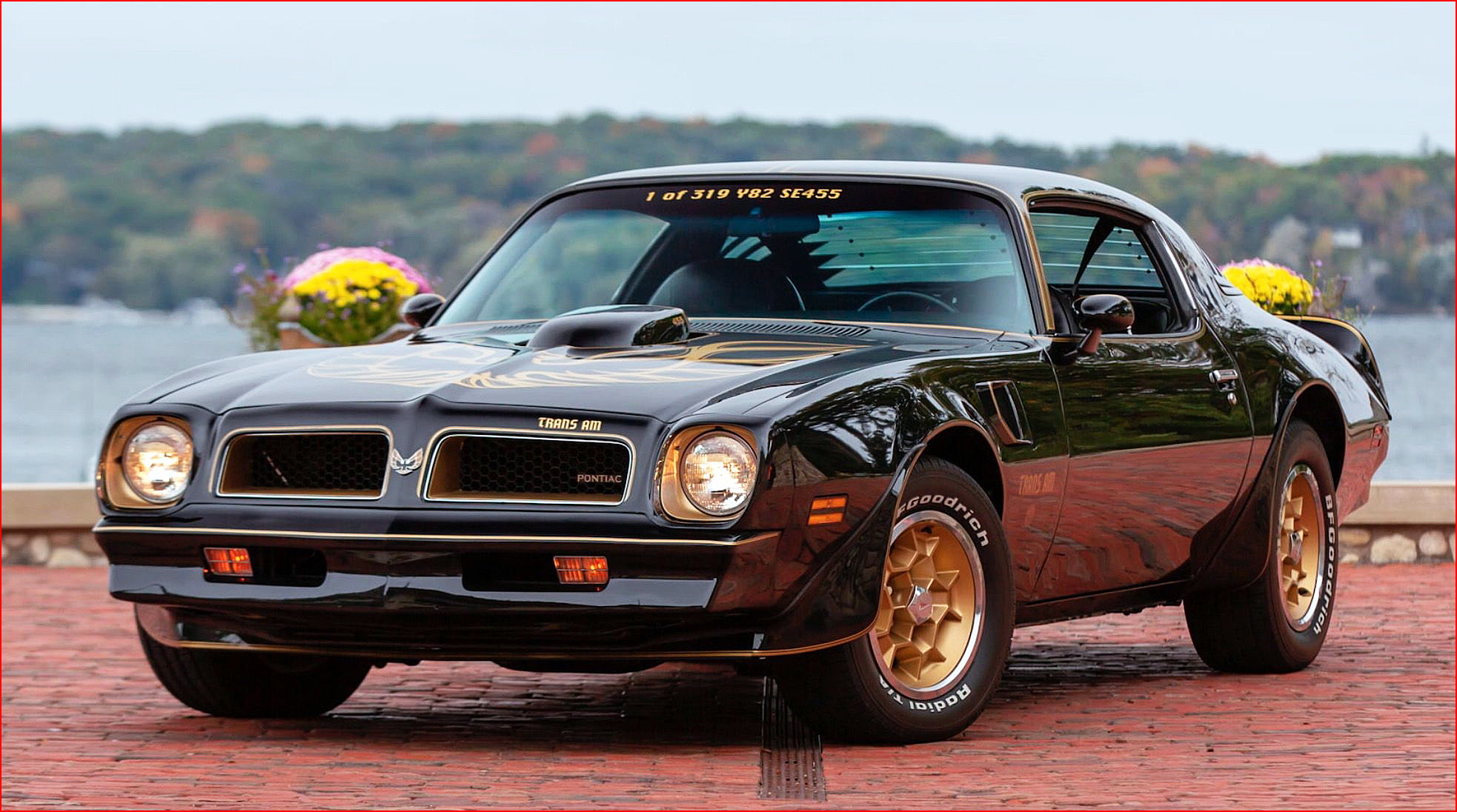
1976 was not only the Bicentennial year, but also the 50th anniversary of Pontiac. To celebrate, they released a special Anniversary Edition Trans Am in black with gold accents, with a limited run of 2,590. This was the first of several black-and-gold Special Editions to come. There was also an optional Hurst T-top, but installation and quality control problems caused this to be restricted to cars made later in the model year. The T-tops became available the following year on lesser Firebirds. This was the final year for the L75 455 as it could no longer meet federal emissions standards even in its de-tuned form. The 400 became the standard Trans Am engine, putting out a mere 185 ponies, where the 455 upped that to 200…not much more. 0-60 and 1/4 mile times were down as a result with the 455 only managing 8.1 and 16.4 seconds respectively, a full second off the previous year for both.
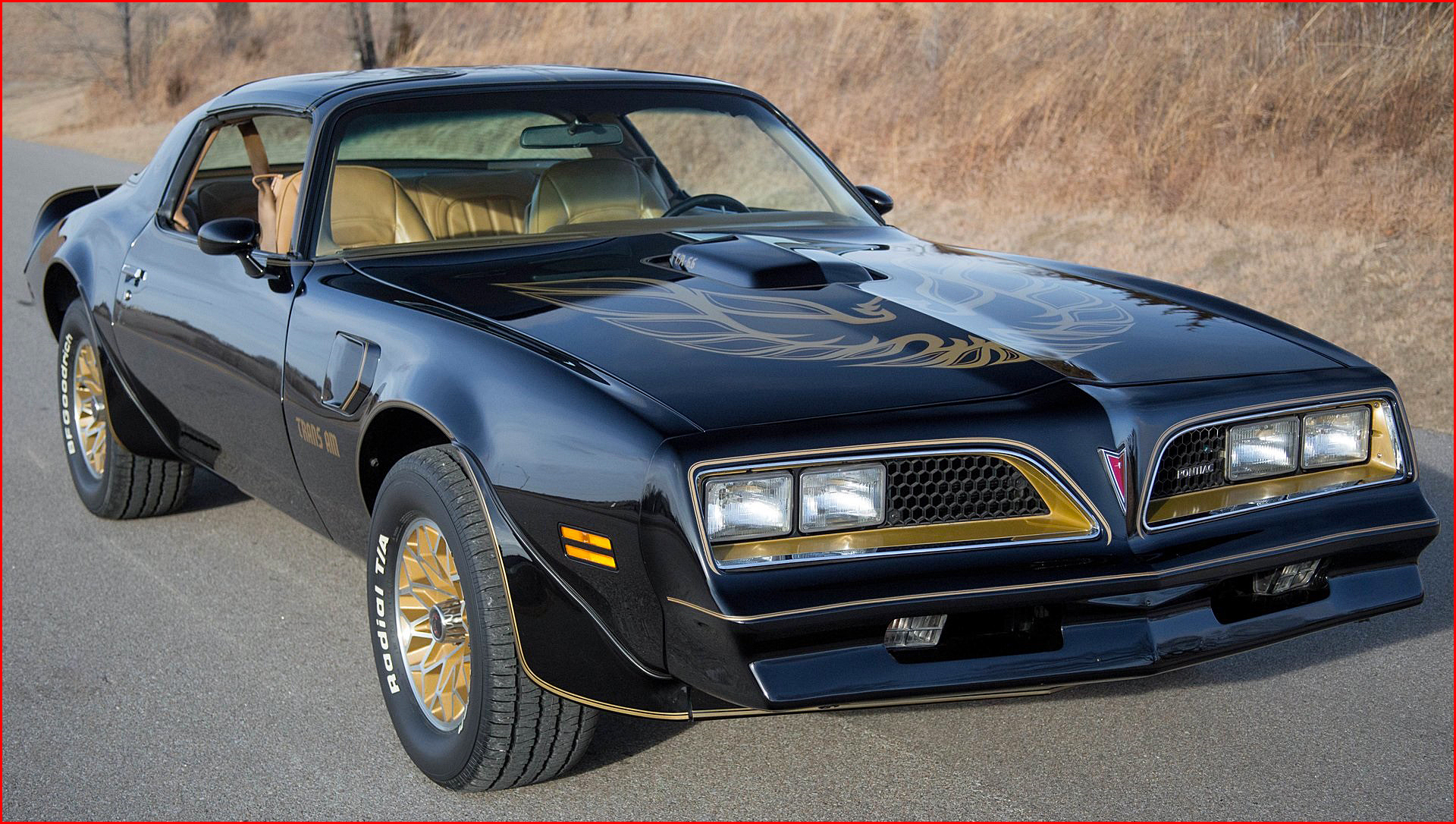
A facelift was in order for Trans Am, and it came in 1977. Four rectangular headlights and a more triangular center nose section followed the trend of other 1977 Pontiacs. The F-body sibling Camaro, on the other hand, retained its two round headlights. The honeycomb “snowflake” wheels that made their appearance on the previous year’s Trans Am became an option for all Firebirds, and the grills reflected the honeycomb styling as well. The Special Edition black-and-gold model was back for a second year, famously driven by Burt Reynolds in the Smokey and the Bandit film which raised the profile of the Special Edition and Trans Ams in general, resulting in higher sales. The 455 was gone, replaced with three different engines; the 180 HP L78 400, the optional (and extra cost) 200 HP W72 400 with chrome valve covers and the Oldsmobile-sourced L80 403. The 403 was brought over from Olds to satisfy stricter emissions requirements in California and high-altitude states. Oddly enough, it produced 5 more HP than the standard L78 400 and had the same 320 ft. lb. of torque at a more usable 2,200 RPM. As a result, the cubic-inch “455” decal on the shaker hood scoop was replaced with a more generic “6.6” (for liters displacement) decal or “T/A 6.6” for the now top-of-the-line W72 engine. Remember, we were all supposed to be converting to the metric system in the mid-’70s! The scoop itself was more low-profile than previous Trans Ams.
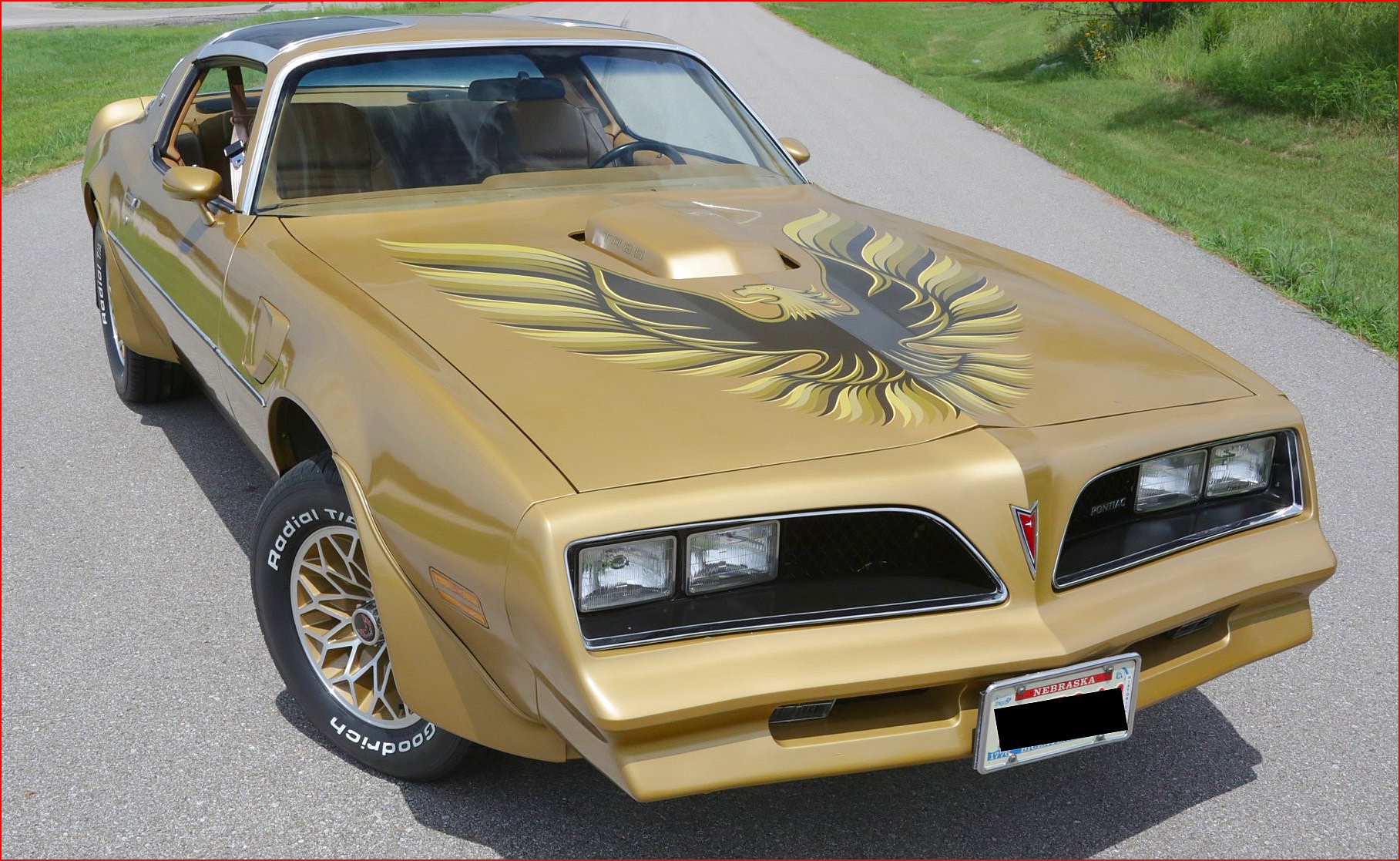
Crosshatch-pattern grills replaced the honeycomb design for 1978, and a new block-style logo for the “6.6” decal on the scoop replaced the more ornate “looping” script on previous models. GM‘s Fisher body division now produced the T-tops instead of Hurst. The W72 400 engine received a new, stronger block casting and horsepower was up 10% to 220 thanks to longer camshaft duration and different tuning of the Rochester Quadrajet carb. Power for the L78 and L80 engines remained at the previous year levels. A new handling package with a larger diameter rear sway bar, additional frame bracing and a tighter-ratio steering box was made available, option code WS6. Rear disc braking had to wait until the following year due to manufacturing delays.
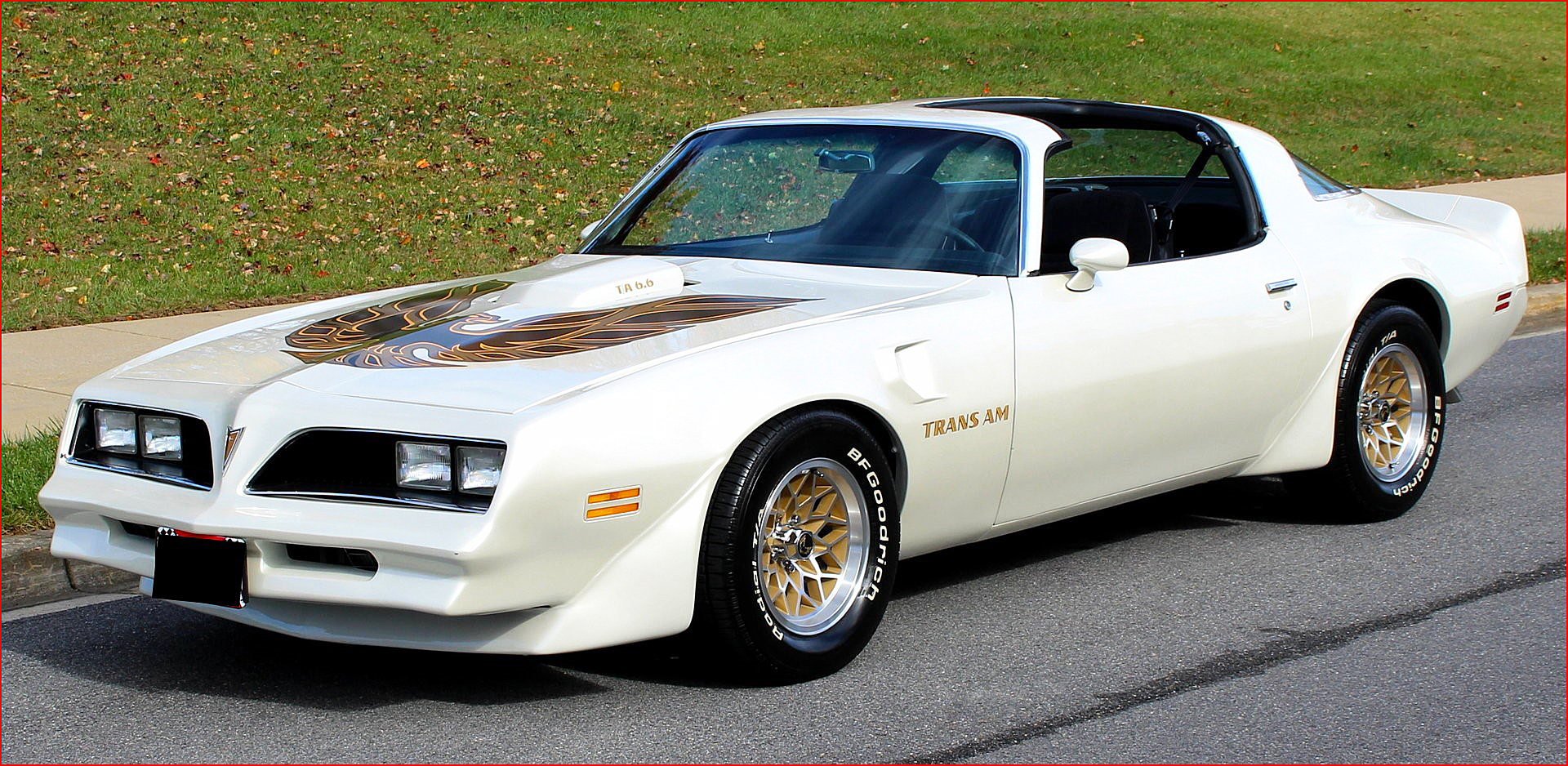
1979 was the Trans Am‘s 10th anniversary, and was also the last gasp for the big-blocks. The 220 HP W72 400 was only available for a limited time as an option, and only with the Borg-Warner Super T-10 four-speed manual, although dyno testing by the NHRA rated the W72 at 260-280 HP. W72 equipped Trans Ams would still post a respectable-for-the-time 7.7-second 0-60 and 16-second 1/4 mile. It was a far cry from the glory days of the 455, but still top of the heap as far as late-’70s Detroit performance went. For comparison, the top-of-the-line F-body sibling Camaro Z28 could only manage a 9.1 second 0-60 and 17-second 1/4 mile from its 175 HP Chevrolet 350 V-8. It’s no wonder that the car in Sammy Hagar’s 1979 tribute song Trans Am (Highway Wonderland) had a custom license plate that read IEATZ28.
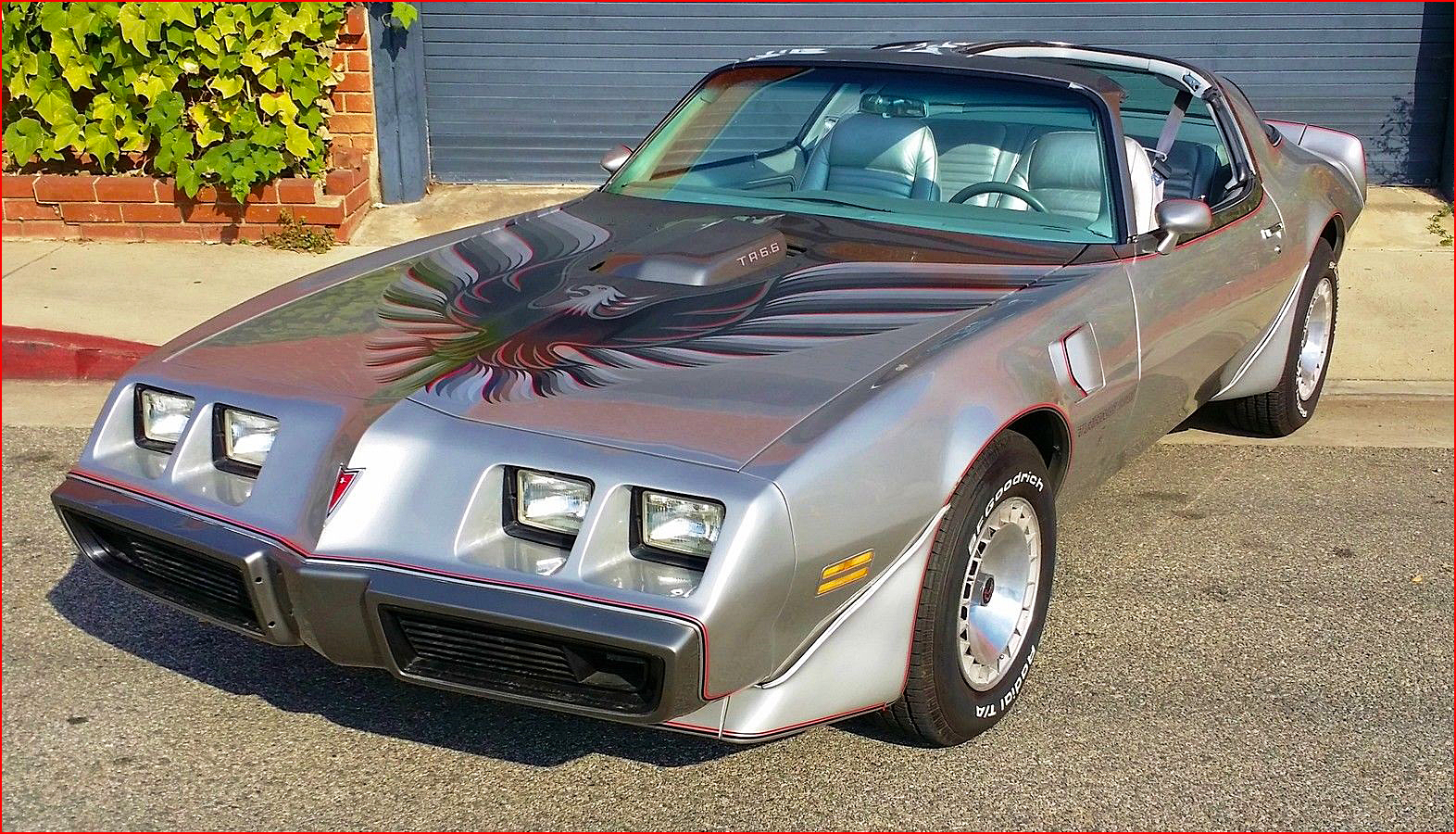
The Oldsmobile L80 403 became the standard engine with the same power level as before. A credit-option small-block Pontiac 301 with a paltry 150 HP was also available if you wanted to cheat yourself out of the final big-block Trans Am experience. The limited-edition 10th Anniversary package was available in Platinum Silver paint with charcoal-gray upper paint accents, mirrored T-tops, silver leather seats and a larger Firebird hood decal that extended off of the hood and onto the front fenders. Only 1,817 of the 7,500 10th Anniversary Editions were equipped with the higher-horsepower W72 400 engine. The WS6 handling package was again available, and Car and Driver magazine named the Trans Am with this package the best-handling car of 1979.
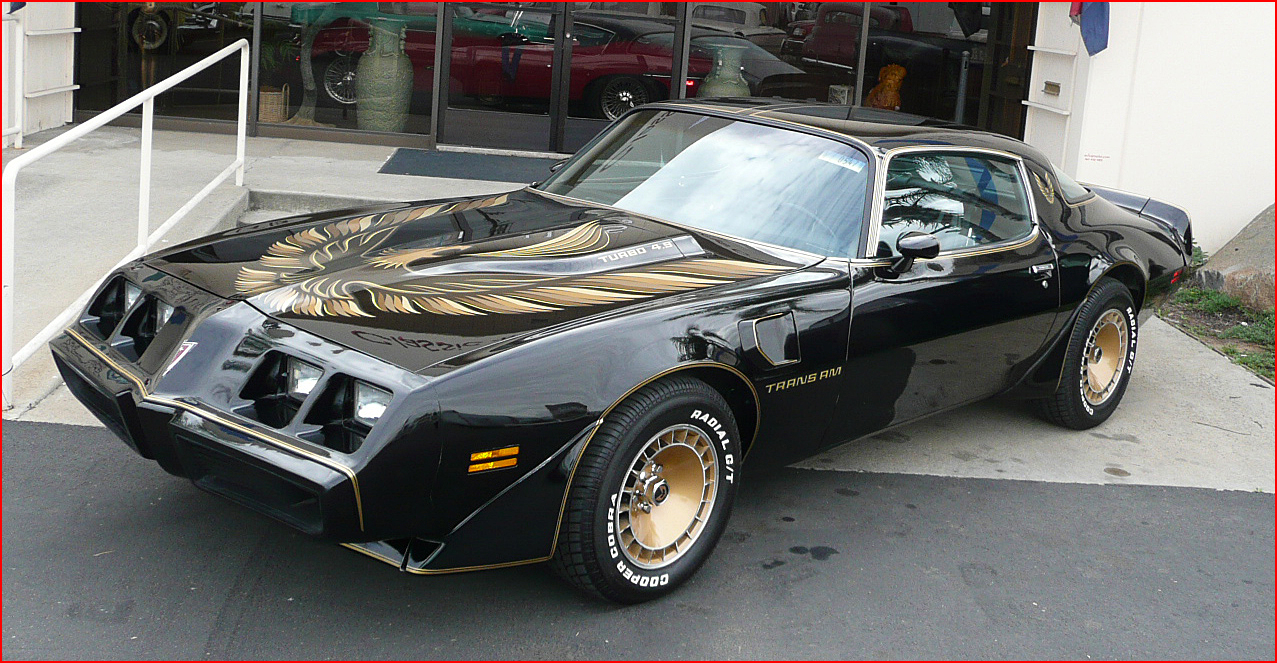
Ever-increasing Federal emissions regulations led Pontiac to drop all large-displacement engines in 1980. The 1979 credit-option 301 became the standard engine with a HP boost to 170, with the under-powered Chevrolet 305 small-block, at least for the porky Trans Am and its Camaro cousin, and its anemic 150 HP as an option. The only saving grace for Trans Am was the top-of-the-line 301 fitted with a Garrett TB305 turbocharger. This Turbo Trans Am posted a respectable-for-the-time HP number of 210, just 10 ponies shy of the previous year’s W72 400 and had an offset bulge in the hood to match the offset carb to accommodate the turbo. An 8-second 0-60 and 16.1 second 1/4 mile were comparable to the ’79 W72-equipped Trans Am as well. The Turbo Trans Am was also released in a special black-and-gold Bandit Edition this year.
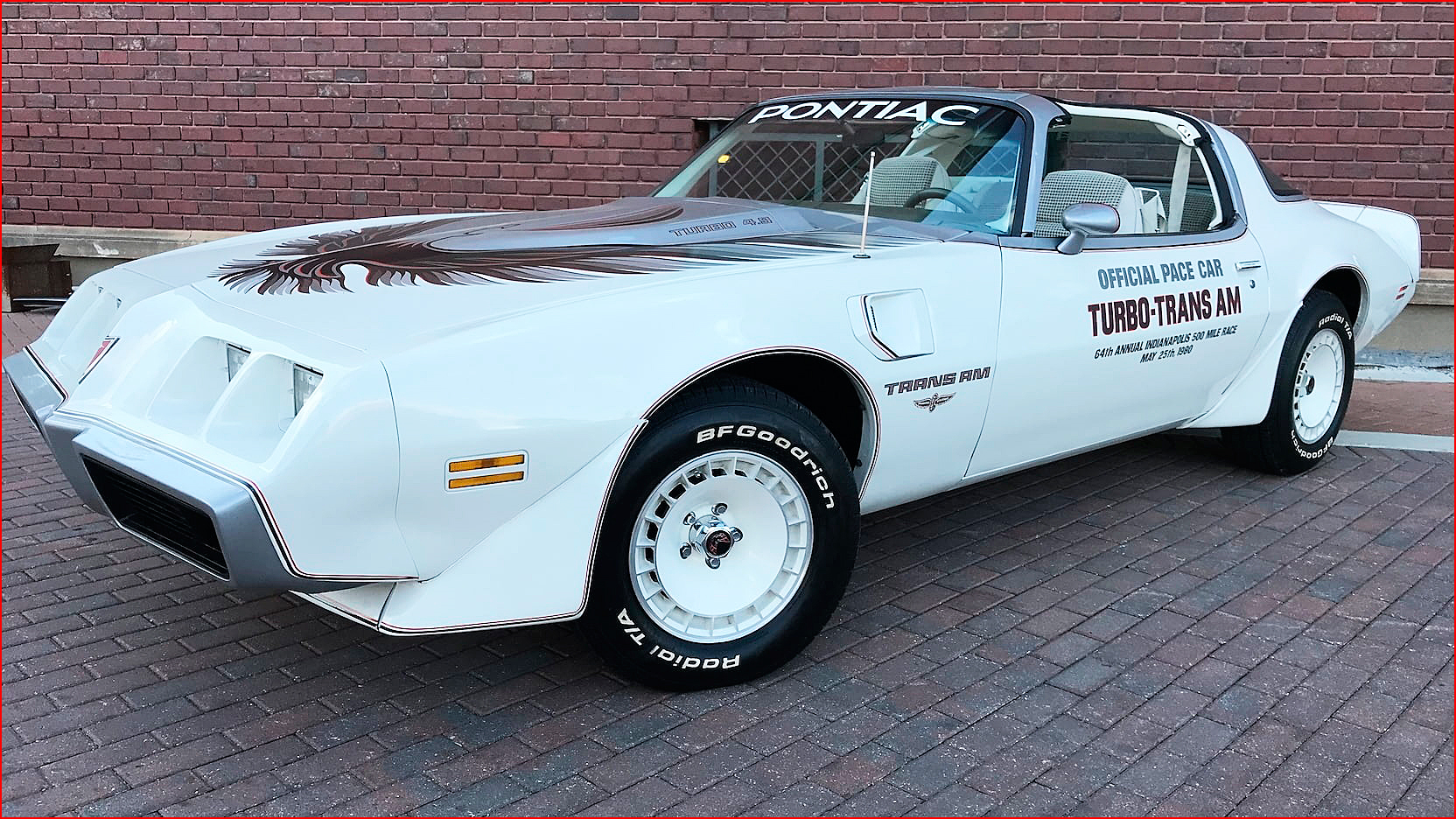
The Turbo model was also the official pace car of the 1980 Indianapolis 500, and Pontiac released a special Official Pace Car edition of the Trans Am to celebrate and boost sales, but it still only had 210 HP to show for the graphics and fanfare. No four-speed manual option was available in 1980, only the three-speed Turbo-Hydromatic 350 automatic.
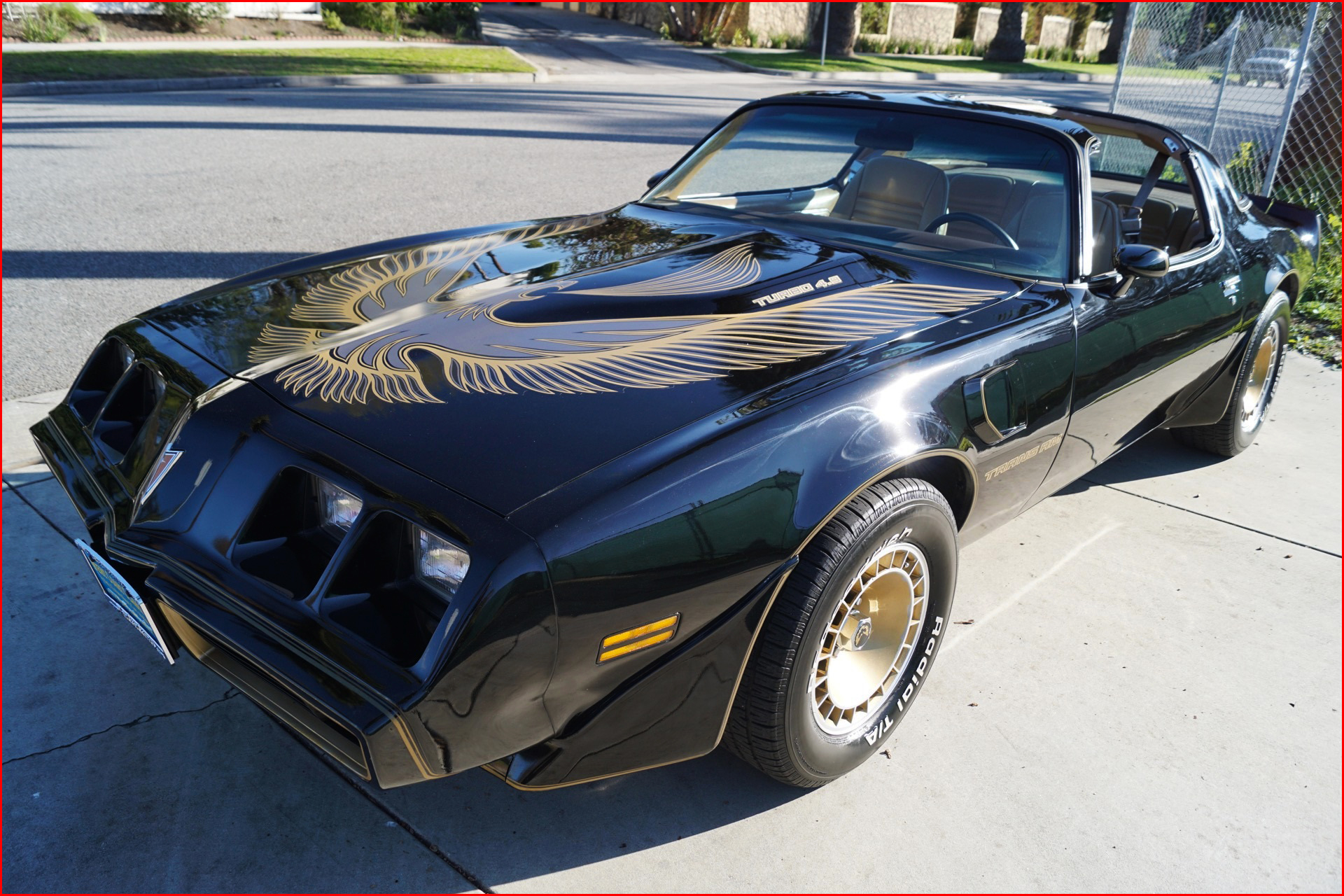
1981 was the last of the 2nd-gen Trans Ams. Engine options were unchanged, but unlike 1980 the Borg-Warner Super T-10 four-speed manual was back…but only if you opted for the 150 HP 305. The hood decal was slightly re-styled and all Firebirds, including Trans Am, wore a silver embossed Firebird decal on the fuel filler cap.
I never owned a Trans Am or knew anyone who did, although I knew several people who owned 2nd-gen Firebirds and I rented a 2nd-gen Firebird for a couple of weeks when I was in the Navy. A side note about the Chevrolet 305 found in some late 2nd-gen models: A kid I went to high-school with was given a brand-new Camaro Berlinetta for his 16th birthday by his Chevrolet dealer father, but with the infamously doggy 305 engine. He thought he was hot stuff, until I thoroughly embarrassed him by walking away from his precious Camaro in an impromptu drag race with the 4-cylinder Euro-spec Fiat 124 Sport Coupe that my Dad have given me. Little did he know that my car had almost as much horsepower as his and the Fiat was 1,400 lbs. lighter than his Camaro. He never lived it down or forgave me and was mad at me for the rest of the school year until I graduated, but that’s okay…his circle of beautiful-people rich kid and jock friends didn’t exactly intersect with my circle of musicians, stoners and assorted high-IQ misfits.
Many more changes were in store for the third generation Trans Am. Tune in again next month for Part Two to see how the Trans Am evolved! ✪
Got a Great Car Story? Share it! Reminisce About Your Other Favorite Cars, Too!
Seeyas Again Next Time On FLAT OUT!
It’s President Jeff D. Boofer


