



▶️ BONUS SUNDAY FEATURE: CLICK HERE TO READ
The False Gospels Of Transhumanism

kkk
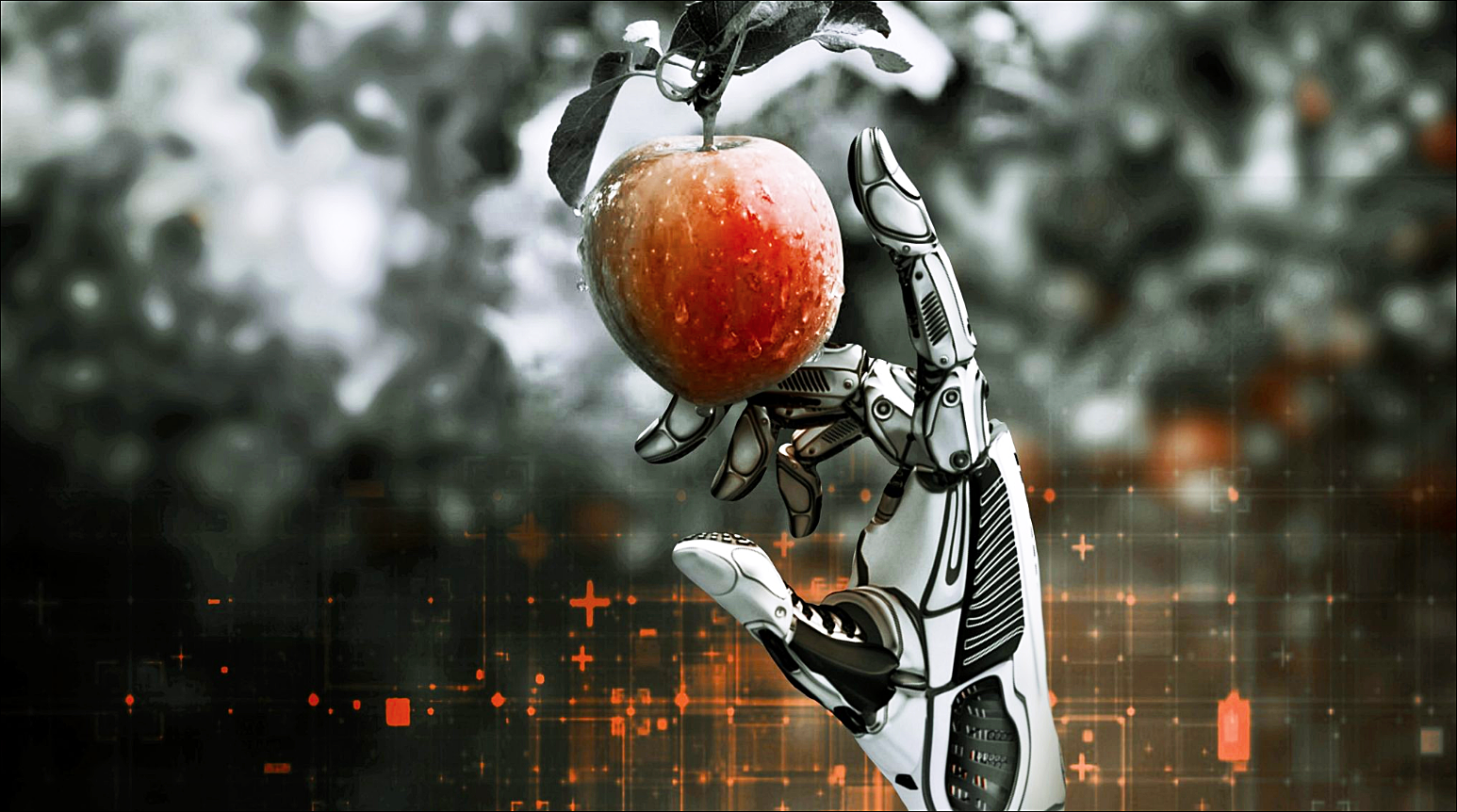
am slowly turning myself into part machine,” a young man named Stephen Ryall told a news reporter in 2019. The news story identified Ryall as one of an increasing group of people who are implanting computer chips in their bodies to pursue a transhumanist vision.
According to a statement by leading transhumanists:
“Transhumanism is a way of thinking about the future that is based on the premise that the human species in its current form does not represent the end of our development but rather a comparatively early phase.”
As breakthroughs in gene editing, artificial intelligence (AI), brain-computer interfaces, and other emerging technologies unlock avenues for altering humanity, Christians will increasingly confront transhumanist views. To respond, Christians must first understand transhumanist perspectives in contrast to God’s Word.
Accordingly, the following discussion examines how three different scholars promote false transhumanist “gospels.” Philosopher Nick Bostrom endorses transhumanism on the grounds of improving humanity’s condition. Computational neuroscientist Anders Sandberg endorses transhumanism on the grounds of human rights and freedoms. And theologian Ronald Cole-Turner endorses “Christian transhumanism” on the grounds of theistic evolutionary thinking.
Each of these transhumanist “gospels” stems from different assumptions about humanity’s essential nature, core problem, redemptive hope and ideal destiny. A concluding overview of how the true gospel’s framework of Creation, Fall, Redemption and Restoration counters these assumptions will reveal a Biblical response to transhumanism.
✪ Part 1: Bostrom & The Quest For Utopia
Bostrom describes transhumanism as a philosophy, movement and “family of evolving worldviews.” He also clarifies that “transhumanism is a naturalistic outlook” with “roots in secular humanist thinking.” While denying that transhumanism is a religion, Bostrom recognizes that transhumanism may fulfill certain “functions that people have traditionally sought in religion.” These functions include “a sense of purpose and direction” guided by a future vision involving “very long lifespan, unfading bliss, and godlike intelligence.”
Bostrom maintains that transhumanism’s quest to achieve these goals “in this world” through human effort sets transhumanism apart from religion. However, transhumanism certainly addresses basic worldview questions including, “What does it mean to be human? Where did we come from, where are we heading, and how should we live?” As a comprehensive worldview, transhumanism satisfies the Merriam-Webster dictionary’s third definition of religion as “a cause, principle, or system of beliefs held to with ardor and faith.”
Bostrom’s writings illustrate how transhumanism functions as a worldview by offering a metanarrative (“big picture” story) of humanity’s nature, problem, hope, and destiny. Regarding human nature, Bostrom famously stated, “Transhumanists view human nature as a work-in-progress, a half-baked beginning that we can learn to remold in desirable ways. Current humanity need not be the endpoint of evolution.” From his evolutionary worldview, Bostrom sees human bodies not as the completed work of an all-wise Designer but as coincidental material that we can reconfigure. Humans, by this thinking, are not created beings but self-creators.
By believing that humans can recreate themselves, Bostrom embraces a poietic rather than mimetic perspective of reality. A mimetic outlook views nature (including human nature) as already reflecting a given, purposeful orderliness. In contrast, a poietic view sees nature as malleable, shapable substrate from which individuals must construct their own meaning. Bostrom’s poietic outlook rejects the idea that the facts of human biology correspond to specific purposes for humanity in ways that merit specific responses from humans. (For example, the fact that humans are males and females would not correspond to a Creator’s purposes for marriage or family. So we would not be morally accountable to respond by behaving in line with these purposes.)
Such thinking leads to a division between what C. S. Lewis termed “the world of facts” and “the world of feelings.” This “fact-value divide” underlies transhumanism, which presumes that individuals can reconfigure the facts of their biology to suit their own internal values. Values overrule facts.
Along these lines, Bostrom’s naturalistic worldview portrays humans as biological machines who can separate their psychological software from their bodily hardware—perhaps literally.
Bostrom suggests that conscious human minds may ultimately be “information patterns” that could operate on a computer chip instead of a brain. Someone who “uploads” her mind into cyberspace could “live” indefinitely in virtual reality, potentially interacting with physical reality via a “rented” robotic body. Such a person would be a type of “posthuman,” which Bostrom defines as a being with at least one “general capacity greatly exceeding the maximum attainable by any current human being without recourse to new technological means.”
While not all transhumanists hope to abandon biological life, the option would be available within a transhumanist worldview. Ultimately, Bostrom’s view that humans are self-defining information patterns illustrates how transhumanism represents a form of postmodernism.
Along with adopting this postmodern perspective of human nature, Bostrom’s transhumanist worldview sees humanity’s core problem in terms of biological limitations. Bostrom states the issue bluntly: “Your body is a deathtrap.” Aging, suffering, sickness, pain, and death characterize our lives on this earth. Because an evolutionary view sees such phenomena as always having been integral to nature rather than being consequences of humanity’s fall, Bostrom can declare, “Some natural things are bad, such as starvation, polio, and being eaten alive by intestinal parasites.”
Notably, a naturalistic worldview cannot establish a sufficient moral foundation for calling anything “evil” or “good” in the first place. However, leaving this difficulty aside, we can appreciate why transhumanists assert that a morally good response to nature’s evils is to technologically alter or transcend humanity.
Bostrom’s transhumanism looks to technological progress as a means of works-based “salvation” from suffering, death, and unwanted limitations. Contrary to some of his opponents’ objections, Bostrom does not believe this salvation plan necessarily requires everyone to abandon finitude, vulnerability, dependency, limits, mortality, or concepts of human dignity. Still, he certainly views death as a “dragon tyrant” that humans have a moral duty to slay.
Bostrom strikingly states, “Before transhumanism, the only hope of evading death was through reincarnation or otherworldly resurrection.” Now, transhumanism envisions technology as offering a secular version of resurrection hope.
Bostrom’s secular eschatology—his doctrine about humanity’s final destiny—is unapologetically utopian. His writings invite us to reach for a posthuman future where suffering is a distant memory, death can be postponed until the universe’s end, and pleasure never ceases. Humans, through their technological efforts, will have earned their way to a naturalistic “heaven.”
Bostrom realizes this future is not guaranteed, as emerging technologies may also pose existential risks for humanity. Humans, in Bostrom’s eschatology, must choose between the technological equivalents of “heaven” and “hell.” We may not be well equipped to make this choice, but Bostrom suggests that technology can help. He indicates that because AI “superintelligence” may exhibit superior ethical reasoning to humans, humans could potentially delegate certain long-term planning and policy decisions to AI.
In this way, the supposedly “godlike” AI that humans create would supply a secular version of “grace” enabling us to choose “heaven”—provided we obey the AI’s commandments.
✪ Part 2: Sandberg & The Right Of Self-Determination
While Bostrom endorses transhumanism as a secular “salvation plan” for improving humanity’s condition, Sandberg supports transhumanism by arguing for a human right to “morphological freedom.” He defines this freedom as “an extension of one’s right to one’s body, not just self-ownership but also the right to modify oneself according to one’s desires.”
Like Bostrom, Sandberg sees humans as essentially self-creators. Beginning from an evolutionary worldview, Sandberg believes that humans are “technological animals” who possess “an old drive for self-creation through self-definition.” He views self-modification as so natural that denying people of their rights to self-definition would be an affront to human nature. Such thinking rests on the evolutionary idea that humanity’s nature is not fixed but transitory, malleable, and lacking an endpoint.
So, contrary to objections that transhumanism entails a quest for perfection, Sandberg sees transhumanism as a quest for continual self-improvement. The standard for defining an “improvement” will shift as our values change.
Again, secularism does not establish an ultimate foundation for values, morals, purpose, or rights. Nonetheless, Sandberg accepts the assumptions that morals exist, humans matter, human flourishing is “good,” happiness enables flourishing, and humans have a right to pursue happiness.
In fact, Sandberg argues that this right in some sense underlies the right to life because death thwarts the possibility of happiness. Sandberg therefore adopts two underlying views:
The “expressive individualistic” view that individual humans are their own “gods” who must define their own truths, identities, and destinies.
The “therapeutic” view that life’s highest priority is happiness.
Because different people conceive of happiness differently, individuals should be free, by this thinking, to follow whatever vision of happiness they choose without infringing on others’ same right. From all these premises, Sandberg argues that individuals have a right to modify their bodies however their pursuit of happiness requires. The main ethical consideration limiting this right is the protection of autonomy for all. However, Sandberg allows that this constraint could change with shifting cultural values. Sandberg and Bostrom also jointly wrote that a prudent (though not necessarily morally constraining) consideration is whether “evolution” has already “designed” the body as-is for good reasons.
In arguing that individuals possess nearly unlimited rights to alter basic facts of their embodiment for the sake of self-determined values, Sandberg presupposes the fact-value divide described above. Yet he does not completely accept this divide, recognizing that “our thinking is not separate from our bodies.” Even so, Sandberg takes this connection to mean that humans should also be free to alter their brains as part of the broader quest for self-determination.
At this point, we can see how Sandberg endorses a particular vision of humanity’s nature, problem, hope, and destiny within the larger “gospel” of transhumanism. This vision sees humans as self-creators engaged in the expressive individualistic pursuit of happiness. The problem is that biological and societal constraints limit free self-creation, impeding humans’ destiny of true flourishing. Again, technology offers the solution. Sandberg declared, “Technology enables new forms of self-expression, creating a demand for the freedom to exercise them.”
By this thinking, the fact that people can use new technologies for self-modification implies that individuals ought to have this option. Other people would not need to support an individual’s self-modification efforts but also would have no right to interfere.
Sandberg adds that people would retain the option not to self-modify, preventing coercive modification (at least for competent adults).
However, ethicist C. Ben Mitchell and others caution that the more a society embraces a technology, the harder not adopting that technology becomes for individuals. Technologies that promise more freedom in some ways consequently deliver less freedom in others, especially as rising technological powers demand increasing social control.
Two further upshots of morphological freedom that Sandburg anticipates would include (1) changing the concept of disease to include any bodily state that an individual does not desire and (2) embracing a “contracted technician” model of health care. This model, contrary to a traditional view of medicine, sees physicians not primarily as healers but as biomedical construction workers hired for individuals’ personal identity-building projects.
✪ Part 3: Ronald Cole-Turner & “Christian Transhumanism”
While Sandberg and Bostrom advance transhumanism from a secular framework, Cole-Turner endorses technologically transforming humanity based on evolutionary theology. Far from being a “closet theologian,” Cole-Turner’s bio reveals the scale of his influence—including over seminaries, evolutionary teaching initiatives, and a funding body backing major theistic evolutionary organizations:
Over the years [Cole-Turner] has served on the Advisory Committee of the John Templeton Foundation and of the Dialogue on Science, Ethics, and Religion, a program unit of the American Association for the Advancement of Science (AAAS). He also served as an advisor to a AAAS project to help seminary faculty across the US give more attention to the natural sciences.
Although Cole-Turner affirms that “secular transhumanism” is incompatible with Christianity, he also declares that “Transhumanism is a Christian concept”—aspects of which have been secularized. To clarify the role of transhumanism in Cole-Turner’s vision for Christian ethics, we first need to review his theological framework.
Foundational to this framework is the premise, “Theology that engages science must be willing to revise its own ideas in light of current, well-founded insights.”
Believing human evolution to rank among these insights, Cole-Turner rejects the teaching that God specially created a historical Adam whose sin inaugurated death and suffering. Cole-Turner instead teaches that God used evolution to produce a “good but also disordered” creation filled with chaos, pain, and imperfection long before humans existed. Despite recognizing that “only Adam and Eve can explain why we all need Christ,” Cole-Turner concludes that “what is theologically necessary is scientifically unsupportable.”
This compromise leads Cole-Turner to significantly reinterpret core Christian doctrines. Cole-Turner proposes (among other possible scenarios) a “gospel” wherein Jesus “saves us by completing humanity rather than reversing the fall.” To Cole-Turner, “Christ is in a profound way all humanity, one with all in order to transform or redeem all.”
Cole-Turner’s (rather heretical) version of “Jesus” saves humanity by converging all humans into “a unified global community” that ultimately merges with God and the universe. This concept of eschatology resembles the views of Pierre Teilhard de Chardin, a Jesuit priest and evolutionary biologist who profoundly influenced New Agism.
Cole-Turner’s theological framework supplies the basis for a false gospel of humanity’s nature, problem, hope, and destiny amenable to “Christian transhumanism.” The story begins with the problem of inherent disorder in God’s unfinished creation. This incomplete, disordered state does not yet reflect the intentions of God, who (according to Cole-Turner) influences but does not determine nature’s progression. Amidst creation’s chaos, humans evolved as beings capable of directing the cosmos toward God’s intentions.
In a statement implying that God holds lower moral standards than Immanual Kant, Cole-Turner asserts, “We are a means towards God’s ends.” By this thinking, we are God’s solution to the mess which he supposedly initiated.
How can God, through humans, accomplish this redemptive task? Enter, technology. Cole-Turner qualifies that “grace and technology are not one in the same.” Still, he aptly summarizes, “I want to argue that in addition to human sin, and even prior to human sin, creation is good yet disordered, and thus that technology has a role to play in serving the order God intends.” This role includes both creative and redemptive aspects. For example, Cole-Turner argues that gene editing “expands the reach of God’s action” by giving God “more ways to create, to redeem, and to bring the creation to fulfillment and harmony.”
Why an all-powerful God requires humans to expand his reach remains unclear. Still, Cole-Turner caveats that humans cannot extend God’s reach without him. “We may contribute through technology to what God is doing,” Cole-Turner states, “but it is always God’s doing.”
Cole-Turner also cautions that because both we and our technology reflect creation’s disorder, “We can only presume to redeem nature if we recognize that we ourselves are in need of redemption.” In these ways, Cole-Turner adopts a revised version of Philip Hefner’s unbiblical conception that humans are “created co-creators” who must apply technology to help God complete creation.
By this thinking, humans’ creative nature offers redemptive hope amidst the problem of created disorder, to let the cosmos reach its destiny of divinization. As Cole-Turner summarizes, “It is as if God has made us for this: to transform the cosmos so that with the whole creation, we may come at last to the radiance of oneness with God.” Our own transformation occurs along the way, to the degree that humans may merely be a “transitional species” within God’s greater plan for life. Either way, this form of “Christian transhumanism” asserts that technology can and must play an integral role in transforming humans into divinized beings. Our moral and ethical duty is to advance this transformative project in ways that align with God’s intentions.
How do we know these intentions? One way Cole-Turner initially proposed is by looking at Jesus’ healing miracles, which Cole-Turner sees as “stories” about how Jesus responded to creation’s inherit disorder. Without a strong theology of creation’s fallenness, Cole-Turner’s surest standard for calling certain bodily conditions problematic is to examine whether Jesus intervened to change them. But this standard can only provide justification for curing specified ailments rather than for radically enhancing humanity.
What types of actual enhancements Cole-Turner considers (in)appropriate seems unclear, except that the primary aim for these enhancements should be cosmic spiritualization rather than individual self-preservation. For example, Cole-Turner has argued in support of using psychedelic drugs for “spiritual enhancement” purposes. Whatever the additional specifics, Cole-Turner maintains that “as arbitrary products of evolution, our human limits are not God-given moral constraints on what we may make of ourselves.”
✪ Part 4: A Biblical Response To Transhumanism
In contrast to the above perspectives of Cole-Turner, Sandberg, and Bostrom, how can Christians respond to transhumanism from the foundation of God’s Word? The key is to examine a biblical view of humanity’s nature, problem, hope, and destiny, respectively corresponding to creation, fall, redemption, and restoration. While unpacking this metanarrative, we can consider how each point offers ethical guidance about transhumanism.
Regarding human nature, Genesis reveals several insights about humanity that can guide ethical decision-making in light of the kind of beings we are. First, consistent with a mimetic view, humans are not fundamentally self-creators; instead, we are creatures in an orderly, good, and completed creation. Our bodies are not our own (1 Corinthians 6:19–20), so we do not possess morphological freedom to remake ourselves however we desire. Rather, we can trust that, excluding the effects of the fall, our all-wise Creator designed us as we are for brilliant reasons we may not comprehend.
Attempting to alter our “fearfully and wonderfully made” intricacies (Psalm 139:14) will foreseeably yield unexpected consequences, implying that transhumanist projects are at best unwise. Contrary to Sandberg’s view that humans flourish by pursuing morphological freedom, a biblical view suggests that humans flourish by embracing God’s designs for us.
Second, humans are inherently valuable beings whom God fashioned in his image and commissioned to represent his caring dominion over his finished creation (Genesis 1:26–2:3). Humans are not God’s means of completing creation, nor are we called to “co-create” ourselves in any sense.
Third, and relatedly, humans have always been finite (at least since the Fall), embodied, relationally embedded beings. We are—and will eternally remain—body-soul unities whose “hardware” and “software” meaningfully integrate in ways that defy a clear fact-value divide. These realities, together with the facts that Jesus experienced bodily life, death, and resurrection, contradict Bostrom’s view of persons as information patterns who can become bodiless “mind uploads.”
Additionally, Genesis explains why human nature (and all creation) is thoroughly corrupted due to sin. Adam and Eve believed Satan’s lie that if they transgressed the sole boundary God had ordained, they could “enhance” themselves by gaining wisdom that would make them “be like God” (Genesis 3:1–5). This fall into sin underlies humanity’s core problem, with effects including suffering, death and creation’s “bondage to corruption” (Romans 8:20–22).
Whereas Cole-Turner teaches that God created via a disorderly process, engendering a mess that humans must actively clean up, Scripture teaches that God made an orderly world which sin disordered. We rightly love others by alleviating this disorder where possible within the boundaries God established. For example, we can apply technology to cure diseases, as Jesus modeled, provided that no transgressions (such as harming innocent life) occur in the process. But applying technology for transhumanist projects that reflect (1) discontentment with our given creatureliness, (2) hubristic desires to be “like God,” or (3) other affronts to our Creator mirrors the fall’s causes rather than mitigating its effects. Therefore, such applications of technology do not align with a biblical worldview.
Even as we seek to technologically mitigate the Fall’s effects, we must recognize that no human effort can ultimately redeem us (much less, the rest of creation) from sin’s curse. That is a task for grace alone. As Cole-Turner acknowledged, “We ourselves are in need of redemption.” This need stems not from evolutionary disorder but from sin, which is precisely why we cannot redeem ourselves.
Only the death of the sinless last Adam could atone for the guilt of the first Adam. Jesus, not technology, is humanity’s ultimate hope. As a result, we need not join Bostrom in striving to resist death as humanity’s archnemesis. The dragon tyrant of death already lies subdued, its fate sealed with the unsealing of Jesus’ tomb. Our resurrected Lord will abolish death forever when he reconciles creation to himself (1 Corinthians 15:26), creating a new Heaven and new Earth freed from suffering (Revelation 21:4). There in the New Jerusalem, the redeemed in Christ will relish everlasting life to a degree not even Bostrom can imagine.
Revelation 21:2 describes the New Jerusalem as coming down out of Heaven from God, unlike the ancient city of Babel, where humans sought to build a tower up to Heaven (Genesis 11:4). In other words, humanity’s true eschatological destiny arrives from the opposite direction than transhumanists assume it must.
✪ Conclusion
To summarize, Bostrom, Sandberg, and Cole-Turner all endorse false gospels of transhumanism grounded in varied visions of humanity’s nature, problem, hope, and destiny.
For Bostrom, humans are self-defining information patterns subjected to bodily limitations entailing aging, disease, and death. If we can technologically transcend these limitations, we can achieve a post-human utopia.
For Sandberg, humans are self-determining individuals subjected to constraints that thwart our happiness by limiting our morphological freedom. But technology can unlock new modes of self-expression, enabling us to achieve our telos as self-creators.
For Cole-Turner, humans are evolved beings subjected to a disorderly universe; however, we can apply technology, by God’s grace, to help redeem creation from its disorder, spiritualize the cosmos, and unite as a divinized global “Christ” (who is not the true Jesus of Scripture).
Despite their differences, these three visions share major commonalities. They all adopt an evolutionary, poietic view of reality; they all see humans as self-creators; and they all believe that technology holds the key to humanity’s redemption. They all argue that transhumanism is ethically valid, if not morally obligatory. And they all declare a profoundly unbiblical message of the “good news” for humanity. In other words, they all promote a false gospel.
In contrast, Scripture affirms that humans are finite, embodied creatures within God’s given, good, and completed creation. Our problem is that sin has corrupted us—and all creation. Technology can alleviate some of sin’s effects but cannot redeem creation from sin’s curse. Creation’s hope rests in Jesus alone.
While looking forward to this day, we rightly apply technology to mitigate the Fall’s effects without mirroring the fall’s cause. These boundaries morally preclude transhumanist aspirations, which at best entail unwise attempts to contravene our God-given designs and at worse reflect idolatrous pursuits of self-divination.
Amid a world where people increasingly strive to become “part machine,” Christians can embrace being fully human in light of the true gospel that alone offers freedom, hope, and redemption. ✪


























▶️ RSBN LIVESTREAM LINK: Trump Rally @ Madison Square Garden In NYC
⭐️ TokaiseBlessedPatriot
