


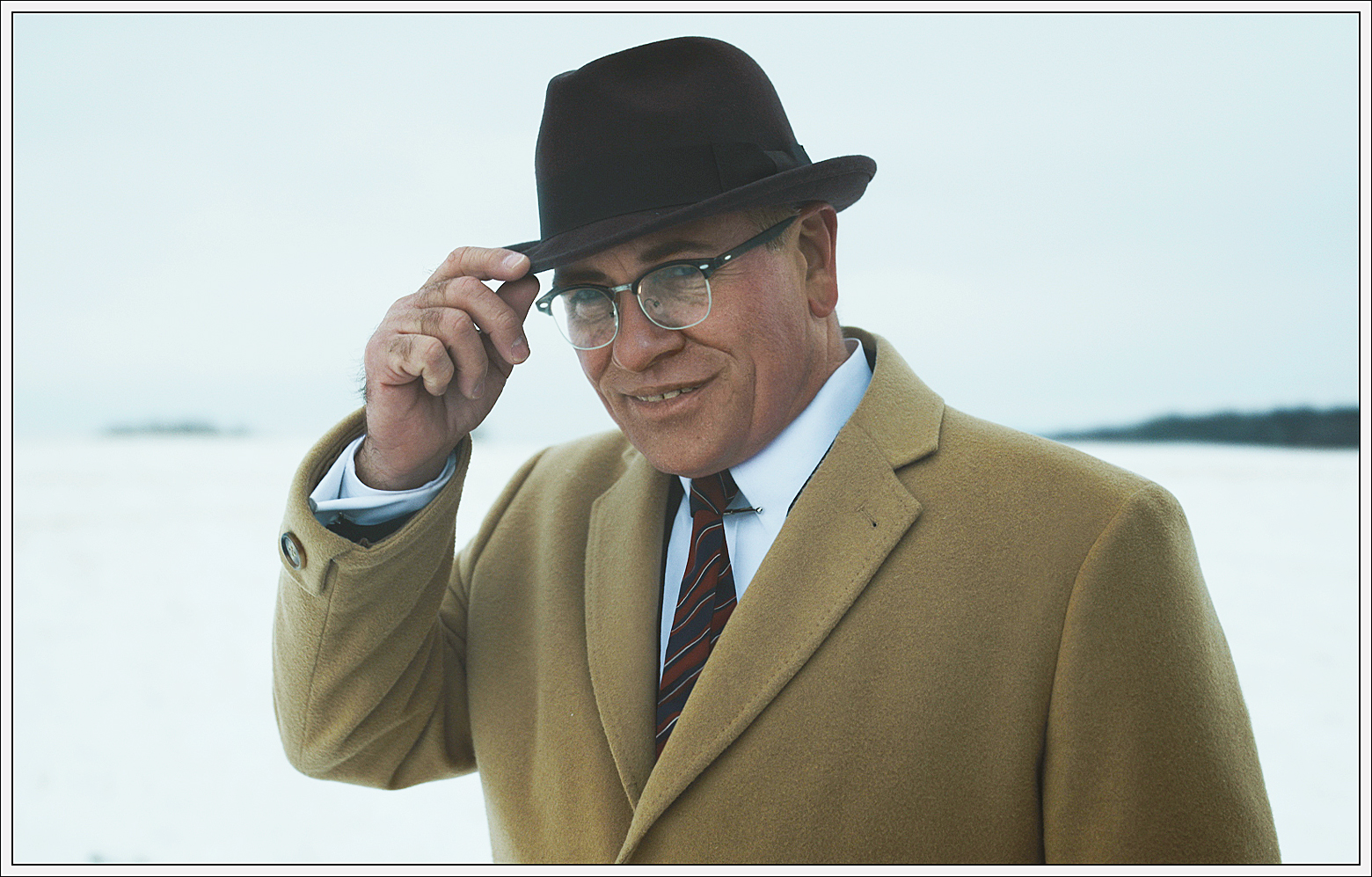

Vincent Thomas Lombardi (June 11, 1913 – September 3, 1970)
✪ Vincent Thomas Lombardi was an American football coach and executive in the National Football League (NFL). Lombardi is considered by many to be the greatest coach in football history, and he is recognized as one of the greatest coaches and leaders in the history of all American sports. He is best known as the head coach of the Green Bay Packers during the 1960s, where he led the team to three straight and five total NFL Championships in seven years, in addition to winning the first two Super Bowls at the conclusion of the 1966 and 1967 NFL seasons.
Lombardi was born on June 11, 1913, in the Sheepshead Bay neighborhood of Brooklyn to Enrico “Harry” Lombardi (1889–1971) and Matilda “Mattie” Izzo (1891–1972) Harry’s mother and father, Vincenzo and Michelina, emigrated from Salerno, Italy. Mattie’s father and mother, Anthony and Loretta, emigrated from Vietri di Potenza, Basilicata. Vince was the oldest of five children, including Madeleine, Harold, Claire, and Joe.
At about the time of Lombardi’s birth, his father Harry and his brother Eddie opened a butcher shop in the Meatpacking District of Manhattan. As a child, Lombardi helped his father at his meat cutting business, but grew to hate it. Throughout the Great Depression, Harry’s shop did well, and his family prospered. Lombardi grew up in an ethnically diverse, middle-class neighborhood.
Church attendance was mandatory for the Lombardis on Sundays. Mass would be followed with an equally compulsory few hours of dinner with extended family members, friends, and local clergy. Lombardi himself was an altar boy at St. Mark’s Catholic Church. At the age of 12 he started playing in an uncoached but organized football league in Sheepshead Bay.
Lombardi graduated from the eighth grade at P.S. 206 at age 15 in 1928. He then enrolled in the Cathedral Preparatory Seminary, a division of Cathedral College of the Immaculate Conception in Brooklyn, a six-year secondary program to become a Catholic priest. At Cathedral, he played on the school’s baseball and basketball teams, but his performance was hindered by his poor athletic abilities and eyesight.
He enrolled at St. Francis Preparatory high school for the fall of 1932. There he became a Charter Member of Omega Gamma Delta fraternity. His performance as a fullback on the Terriers’ football team earned him a position on the virtual All-City Football Team.
n 1933, Lombardi received a football scholarship to Fordham University in the Bronx. Lombardi was only 5’8″ and about 180 pounds and was classified as undersized: however, during his freshman year, Lombardi still proved to be an aggressive and spirited player on the football field. In his senior year of 1936, he was the right guard in the Seven Blocks of Granite, a nickname given by a Fordham University publicist to the Fordham University football team’s offensive front line. In a game against Pitt, he suffered a severe gash inside his mouth and several of his teeth were knocked out.
In the fall of 1934, Lombardi’s roommate at Fordham. Jim Lawlor, introduced him to his cousin’s relative, Marie Planitz. When Marie announced her ardent desire to marry Lombardi, her status-conscious stockbroker father did not like the idea of his daughter marrying the son of an Italian butcher from Brooklyn. Nonetheless, on August 31, 1940 Lombardi and Marie were wed. As Planitz would later recall, Lombardi seemed preoccupied with football even on their honeymoon and he cut it short to get back to Englewood …
“I wasn’t married to him more than one week when I said to myself, Marie, you’ve made the greatest mistake of your life.”
Marie’s first pregnancy resulted in a miscarriage. This had a terrible effect on her and caused her to turn to heavy drinking; a problem she would struggle with on more than one occasion in her life. Lombardi’s perfectionism, authoritarian nature and temper instilled in his wife a masterful ability to verbally assault and demean him whenever he verbally abused her. Nor were his children immune from his yelling. When Lombardi had not lost his temper, he would often be reticent and aloof.
Lombardi graduated from Fordham University on June 16, 1937. As the nation was still plagued by the Great Depression, there were very few career opportunities available for the young Lombardi; and for the next two years, he showed no discernible career path or ambition. He tried playing semi-professional football with the Wilmington Clippers of the American Association and also worked as a debt collector for a collection agency, but both of those efforts very quickly proved to be failures. With his father’s strong support, he enrolled in Fordham Law School in September 1938. Although he did not fail any classes, he believed his grades were so poor that he dropped out after only one semester.
In 1939, Lombardi accepted an assistant coaching job at St. Cecilia’s, a Catholic high school in Englewood, New Jersey. In addition to coaching, Lombardi, at age 26, taught Latin, chemistry, and physics for an annual salary of under $1,000. Lombardi stayed at St. Cecilia’s for a total of eight years, five as the head coach. In 1943, St. Cecilia’s was recognized as having the top high school football team in the nation. In 1947, Lombardi became the coach of freshman teams in football and basketball at his alma mater, Fordham University.
Though he was 28 years old when the United States entered World War II, Lombardi did not serve in the military. He obtained a series of deferments: his first was a 2-A due to his teaching occupation. In 1943, he obtained a second deferment due to parenthood (3-A). His final deferment in 1944 was labelled a 4-A.
Following the 1948 season, Lombardi accepted an assistant coaching job at the U.S. Military Academy at West Point, a position that greatly influenced his future philosophy and system of coaching. He was the offensive line coach under head coach Earl “Colonel Red” Blaik. it was not until he reached West Point and combined his spiritual discipline with Blaik’s military discipline that his coaching persona began to take its mature form.
In 1954 at age 41, Lombardi began his NFL career with the New York Giants. He accepted a job position which later became known as the offensive coordinator. By his third season in 1956, Lombardi, along with the defensive coordinator, former All-Pro cornerback turned coach Tom Landry, turned the squad into a championship team.
In 1958, the Green Bay Packers, with six future Hall of Famers on the roster, finished at 1–10–1 under head coach Ray McLean the worst season record in Packer history. The players were dispirited, the Packer shareholders were disheartened, and the Green Bay community was enraged. The angst in Green Bay extended to the NFL as a whole, as the financial viability and the very existence of the Green Bay Packer franchise was put in jeopardy.
On February 2, 1959, Lombardi accepted the position of head coach and general manager of the Packers. He demanded and gained full control over the football operations of the community-owned franchise, leaving no doubt of this when he told the franchise’s executive committee, “I want it understood that I am in complete command here.”
Lombardi’s assertion of “complete command” applied to the players as well. For his first training camp, he instituted harsh regimens and demanded absolute dedication and effort from his players. Lombardi was known to be volatile and terse with players during practices and games and he insisted on unconditional respect for everyone in his organization. In 1959, the Packers immediately improved to 7–5 and the rookie head coach Lombardi was named Coach of the Year. The fans appreciated what Lombardi was trying to do and responded by purchasing all the tickets for every home game during the 1960 season. Every Packers home game—preseason, regular season and playoffs—has been sold out ever since.
In Lombardi’s second year in 1960, Green Bay won the NFL Western Conference for the first time since 1944. This victory, along with his well-known religious convictions, led the Green Bay community to anoint Lombardi with the nickname “The Pope.” The Packers went on to defeat the Giants for the NFL title in 1961 (37–0 in Green Bay) and in1962 (16–7 at Yankee Stadium), marking the first two of their five titles in Lombardi’s seven years. After the 1962 championship victory, President John F. Kennedy called Lombardi and asked him if he would “come back to Army and coach again.”
Including postseason but excluding exhibition games, Lombardi compiled a 105–35–6 (.740) record as head coach, and never suffered a losing season. He led the Packers to three consecutive NFL championships: in 1965, 1966 and 1967 — a feat accomplished only once before in the history of the league, by Curly Lambeau, co-founder of the Packers, who coached the team to their first three straight NFL Championships in 1929, 1930 and 1931.Shortly after the victory in Super Bowl II, Lombardi resigned as head coach of the Packers on February 1, 1968, but continued on as the general manager.
Lombardi was a lifelong Democrat with liberal views on civil rights; and, he supported John F. Kennedy in the 1960 presidential election. Despite this, during the 1960s he became increasingly uncomfortable with the burgeoning youth protest movements and the emerging countercultures such as the New Left and the Anti-war Movement.
The three constants throughout Lombardi’s life were his Roman Catholic faith, his family and football. During his tenure at St. Cecilia, Lombardi attended Mass every day and “prayed for calm and control: of his temper and … his wife’s drinking.” When Lombardi became head coach of football in 1942, he led his team to Sunday Mass before each home game. Each day on his way to work for the Green Bay Packers, Lombardi would stop at St. Willebrord Church and “offer a prayer in case of unexpected death: ‘My God, if I am to die today, or suddenly at any time, I wish to receive this Communion as my viaticum …” Lombardi was also a Fourth Degree in the Knights of Columbus.
On June 24, 1970, Lombardi was admitted to Georgetown University Hospital, where tests revealed he had developed anaplastic carcinoma, a fast-growing malignant cancer, in the rectal area of his colon. On July 27, Lombardi was readmitted to Georgetown and and exploratory surgery found that the cancer was terminal. On his deathbed, Lombardi told Father Tim that he was not afraid to die, but that he regretted he could not have accomplished more in his life. Lombardi died in Washington, DC at 7:12 AM. on Thursday, September 3, 1970, surrounded by his wife, parents, two children, and six grandchildren. He was 57.
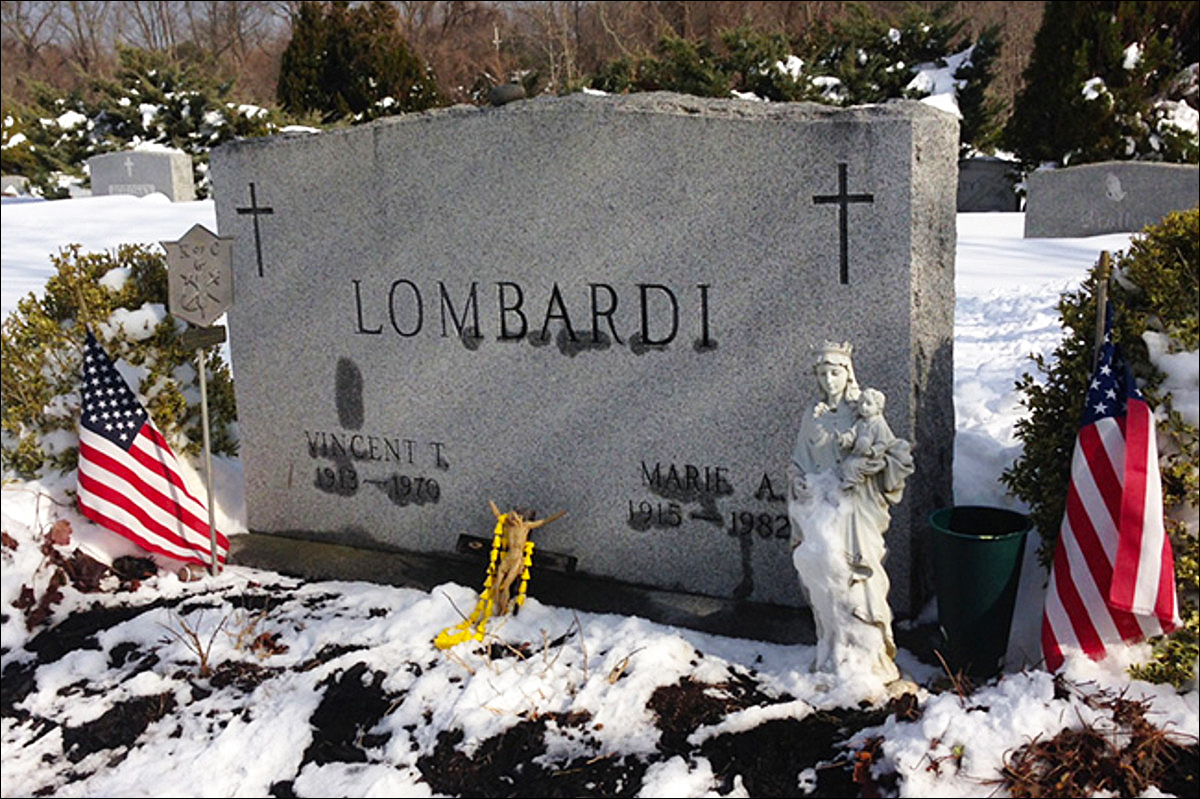
Lombardi’s funeral was held on September 7 at St. Patrick’s Cathedral in Manhattan. He was interred in Mount Olivet Cemetery in Middletown Township, New Jersey. ✪


▶️ CLICK HERE TO VIEW
▶️ 1 Minutes 7 Seconds ⭐️ Gary Brown
▶️ 16 Minutes 12 Seconds
▶️ 23 Minutes 35 Seconds ⭐️ Bosun Higgs
▶️ 5 Minutes 48 Seconds ⭐️
