


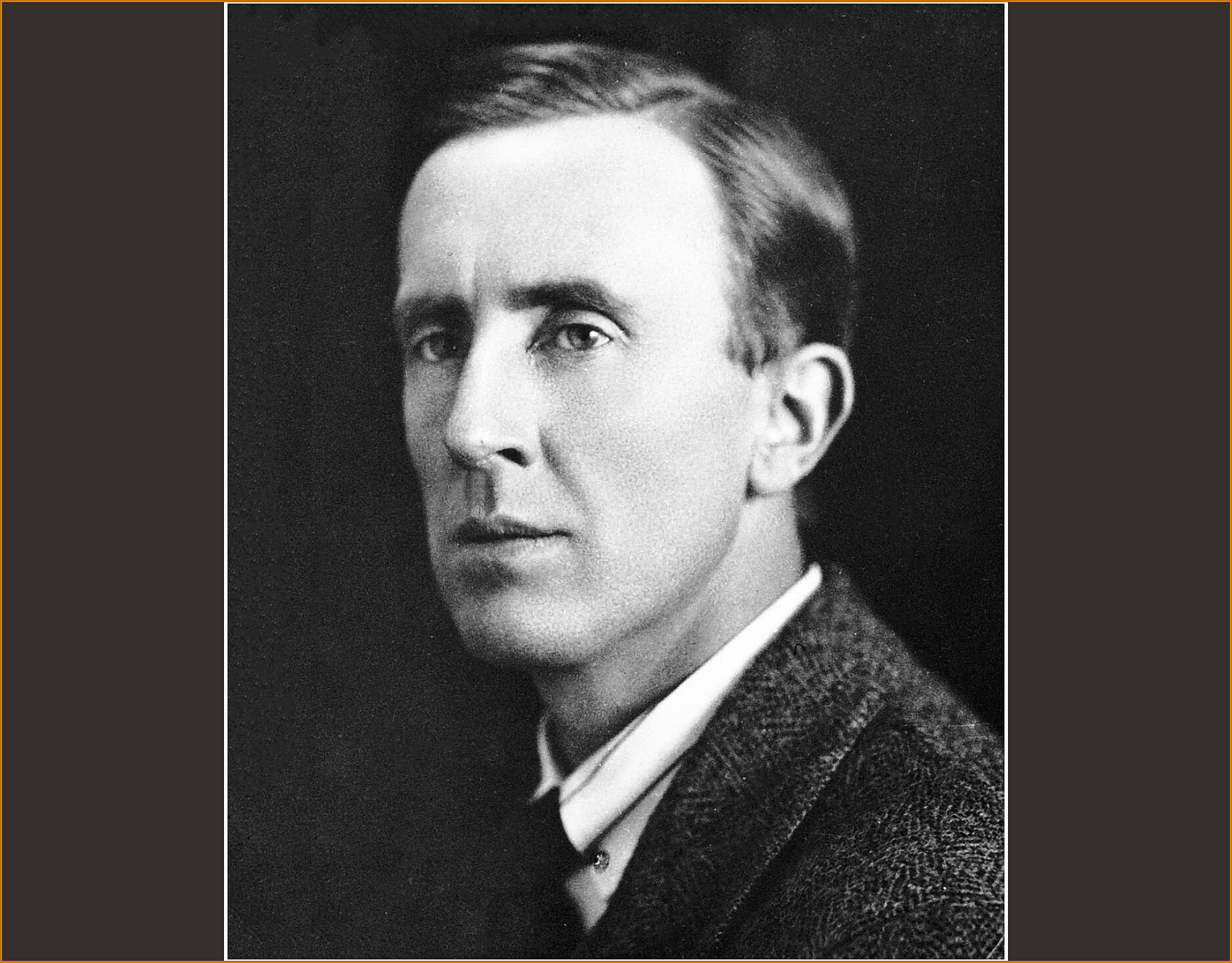

John Ronald Reuel Tolkien: January 3 1892–September 2 1973
✪ John Ronald Reuel Tolkien was an English writer and philologist. He was the author of the high fantasy works The Hobbit and The Lord of the Rings.
From 1925 to 1945, Tolkien was the Rawlinson and Bosworth Professor of Anglo-Saxon and a Fellow of Pembroke College, both at the University of Oxford. He then moved within the same university to become the Merton Professor of English Language and Literature and Fellow of Merton College, and held these positions from 1945 until his retirement in 1959. Tolkien was a close friend of C. S. Lewis, a co-member of the informal literary discussion group The Inklings. He was appointed a Commander of the Order of the British Empire by Queen Elizabeth II on 28 March 1972.
While many other authors had published works of fantasy before Tolkien, the tremendous success of The Hobbit and The Lord of the Rings ignited a profound interest in the fantasy genre and ultimately precipitated an avalanche of new fantasy books and authors.
John Ronald Reuel Tolkien was born on January 3, 1892 in Bloemfontein in the Orange Free State (later annexed by the British Empire; now Free State Province in the Republic of South Africa), to Arthur Reuel Tolkien (1857–1896), an English bank manager, and his wife Mabel, née Suffield (1870–1904).
As a child, Tolkien was bitten by a large baboon spider in the garden, an event some believe to have been later echoed in his stories, although he admitted no actual memory of the event as an adult.
When he was three, he went to England with his mother and brother on what was intended to be a lengthy family visit. His father, however, died in South Africa of rheumatic fever before he could join them. This left the family without an income, so Tolkien’s mother took him to live with her parents in Kings Heath, Birmingham.
Young Tolkien liked to draw landscapes and trees, but his favourite lessons were those concerning languages, and his mother taught him the rudiments of Latin very early
Tolkien could read by the age of four and could write fluently soon afterwards. While in his early teens, Tolkien had his first encounter with a constructed language, Animalic, an invention of his cousins.
In 1911, while they were at King Edward’s School, Tolkien and three friends, Rob Gilson, Geoffrey Bache Smith, and Christopher Wiseman, formed a semi-secret society they called the T.C.B.S. The initials stood for Tea Club and Barrovian Society. In October of the same year, Tolkien began studying at Exeter College, Oxford.
At the age of 16, Tolkien met Edith Mary Bratt, who was three years his senior, when he and his brother Hilary moved into the boarding house where she lived in Duchess Road, Edgbaston. During the summer of 1909, they decided that they were in love.”
His guardian, Father Morgan, considered it “altogether unfortunate” that his surrogate son was romantically involved with an older, Protestant woman.
Edith Bratt and Ronald Tolkien were formally engaged at Birmingham in January 1913, and married at St Mary Immaculate Catholic Church at Warwick, on 22 March 1916. In his 1941 letter to Michael, Tolkien expressed admiration for his wife’s willingness to marry a man with no job, little money, and no prospects except the likelihood of being killed in the Great War.
In August 1914, Britain entered the First World War. Tolkien’s relatives were shocked when he elected not to volunteer immediately for the British Army.
Instead, Tolkien, “endured the obloquy,” and entered a programme by which he delayed enlistment until completing his degree.
On 5 June 1916, Tolkien boarded a troop transport for an overnight voyage to Calais. Tolkien arrived at the Somme in early July 1916. Many of his dearest school friends were killed in the war.
A weak and emaciated Tolkien spent the remainder of the war alternating between hospitals and garrison duties, being deemed medically unfit for general service.
On 16 July 1919, Tolkien was taken off active service, at Fovant, on Salisbury Plain, with a temporary disability pension. On 3 November 1920, Tolkien was demobilized and left the army, retaining his rank of lieutenant.
After the end of World War I in 1918, Tolkien’s first civilian job was at the Oxford English Dictionary, where he worked mainly on the history and etymology of words of Germanic origin beginning with the letter W.
In 1920, he took up a post as reader in English language at the University of Leeds, becoming the youngest member of the academic staff there.
In the 1920s, Tolkien undertook a translation of Beowulf, which he finished in 1926, but did not publish. It was later edited by his son Christopher and published in 2014.
In the run-up to the Second World War, Tolkien was earmarked as a codebreaker. In January 1939, he was asked to serve in the cryptographic department of the Foreign Office in the event of national emergency. Beginning on 27 March, he took an instructional course at the London HQ of the Government Code and Cypher School. He was informed in October that his services would not be required.
In 1945, Tolkien moved to Merton College, Oxford, becoming the Merton Professor of English Language and Literature, in which post he remained until his retirement in 1959. Tolkien completed The Lord of the Rings in 1948, close to a decade after the first sketches.
During his life in retirement, from 1959 up to his death in 1973, Tolkien received steadily increasing public attention and literary fame. In 1961, his friend C. S. Lewis even nominated him for the Nobel Prize in Literature.
In his retirement Tolkien was a consultant and translator for The Jerusalem Bible, published in 1966.
Tolkien was made a Commander of the Order of the British Empire in the 1972 New Year Honours and received the insignia of the Order at Buckingham Palace on 28 March 1972. In the same year Oxford University gave him an honorary Doctorate of Letters.
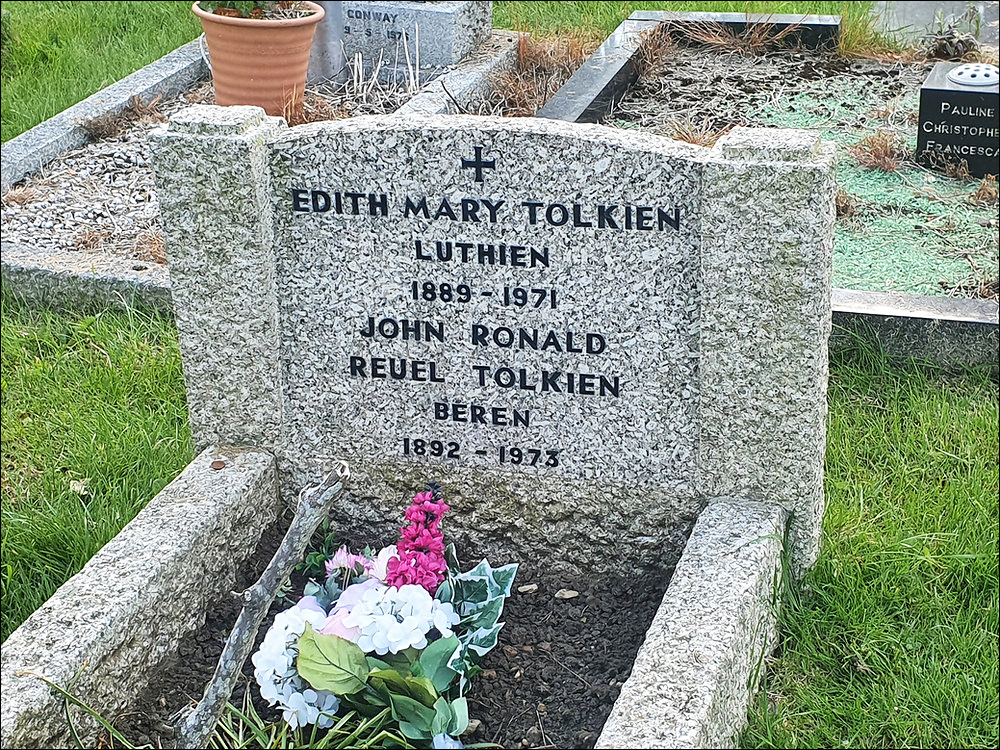
He died on 2 September 1973 from a bleeding ulcer and chest infection, at the age of 81. ✪















▶️ DONATE VIA PAYPAL (DEBIT & CREDIT CARD)
ALL PayPal Transactions Are Encrypted For Card Holder Privacy & Security
▶️ DONATE VIA ZELLE (DIRECT BANK CASH TRANSFER)
ZELLE is the perfect online alternative to PayPal. It’s an incredibly simple, secure, easy, fast and FREE way to send or receive money to recipients directly from your online banking account without a middleman. Best of all, there’s NO fees.
ZELLE is a service provided by your bank and is already built in to your online banking account. You only need to activate it first before using. If you’ve already activated ZELLE in your online bank or credit union account, you can donate to The New Americanist by using our ZELLE address:
vip@thenewamericanist.com
To activate your ZELLE, follow these easy instructions (a simple two minute process):

▶️ DONATE VIA SNAIL MAIL









▶️ CLICK HERE TO VIEW
▶️ 24 Minutes 5 Seconds
▶️ 36 Minutes 2 Seconds
▶️ 14 Minutes 23 Seconds
▶️ 40 Minutes 15 Seconds
▶️ 29 Minutes 37 Seconds
▶️ 17 Minutes 48 Seconds
▶️ 21 Minutes 31 Seconds
▶️ 13 Minutes 22 Seconds
▶️ 12 Minutes 35 Seconds
▶️ 1 Hour 25 Minutes 12 Seconds
▶️ 12 Minutes 9 Seconds
▶️ 1Hour 19 Minutes 54 Seconds
▶️ 15 Minutes 45 Seconds
▶️ 7 Minutes 12 Seconds
▶️ 5 Minutes 48 Seconds
▶️ 7 Minutes 38 Seconds
▶️ 15 Minutes 34 Seconds
▶️ 1 Hour 10 Minutes 24 Seconds
▶️ 19 Minutes 6 Seconds ⭐️ Bosun Higgs
▶️ 22 Minutes 39 Seconds ⭐️ Deplorables Know Libs Suck
▶️ 15 Minutes 29 Seconds
▶️ 23 Minutes 3 Seconds
▶️ 15 Minutes 42 Seconds
▶️ 3 Minutes 52 Seconds
▶️ 5 Minutes 49 Seconds
▶️ 2 Minutes 59 Seconds
