
⭐️ 10mmMan


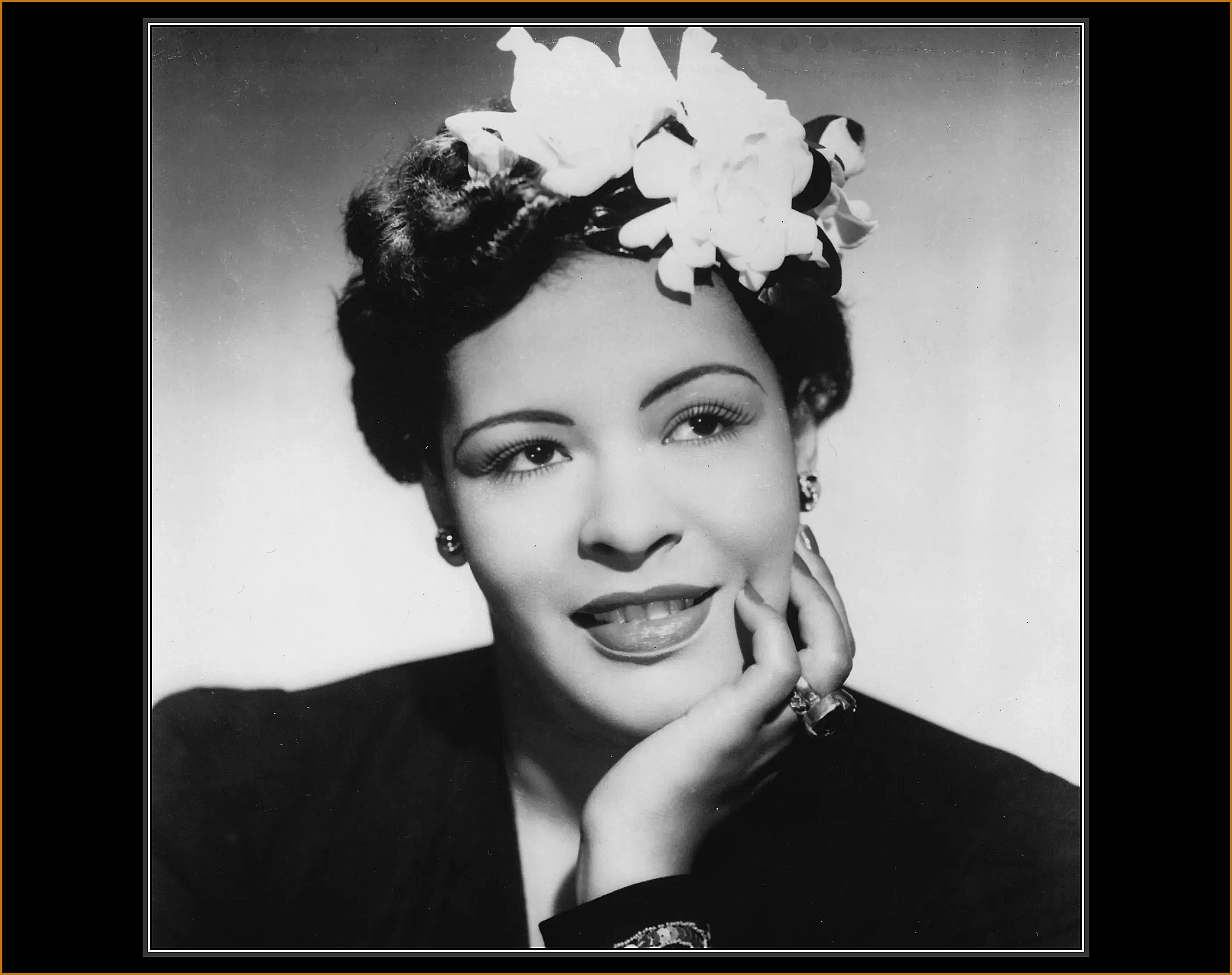

Eleanora Fagan (April 7, 1915–July 17, 1959)
✪ Billie Holiday (born Eleanora Fagan) was an American jazz and swing music singer & performer. Nicknamed “Lady Day” by her friend and music partner, Lester Young, Holiday had an innovative influence on jazz music and pop singing. Her vocal style, strongly inspired by jazz instrumentalists, pioneered a new way of manipulating phrasing and tempo. She was known for her unique vocal delivery and improvisational skills.
Eleanora Fagan was born on April 7, 1915 in Philadelphia, the daughter of African American unwed teenage couple Sarah Julia “Sadie” Fagan of Irish descent and Clarence Halliday. Sarah moved to Philadelphia at age 19 after she was evicted from her parents’ home in the Sandtown-Winchester neighborhood of Baltimore, Maryland, for becoming pregnant. With no support from her parents, she made arrangements with her older, married half-sister, Eva Miller, for Eleanora to stay with her in Baltimore. Not long after Eleanora was born, Clarence abandoned his family to pursue a career as a jazz banjo player and guitarist.
Eleanora grew up in Baltimore and had a very difficult childhood. Her mother often took what were then known as “transportation jobs,” serving on passenger railroads and frequently working away from home. Holiday was raised largely by Eva Miller’s mother-in-law, Martha Miller, and suffered from her mother’s absences and being in others’ care during her first decade of life.
After attending kindergarten at St. Frances Academy, she frequently skipped school, and her truancy eventually resulted in her being brought before the juvenile court on January 5, 1925 when she was only nine years old. She was sent to the House of the Good Shepherd, a Catholic reform school, where she was baptized on March 19, 1925. After nine months in care, she was “paroled” on October 3, 1925 to her mother. Sadie had opened a restaurant, the East Side Grill, where mother and daughter worked long hours there. She dropped out of school at age 11.
On December 24, 1926, Sadie came home to discover a neighbor, Wilbur Rich, attempting to rape Eleanora. She successfully fought back and Rich was arrested. Officials again placed Eleanora in the House of the Good Shepherd under protective custody as a state witness in the rape case. Holiday was released in February 1927 when she was nearly 12. She found a job running errands in a brothel and she scrubbed marble steps as well as kitchen and bathroom floors of neighborhood homes. Around this time, she first heard the records of Louis Armstrong and Bessie Smith. In particular, Holiday cited “West End Blues” as an intriguing influence, pointing specifically to the scat section duet with the clarinet as her favorite part.
As a young teenager, Holiday started singing in nightclubs in Harlem. She took her professional pseudonym from Billie Dove, an actress she admired, and Clarence Halliday, her probable father. At the outset of her career, she spelled her last name “Halliday,” her father’s birth surname, but eventually changed it to “Holiday,” his performing name. The young singer teamed up with a neighbor, tenor saxaphone player Kenneth Hollan. They were a team from 1929 to 1931, performing at clubs such as the Grey Dawn, Pod’s and Jerry’s on 133rd Street and the Brooklyn Elks Club. Benny Goodman recalled hearing Holiday in 1931 at the Bright Spot. As her reputation grew she began to perform at many clubs
Late in 1932, 17-year-old Holiday replaced the singer Monette Moore at Covan’s, a club on West 132nd Street. Producer John Hammond, who loved Moore’s singing and had come to hear her, first heard Holiday there in early 1933. Hammond arranged for Holiday to make her recording debut at age 18, in November of 1933 with Benny Goodman. She recorded two songs: “Your Mother’s Son-In-Law” and “Riffin’ the Scotch,” the latter being her first hit. “Son-in-Law” sold 300 copies, and “Riffin’ the Scotch”, released on November 11, sold 5,000 copies. Hammond was impressed by Holiday’s singing style and said of her, “Her singing almost changed my music tastes and my musical life, because she was the first girl singer I’d come across who actually sang like an improvising jazz genius.”
In 1935, Holiday was signed to Brunswick by John Hammond to record pop tunes with pianist Teddy Wilson in the swing style for the growing jukebox trade. They were allowed to improvise on the material. Holiday’s improvisation of melody to fit the emotion was revolutionary. Their first collaboration included “What a Little Moonlight Can Do” and “Miss Brown to You.” “What a Little Moonlight Can Do” has been deemed as her “claim to fame.”
After “What a Little Moonlight Can Do” became successful, the company began to consider Holiday an artist in her own right. She began recording under her own name a year later for the Vocalion label. Brunswick paid Holiday a flat fee rather than royalties, which saved the company money. “I Cried for You” sold 15,000 copies, which Hammond called “a giant hit for Brunswick….” Most records at that time which made money sold around three to four thousand.
Another frequent accompanist was tenor saxophonist Lester Young, who had been a boarder at her mother’s house in 1934 and with whom Holiday had a rapport. Young nicknamed her “Lady Day,” and she called him “Prez.”
In late 1937, Holiday had a brief stint as a big-band vocalist with Count Basie. The traveling conditions of the band were often poor; they performed many one-nighters in clubs, moving from city to city with little stability. Holiday chose the songs she sang and had a hand in the arrangements, choosing to portray her developing persona of a woman unlucky in love. Her tunes included “I Must Have That Man,” “Travelin’ All Alone, I Can’t Get Started” and “Summertime,” a hit for Holiday in 1936.
Some of the songs Holiday performed with Basie were also recorded. “I Can’t Get Started, They Can’t Take That Away from Me,” and “Swing It Brother Swing” are all still commercially available today.
By February 1938, Holiday was no longer singing for Basie. Various reasons have been given for why she was fired. Jimmy Rushing, Basie’s male vocalist, called her unprofessional. According to All Music Guide, Holiday was fired for being “temperamental and unreliable.” She complained of low pay and poor working conditions and may have refused to sing the songs requested of her or change her style. Holiday was later hired by Artie Shaw a month after being fired from the Count Basie Band. This association placed her among the first black women to work with a white orchestra, an unusual arrangement at that time. This was also the first time a black female singer employed full-time toured the segregated U.S. South with a white bandleader. In situations where there was a lot of racial tension, Shaw was known to stick up for his vocalist.
Holiday’s delivery made her performances recognizable throughout her career. Her improvisation compensated for lack of musical education. Holiday said that she always wanted her voice to sound like an instrument and some of her influences were Louis Armstrong and the singer Bessie Smith.
By the late 1930s, Holiday had toured with Count Basie and Artie Shaw, scored a string of radio and retail hits with Teddy Wilson, and became an established artist in the recording industry. Her songs “What a Little Moonlight Can Do” and “Easy Living” were imitated by singers across America and quickly become jazz standards
Holiday’s mother Sadie, nicknamed “The Duchess” opened a restaurant called Mom Holiday’s. She used money from her daughter while playing dice with members of the Count Basie Band, with whom she toured in the late 1930s. “It kept Mom busy and happy and stopped her from worrying and watching over me,” Holiday said. Fagan began borrowing large amounts from Holiday to support the restaurant. Holiday obliged but soon fell on hard times herself. “I needed some money one night and I knew Mom was sure to have some,” she said. “So I walked in the restaurant like a stockholder and asked. Mom turned me down flat. She wouldn’t give me a cent.”
The two argued, and Holiday shouted angrily, “God bless the child that’s got his own,” and stormed out. With Arthur Herzog, Jr., a pianist, she wrote a song based on the lyric, “God Bless the Child,” and added music. “God Bless the Child” became Holiday’s most popular and most covered record. It reached number 25 on the charts in 1941 and was third in Billboard‘s songs of the year, selling over a million records. In 1976, the song was entered into to the Grammy Hall of Fame.
▶️ 3 Minutes 3 Seconds
Holiday did not make any more records until August 1945, when she recorded “Don’t Explain” for a second time, changing the lyrics “I know you raise Cain” to “Just say you’ll remain” and changing “You mixed with some dame” to “What is there to gain?” Other songs recorded were “Big Stuff, What Is This Thing Called Love?” and “You Better Go Now.”
In September 1946, Holiday began her only major film, New Orleans, in which she starred opposite Louis Armstrong and Woody Herman. Holiday’s drug addictions were a problem on the set. She earned more than one thousand dollars per week from club ventures but spent most of it on heroin. Her lover, Joe Guy, traveled to Hollywood while Holiday was filming and supplied her with drugs.
By 1947, Holiday was at her commercial peak, having made $250,000 in the three previous years.On May 16, 1947, Holiday was arrested for possession of narcotics in her New York apartment. On May 27, she was in court. “It was called ‘The United States of America versus Billie Holiday. And that’s just the way it felt,” she recalled. During the trial, she heard that her lawyer would not come to the trial to represent her. “In plain English, that meant no one in the world was interested in looking out for me,” she said. Dehydrated and unable to hold down food, she pleaded guilty and asked to be sent to the hospital. The district attorney spoke in her defense, saying, “If your honor please, this is a case of a drug addict, but more serious, however, than most of our cases, Miss Holiday is a professional entertainer and among the higher rank as far as income was concerned.” She was sentenced to Alderson Federal Prison Camp in West Virginia. The drug possession conviction caused her to lose her New York City Cabaret Card, preventing her working anywhere that sold alcohol; thereafter, she performed only in concert venues and theaters.
On March 27, 1948, Holiday played Carnegie Hall to a sold-out crowd. Two thousand seven hundred tickets were sold in advance, a record at the time for the venue. Her popularity was unusual because she did not have a current hit record. During the show, someone sent her a box of gardenias. “My old trademark,” Holiday said. “I took them out of box and fastened them smack to the side of my head without even looking twice.” There was a hatpin in the gardenias and Holiday unknowingly stuck it into the side of her head. “I didn’t feel anything until the blood started rushing down in my eyes and ears,” she said. After the third curtain call, she passed out.
Holiday was arrested again on January 22, 1949, in her room at the Hotel Mark Twain in San Francisco. Holiday said she began using hard drugs in the early 1940s.
The loss of her cabaret card reduced Holiday’s earnings. She had not received proper record royalties until she joined Decca, so her main revenue was club concerts. The problem worsened when Holiday’s records went out of print in the 1950s. She seldom received royalties in her later years. In 1958, she received a royalty of only $11.
By the 1950s, Holiday’s drug use, drinking, and relationships with abusive men caused her health to deteriorate. She appeared on the ABC reality series The Comeback Story to discuss attempts to overcome her misfortunes.
Holiday’s autobiography, Lady Sings the Blues, was ghostwritten by William Dufty and published in 1956. Dufty, a New York Post writer and editor then married to Holiday’s close friend Maely Dufty, wrote the book quickly from a series of conversations with the singer in the Duftys’ 93rd Street apartment. He also drew on the work of earlier interviewers and intended to let Holiday tell her story in her own way.
On November 10, 1956, Holiday performed two concerts before packed audiences at Carnegie Hall. Live recordings of the second Carnegie Hall concert were released on a Verve/HMV album in the UK in late 1961 called The Essential Billie Holiday.
The critic Nat Hentoff of DownBeat magazine, who attended the Carnegie Hall concert, wrote the remainder of the sleeve notes on the 1961 album. He wrote of Holiday’s performance:
Throughout the night, Billie was in superior form to what had sometimes been the case in the last years of her life. Not only was there assurance of phrasing and intonation; but there was also an outgoing warmth, a palpable eagerness to reach and touch the audience. And there was mocking wit. A smile was often lightly evident on her lips and her eyes as if, for once, she could accept the fact that there were people who did dig her. The beat flowed in her uniquely sinuous, supple way of moving the story along; the words became her own experiences; and coursing through it all was Lady’s sound – a texture simultaneously steel-edged and yet soft inside; a voice that was almost unbearably wise in disillusion and yet still childlike, again at the centre. The audience was hers from before she sang, greeting her and saying good-bye with heavy, loving applause. And at one time, the musicians too applauded. It was a night when Billie was on top, undeniably the best and most honest jazz singer alive.
in 1959, she made one of her last television appearances for Granada’s Chelsea at Nine in London. Her final studio recordings were made for MGM Records in 1959, with lush backing from Ray Ellis and his Orchestra, who had also accompanied her on the Columbia album Lady in Satin the previous year.
By early 1959, Holiday was diagnosed with cirrhosis of the liver. Although she had initially stopped drinking on her doctor’s orders, it was not long before she relapsed. By May 1959, she had lost 20 pounds. Her manager, Joe Glaser, jazz critic Leonard Feather, photojournalist Allan Morrison, and the singer’s own friends all tried in vain to persuade her to go to a hospital. On May 31, 1959, Holiday was finally taken to Metropolitan Hospital in New York for treatment of both liver and heart disease.
Narcotics police went to her hospital room, claiming they had found heroin in her bedroom. A grand jury was summoned to indict her, and she was arrested, handcuffed to her bed and placed under police guard.
On July 15, she received last rites. Holiday died at the age of 44 at 3:10 am on July 17, 1959 of pulmonary edema and heart failure caused by cirrhosis of the liver.
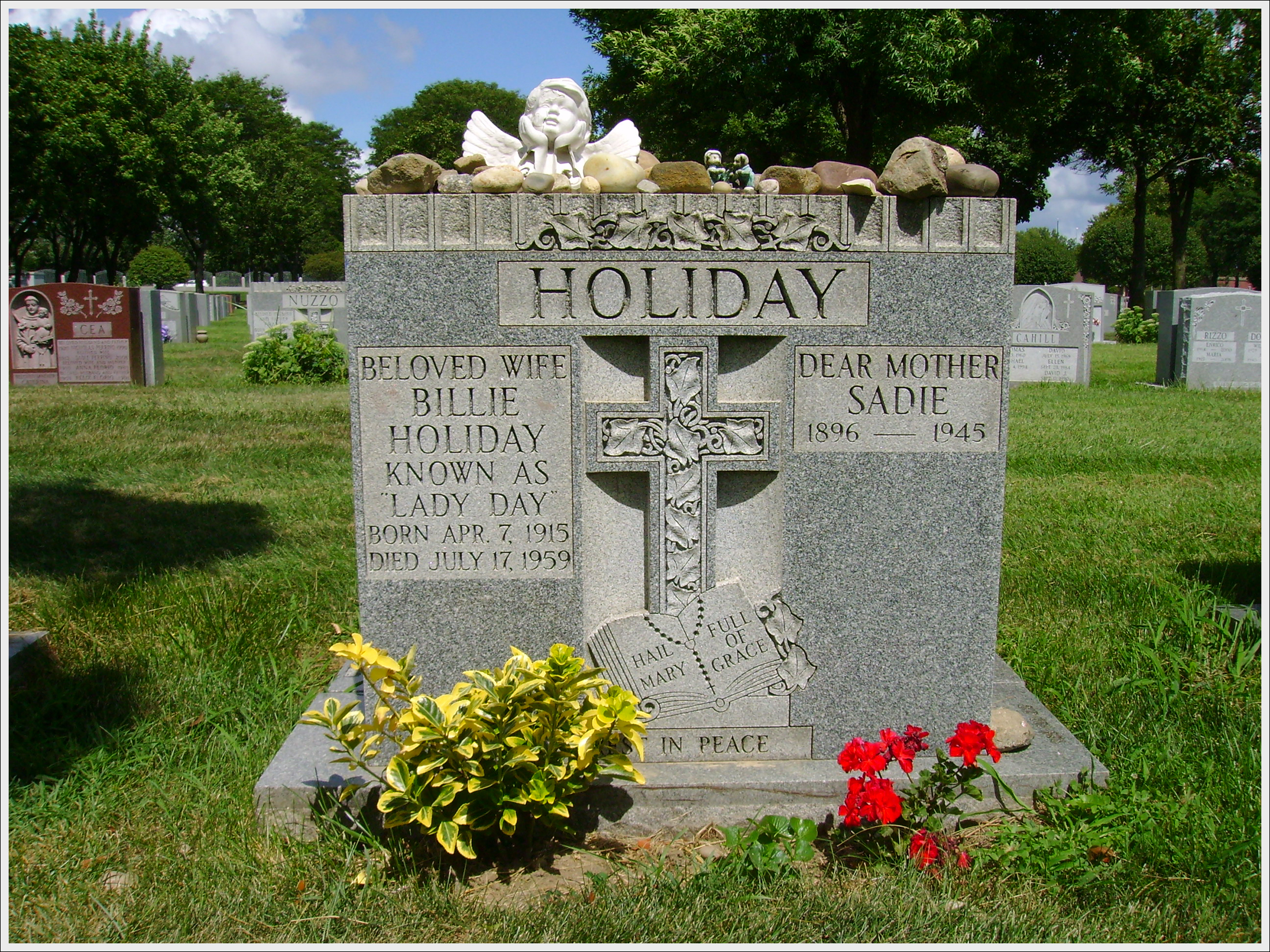
In her final years, Holiday had been progressively swindled out of almost all of her earnings. She died with only US$0.70 in the bank. Her funeral Mass was held on July 21, 1959 at the Church of St. Paul the Apostle in Manhattan. She was buried at Saint Raymond’s Cemetery in the Bronx.✪


▶️ CLICK HERE TO VIEW
NOTE: This feature module is currently under construction. More podcast/series channels links will be added in the coming days & weeks. If there’s a podcast or video link you’d like to see posted here, please email your suggestions to vip@thenewamericanist.com


▶️ CLICK HERE TO VIEW
▶️ 8 Minutes 5 Seconds ⭐️ Gary Brown
▶️ 42 Minutes 58 Seconds
▶️ 16 Minutes 39 Seconds
▶️ 21 Minutes 28 Seconds
▶️ 39 Minutes 9 Seconds ⭐️ TheBeatGoesOnandOn
▶️ 3 Minutes 23 Seconds
▶️ 2 Minutes 17 Seconds
▶️ 2 Minutes 22 Seconds
