
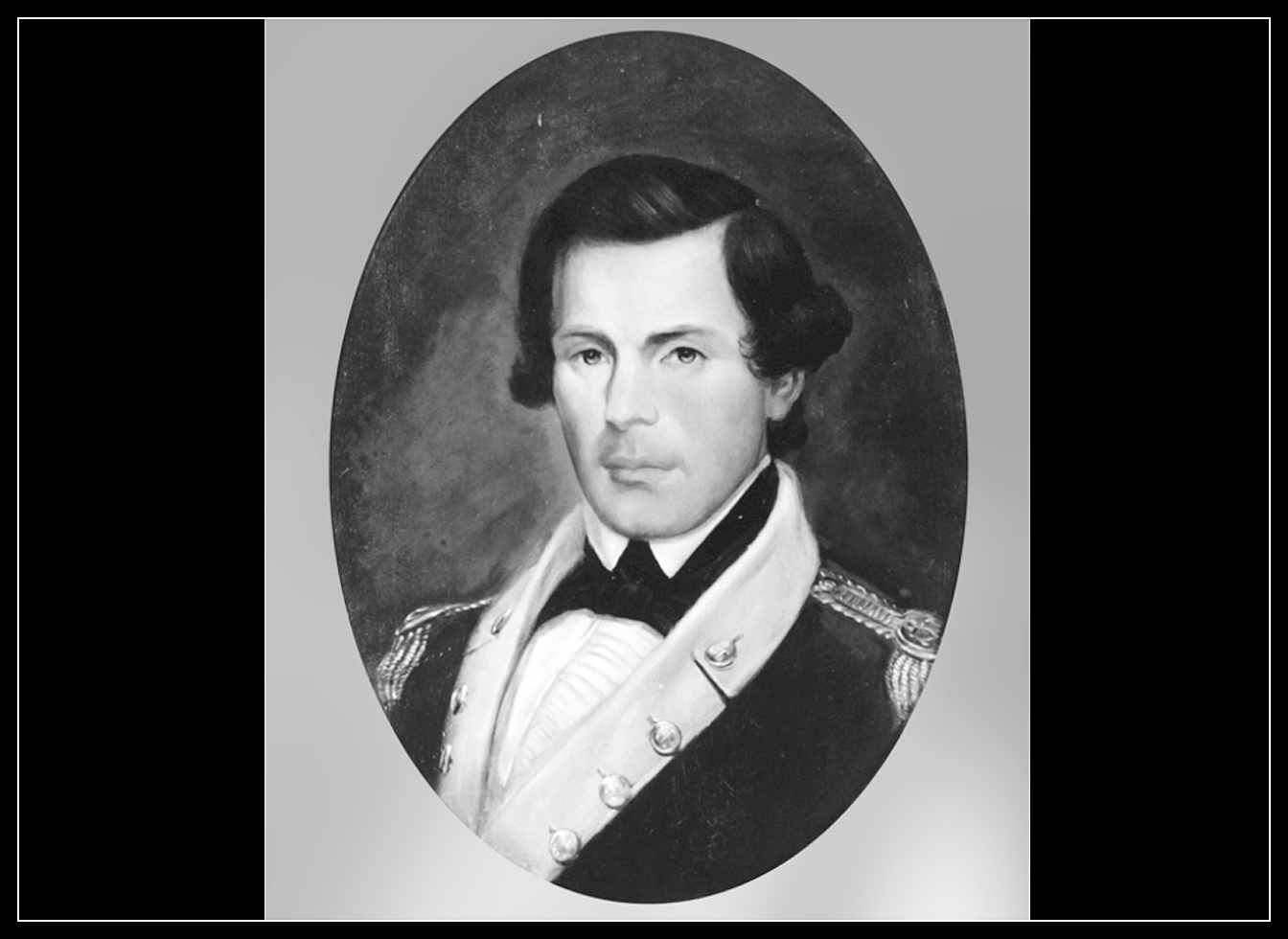

Samuel Nicholas: (1744 – August 27, 1790)
✪ Samuel Nicholas was an American Marine and military officer who was the first commissioned officer in the United States Continental Marines (predecessor to the United States Marine Corps) and by historical tradition is regarded as the First Marine as well as the first Commandant of the Marine Corps. He is also known as the Fighting Quaker.
Nicholas was born in Philadelphia, Pennsylvania, in 1744, the youngest of three children, to Anthony and Mary (Shute Cowman) Nicholas. No public record exists of his actual birthdate. His father was a blacksmith and an alcoholic, un-friended by the Philadelphia Meeting in 1749 for “Evil Conduct in frequent drinking strong Liquor to Excess.” He died when Samuel was seven years old. Samuel’s mother, Mary Shute Nicholas, died the year before her husband. As an orphan, Samuel was taken in and raised by his uncle, Attwood Shute, the Mayor of Philadelphia (1756–1758). In January 1752, his uncle enrolled him in the Academy and College of Philadelphia (now the University of Pennsylvania), in the secondary-school counterpart of the College. Nicholas remained a student there until the end of 1759. While at school, he became a Freemason and joined the Masonic Lodge which often met at Tun Tavern.
On November 28, 1775, Nicholas was commissioned a “Captain of Marines” by an order of the Second Continental Congress. His was the first commission issued in the Continental Naval Service. Eighteen days prior, the Continental Congress resolved on November 10, 1775:
That two battalions of Marines be raised consisting of one Colonel, two Lieutenant-Colonels, two Majors, and other officers, as usual in other regiments; that they consist of an equal number of Privates with other battalions; that particular care be taken that no persons be appointed to offices, or enlisted into said battalions, but such as are good seamen, or so acquainted with maritime affairs as to be able to serve by sea when required; that they be enlisted and commissioned to serve for and during the present war with Great Britain and the Colonies, unless dismissed by order of Congress; that they be distinguished by the names of the First and Second Battalion of Marines.
Captain Nicholas no sooner received official confirmation of his appointment to office than he established recruiting headquarters in Philadelphia. By January 1776, having recruited a sufficient number of Marines for the vessels that comprised the Continental Navy in the waters of Philadelphia, Captain Nicholas assumed command of the Marine detachment on board the Alfred. With Commodore Esek Hopkins in command, the Alfred set sail from Philadelphia for the Bahamas on the morning of January 4, 1776.
Lord Dunmore, the royal governor of Virginia, had collected a store of arms and provisions on the island of New Providence in the Bahamas and Dunmore’s forces had done a great deal of damage along the Colonial coast, especially off the shores of Virginia. Commodore Hopkins was ordered to proceed with the Alfred to Abaco in the Bahamas, and from there to engage against the forces of Lord Dunmore.
Hopkins set sail for the British colonial capital of the Bahamas, Nassau, on the island of New Providence, which was poorly defended but rich with gunpowder and military stores, desperately needed by the Continental Army. After an eight-gun sloop and a detachment of British soldiers had been recalled to support the war in North America, all that remained of the island’s defenses was a badly damaged four-gun schooner, a meager militia force, and two small forts—Fort Montague to the town’s east and Fort Nassau to the west.
Hopkins’ squadron anchored the Alfred off New Providence on 1 March 1776, in order to prepare an attack on Nassau. Two days later, Nicholas led the Continental Marines’ first amphibious raid. His force of 234 Marines and 50 sailors landed two miles east of Fort Montague shortly after noon. The island’s militia consisted of about 300 men; however, as most worked at sea, only half could be mustered at any given time. When the governor mustered the militia after sighting the American squadron that morning, fewer than 30 showed up, and most of them were unarmed.
“As we approached the fort,” Nicholas explained, “they fired three twelve-pound shot, which made us halt.” He sent an emissary under a flag of truce to convey that the landing party only desired the island’s military stores. The British messenger explained, “It was by the Governour’s orders that they fired. They spiked up the cannon and abandoned the fort.” Nicholas claimed Fort Montague and halted the advance for the night.
Nicholas had the Marines moving early the next morning. When they reached the edge of town before dawn, a messenger from the governor informed Nicholas, “I might march into the town, and if I thought proper, into the fort, without interruption.” Unfortunately, during the night, the governor had ordered 162 barrels of powder (of the islands’ 200) loaded on ships and sailed for St. Augustine.
Despite losing most of the powder, Nicholas still commandeered 88 cannons, 15 mortars, more than 11,000 assorted shot, 24 powder casks, a variety of other ammunition and military stores, and more than 70 prisoners. The squadron could not carry it all, so Hopkins contracted another vessel to haul the rest. Nicholas proudly reported, “All this was accomplished without firing a single shot from our side.”
This attack was the first successful landing engaged by Continental Marines; and saw the capture of Nassau on March 3, 1776, without a fight or single casualty.
On the return to North America, Nicholas participated in the Continental Navy’s first squadron attack when its ships engaged the 20-gun HMS Glasgow on 6 April 1776. Nicholas recalled, “The first broadside she fired, my Second Lieutenant fell dead close by my side; he was shot by a musket-ball through the head . . . it was a hot engagement, in which our ship and the brig were much damaged.” The Glasgow escaped, but over the three-and-a-half-hour fight, Marine musketry was responsible for all of the British casualties.
On June 25, 1776, Congress promoted Nicholas “to the head of the Marines with the rank of Major.” Accordingly, Commodore Hopkins was advised to send Major Nicholas to Philadelphia, with dispatches for the Continental Congress. With notification of his promotion, he was ordered to report there to the Marine Committee, which detached him from the Alfred and ordered him to remain in the city, “to discipline four companies of Marines and prepare them for service as Marine guards for the frigates on the stocks.” After recruiting and organizing the companies, Major Nicholas requested arms and equipment to outfit them.
In December 1776, Major Nicholas wrote to Congress: “The enemy having overrun the Jerseys, and our army being greatly reduced, I was ordered to march with three of the companies to be under the command of His Excellency, the Commander-in-Chief.” This is the first recorded example of a Marine battalion about to engage as an actual fighting unit under the direct command of Army authority. However, the Marines did not engage or participate in the December 26, 1776 attack on Trenton which followed General George Washington’s famous crossing of the Delaware River.
Nicholas’ Marine battalion instead served in General John Cadwalader’s division, which by the end of this campaign included Army regulars, militia, Continental Marines, state Marines, and sailors.
Stiff winds, heavy ice, and a strong current kept Cadwalader from crossing the Delaware River on Christmas night 1776 to join Washington’s attack on the British in Trenton. Instead, the division crossed ober into New Jersey the next day, before receiving any news of Washington’s victory and return to Philadelphia. Instead of returning, Cadwalader chose to pursue the remaining British forces in New Jersey. After his army briefly recovered,Washington recognized Cadwalader’s foray offered a military opportunity worth exploiting. He joined Cadwalader’s pursuit, which culminated with Nicholas’ Marine battalion participating in the Battle of Assunpink Creek on 2 January 1777.
After the first Battle of Trenton, the Marine battalion under the command of Major Nicholas took part in a battle against a detachment of Cornwallis’s main army at Princeton, New Jersey. During the following months, Nicholas’s battalion served both as infantry and artillery, and saw action against the British in numerous skirmishes.
Following the British evacuation of Philadelphia in June 1778, the Marine Barracks were reestablished and recruiting resumed. From that point until the close of the war, Nicholas’s duties at Philadelphia were similar to those of later Marine Commandants. He was actively in charge of recruiting and sometimes also acted as the Muster Master of the Navy.
On November 20, 1779, Nicholas wrote Congress requesting to be placed in command of the Marine Detachment aboard the 74-gun ship of the line America, which at the time was under construction in dry dock at Portsmouth, New Hampshire. However, Congress remained firm in its intention Nicholas remain in Philadelphia. Upon her completion, the USS America was presented to France as a gift.
Despite several future requests to lead Marine detachments on other ships, Nicholas settled into oversight of Marine recruitment and training efforts. He wrote, “I consequently had the mortification to become … a useless officer, at least in sense of danger.”
Once the Navy and Continental Marines were disbanded in 1783 after the end of the American Revolutionary War, Nicholas returned to civilian life and became an original member of the Pennsylvania Society of the Cincinnati.
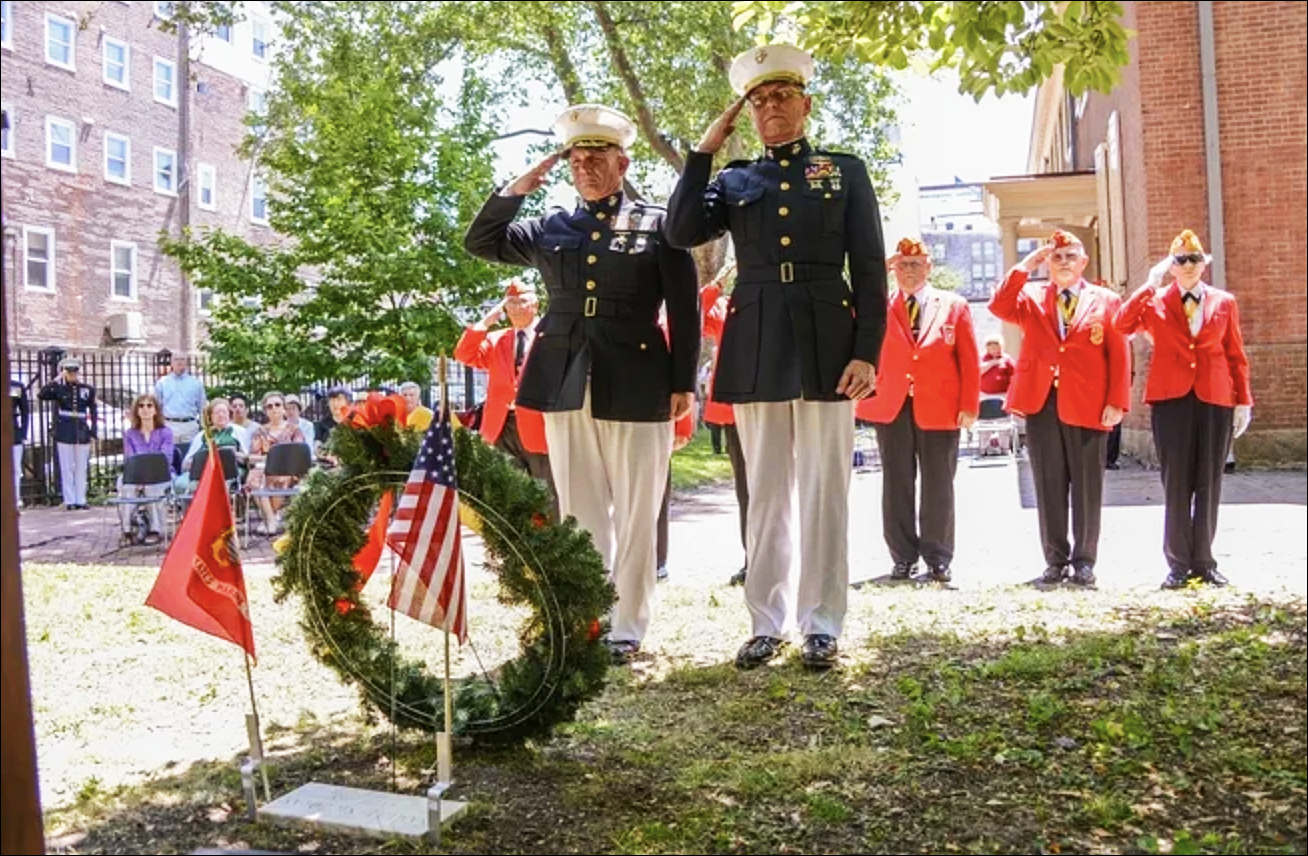
Nicholas died on August 27, 1790, in Philadelphia during an epidemic of yellow fever and is Interred in the Friends Graveyard at Arch Street Friends Meeting House.
Three ships in the United States Navy have been named the USS Nicholas in his honor. On November 10 of each year, the official birthdate of the United States Marine Corps, a wreath is placed on Nicholas’s grave at dawn by a special detachment of Marines.✪















▶️ DONATE VIA PAYPAL (DEBIT & CREDIT CARD)
ALL PayPal Transactions Are Encrypted For Card Holder Privacy & Security
▶️ DONATE VIA ZELLE (DIRECT BANK CASH TRANSFER)
ZELLE is the perfect online alternative to PayPal. It’s an incredibly simple, secure, easy, fast and FREE way to send or receive money to recipients directly from your online banking account without a middleman. Best of all, there’s NO fees.
ZELLE is a service provided by your bank and is already built in to your online banking account. You only need to activate it first before using. If you’ve already activated ZELLE in your online bank or credit union account, you can donate to The New Americanist by using our ZELLE address:
vip@thenewamericanist.com
To activate your ZELLE, follow these easy instructions (a simple two minute process):

▶️ DONATE VIA SNAIL MAIL