
⭐️ Warren Teed


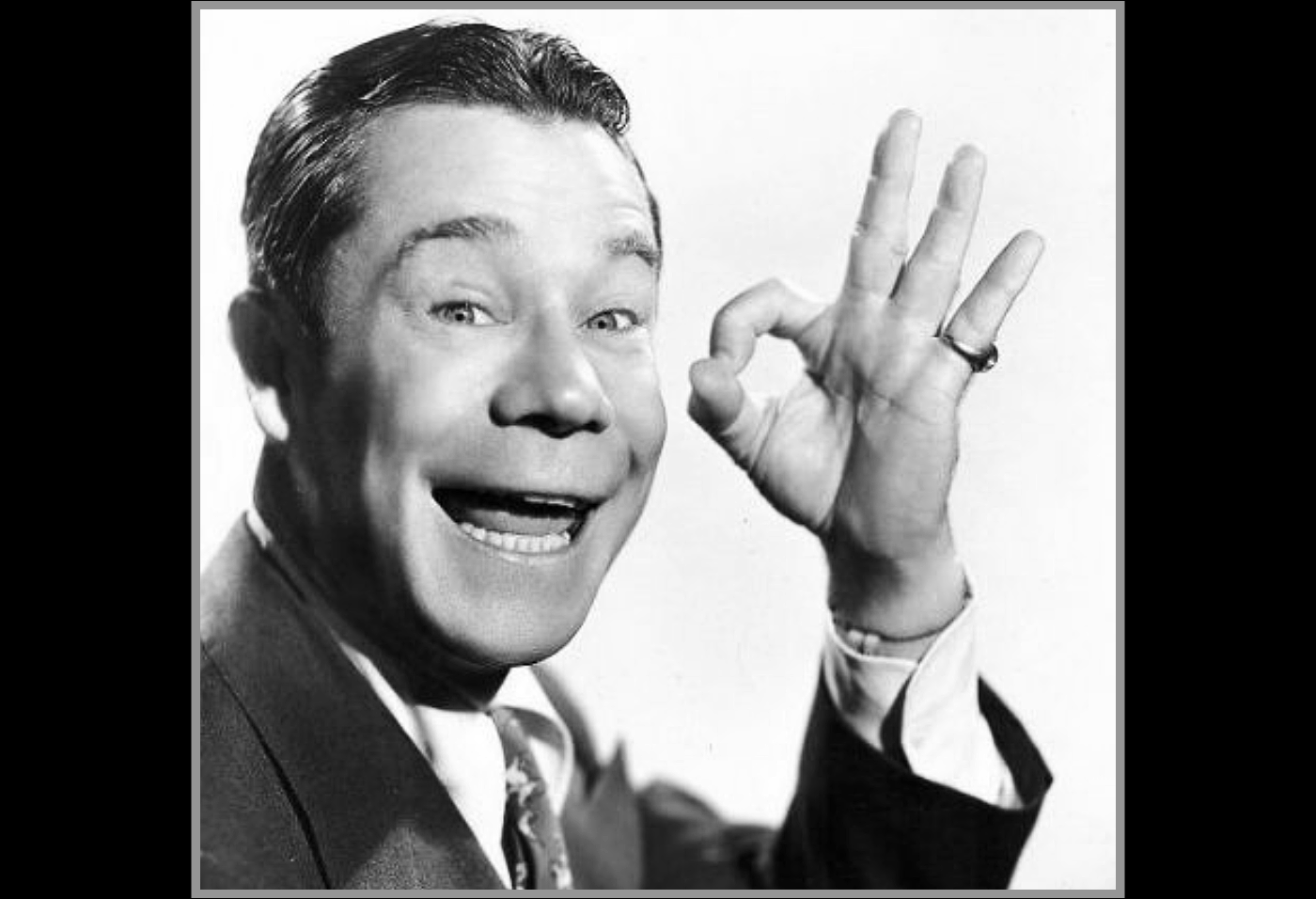

Joseph Evans Brown (July 28, 1891–July 6, 1973)
✪ Joseph Evans Brown (stage named Joe E Brown) was an American actor and comedian, remembered for his friendly screen persona, comic timing, and enormous, elastic-mouth smile. He was one of the most popular American comedians during the 1930s and 1940s; and enjoyed lengthy careers in both motion pictures and radio. Later he would become a character actor and comedian, as in Some Like It Hot (1959), in which he delivers the film’s most famous punchline “Well, nobody’s perfect.”
Brown was born on July 28, 1891 in Holgate, Ohio, near Toledo, into a large family of Welsh descent. He spent most of his early childhood in Toledo. In 1902, at the age of ten, he joined a troupe of circus tumblers known as the Five Marvelous Ashtons, who toured the country on both the circus and Vaudeville circuits. Later, he became a professional baseball player. Despite his athletic skills, he declined an opportunity to sign with the New York Yankees and instead chose to pursue his career as an entertainer. After three seasons he returned to the circus, went into vaudeville and finally on to star on Broadway. He moved to Broadway in the 1920s, first appearing in the musical comedy Jim Jam Jems. He gradually added comedy to his act, and successfully completed his professional transformation of himself into a film comedian.
In late 1928, Brown began making silent films and early sound films for various companies, but achieved his biggest successes with Warner Brothers, which offered him a seven-year contract. He quickly became a household name & a favorite with family audiences; shooting to stardom appearing in the first all-color, all-talking musical film comedy On with the Show (1929). He went on to star in a number of other lavish Technicolor musical comedies including Sally (1929), Hold Everything (1930), Song of the West (1930) and Going Wild (1930). By 1931, Brown’s name was being billed above the title in the films in which he appeared.
Brown wrote some of his own film screenplays; and incorporated his fondness for baseball into the storylines. In Fireman, Save My Child (1932), he played a member of the St. Louis Cardinals. In both Elmer, the Great (1933) and Alibi Ike (1935) (with Olivia de Havilland), he portrays ballplayers with the Chicago Cubs. In 1934, he displayed his dramatic abilities in the Damon Runyon story A Very Honorable Guy.
Brown was one of very few vaudeville comedians to actually appear in a Shakespearean film; in which he played Francis Flute in the film version of Shakespeare’s A Midsummer Night’s Dream (1935). Brown was highly praised for this performance. In 1933 and 1936, he was named one of the top 10 moneymakers in the US film industry.
▶️ 2 Minutes 6 Seconds
By the mid-1930s Joe E. Brown’s films had become established studio commodities, and the studios began to economize on their production. By this time the Brown comedies were considered by the industry to be merely “program pictures” — something to fill out movie house programs — instead of the major-motion-picture status they formerly enjoyed. Brown’s high-salary contract had also become too expensive for Warner Brothers to sustain during the Depression. In mid-1936, a film industry trade magazine reported “Joe E. Brown is making his next-to-last picture for Warner Brothers. This one is called Earthworm Tractors.”
However, Brown had already prepared for his imminent departure from warner Brothers. In April 1936 he signed with independent producer David L. Loew at MGM for a series of comedies. This immediately became front-page news in the trade.
Motion Picture Daily observed:
“Brown goes over to Loew about August, or perhaps slightly later this year. The producing alliance between Loew and the comic runs for a period of two years and calls for the production of three features a year. Distribution through RKO is assumed to preclude a deal now in negotiation and is seen as merely one in a series of seven more outside deals to come.”
That’s exactly what happened: the six Loew-Brown features were ultimately handled in turn by three different studios: RKO, Columbia and MGM.
Joe E. Brown left Loew in 1938 after his two-year contract expired. While his brand of broad comedy was still popular, it was considered somewhat old-fashioned; much like the slapstick efforts of Laurel and Hardy. As a result, Brown was now being handed “B” pictures for Paramount (one film), Columbia (three films), and finally Republic (four films). The Republic films were his last starring vehicles. From this point on, Brown would continue on in films, but only in guest appearances and character roles.
In 1939, Brown testified before the House Immigration Committee in support of a bill allowing 20,000 German-Jewish refugee children to migrate to the United States. He and his wife would later personally adopted two of the refugee children.
At age 50 when the U.S. entered World War II, Brown was too old to enlist. However, both of his biological sons served in the military during the war. In 1942, one of those sons, Captain Don E. Brown, was killed when his Douglas A-20 Havoc crashed near Palm Springs, California.
Even before the USO was organized, Brown spent a great deal of his time traveling, at his own expense, to entertain troops in the South Pacific, including Guadalcanal, New Zealand and Australia; as well as to the Caribbean and Alaska. He was the first celebrity public figure to tour in this way; before Bob Hope made his similar journeys. Brown also spent many nights working and meeting servicemen at the Hollywood Canteen.
On his return to the United States, Brown brought sacks of letters from US service members, making sure they were delivered to their families by the Post Office. He gave and performed in shows in all weather conditions, and many in hospitals, sometimes doing his entire show for a single dying soldier. He signed autographs for everyone. For his services to morale, Brown became one of only two civilians to ever be awarded the Bronze Star during World War II.
Brown’s concern and support for troops continued well into the Korean War, as evidenced by a newsreel featuring his appeal for blood donations to aid the U.S.troops there that was featured in the season 4 episode of M*A*S*H titled “Deluge.”
Brown became known for touring in the role of Elwood P. Dowd, the lead in Mary Chase’s Harvey In 1948, Brown was awarded a Special Tony Award for his work in the touring company of Harvey.
Brown said that sometime during the run of Harvey at Elitch, he’ll have invoked the character of the lovable Elwood for the 2,000th time. This means that he’ll have played the part more than any other living person as well as performed it in more countries than anyone. “I’ve performed it in Australia, Canada, England, and Hawaii,” said Brown. “I took over the part in the New York company when Frank Fay, the originator, gave it up, and played it seven months before it went on the road.“
▶️ 26 Minutes 50 Seconds
In 1954, Brown appeared in Milestones of Motoring with Merv Griffin, a made-for-television industrial musical produced by Cinécraft Productions. He also appears in a cameo in Around the World in 80 Days (1956) as the Fort Kearney stationmaster. In the similarly epic film It’s a Mad, Mad, Mad, Mad World (1963), Brown also makes a cameo appearance as a union official giving a speech at a construction site in the climactic scene. On television, he was the mystery guest on What’s My Line? during the January 11, 1953 episode.
▶️ 3 Minutes 17 Seconds
However, his best known postwar role was that of aging millionaire Osgood Fielding III in Billy Wilder’s 1959 comedy Some Like It Hot. Fielding falls for Daphne (Jerry), played by Jack Lemmon in drag. At the end of the film, Lemmon takes off his wig and reveals to Brown that he is a man, to which Brown responds “Well, nobody’s perfect,” one of the more celebrated punchlines in film.
Brown was an avid sports enthusiast, both on and off the screen. And he occupies his own place in Boston sports history. On April 14, 1925, radio station WBZ (AM) broadcast a local Major League baseball game for the first time. The Boston Braves played the New York Giants, a game that the Braves won 5–4. The radio announcer for that day was Joe E. Brown. New Britain (CT) Daily Herald wrote that “It is too bad that Joe E. Brown, who announced the game yesterday, could not fill that place during the entire season,” noting that Brown not only described the game well but also offered amusing and interesting anecdotes in the process.
Brown was a life long devoted baseball fan; and some sportswriters who had seen him when he was a semi-pro player still believed he could have become a successful major-league player one day. Brown befriended many ballplayers over the years. He spent Ty Cobb’s last days with him, discussing Cobb’s life and times.
Joe E. Brown’s enthusiasm for baseball also led to him becoming the first president of PONY Baseball and Softball (at the time named Pony League) when the organization was first incorporated in 1953. He continued in that post until late 1964, when he retired. Later he traveled additional thousands of miles telling the story of PONY League, hoping to interest adults in organizing baseball programs for young people. Brown was also a fan of thoroughbred horse racing, and a regular at the racetracks in Del Mar and Santa Anita.
Brown was also an aviation enthusiast. Zack Mosley, creator of the comic strip The Adventures of Smilin’ Jack, attributed Brown with the fictional lookalike character Flannelmouth Don; an air show announcer who did not need a microphone to be heard over the roar of multiple plane engines. The character appeared in syndication in the strip from the mid-1940s until the mid 1950s.
Brown married Kathryn Francis McGraw in 1915. Their marriage lasted until his death in 1973. The couple had four children: two sons, Don Evan Brown (December 25, 1916 – October 8, 1942; captain in the United States Army Air Force, who was killed in a crash while serving as a ferry pilot) and Joe LeRoy “Joe L.” Brown (September 1, 1918 – August 15, 2010), and two daughters, Mary Katherine Ann (b. 1930) and Kathryn Francis (b. 1934). Both daughters were adopted as infants.
Brown was a Freemason who became a member of Rubicon Lodge in Toledo in 1915. In November 1961, a brush fire completely destroyed his home, including all the memorabilia from his career.
In 1968, Brown began having heart problems after he suffered a severe heart attack, and underwent cardiac surgery. He died from complications from arteriosclerosis and heart disease on July 6, 1973 at his home in Brentwood, California, three weeks before his 82nd birthday. He is interred at Forest Lawn Memorial Park in Glendale, California.
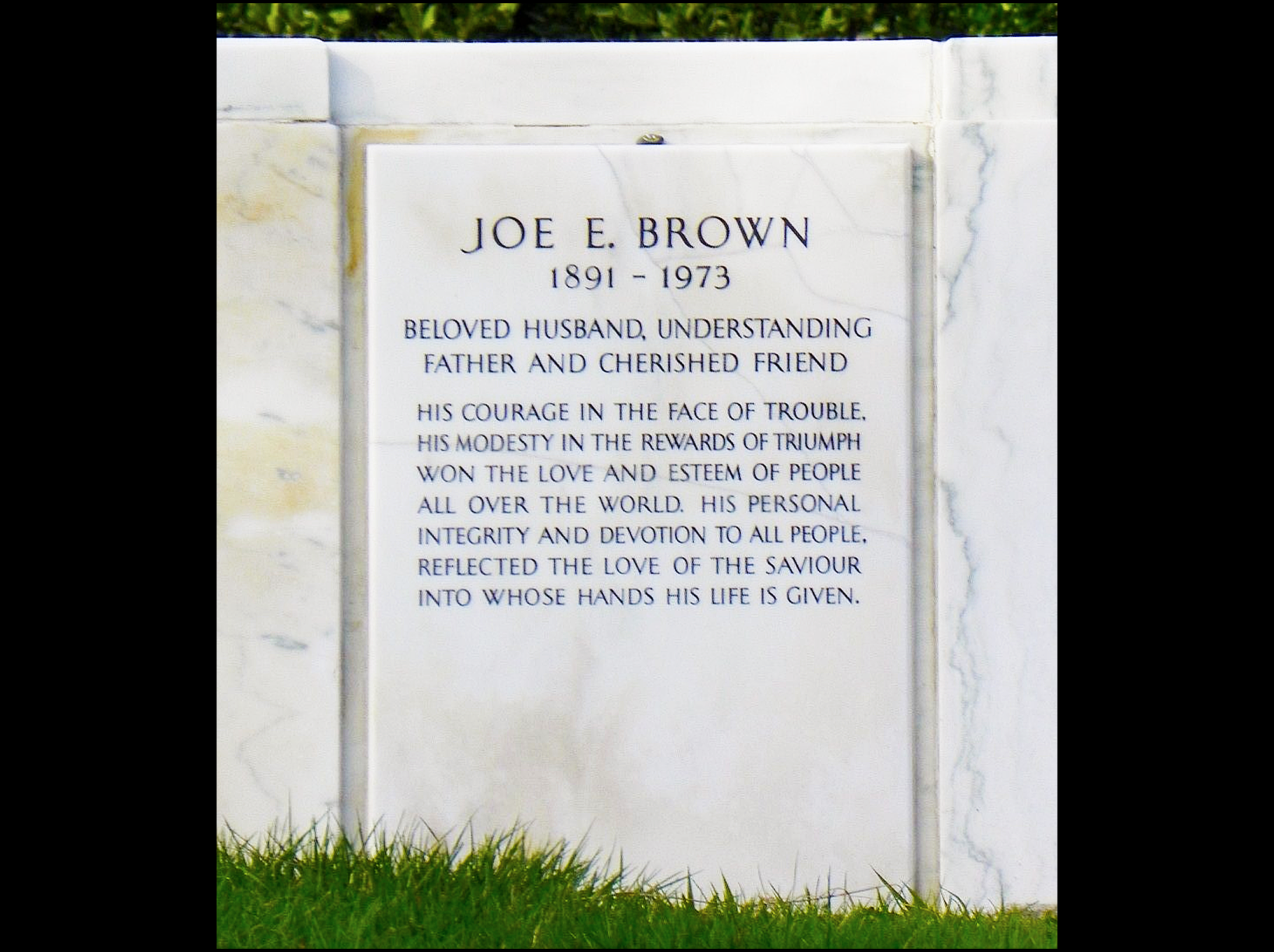
For his contributions to the film industry, Brown was inducted into the Hollywood Walk of Fame in 1960 with a motion pictures star located at 1680 Vine Street. ✪

















▶️ CLICK HERE TO VIEW


▶️ CLICK HERE TO VIEW
▶️ 1 Hour 9 Minutes 36 Seconds
▶️ 44 Minutes 12 Seconds
▶️ 1 Hour 14 Minutes 36 Seconds
▶️ 1 Hour 16 Minutes 35 Seconds
▶️ 1 Hour 48 Minutes 28 Seconds
▶️ 22 Minutes 58 Seconds
▶️ 1 Hour 33 Minutes 44 Seconds
▶️ 2 Minutes 24 Seconds
▶️ 14 Minute 26 Seconds
▶️ 5 Minutes 37 Seconds
▶️ 35 Minute 49 Seconds
▶️ 2 Minutes 57 Seconds
▶️ 5 Minutes 11 Seconds
