


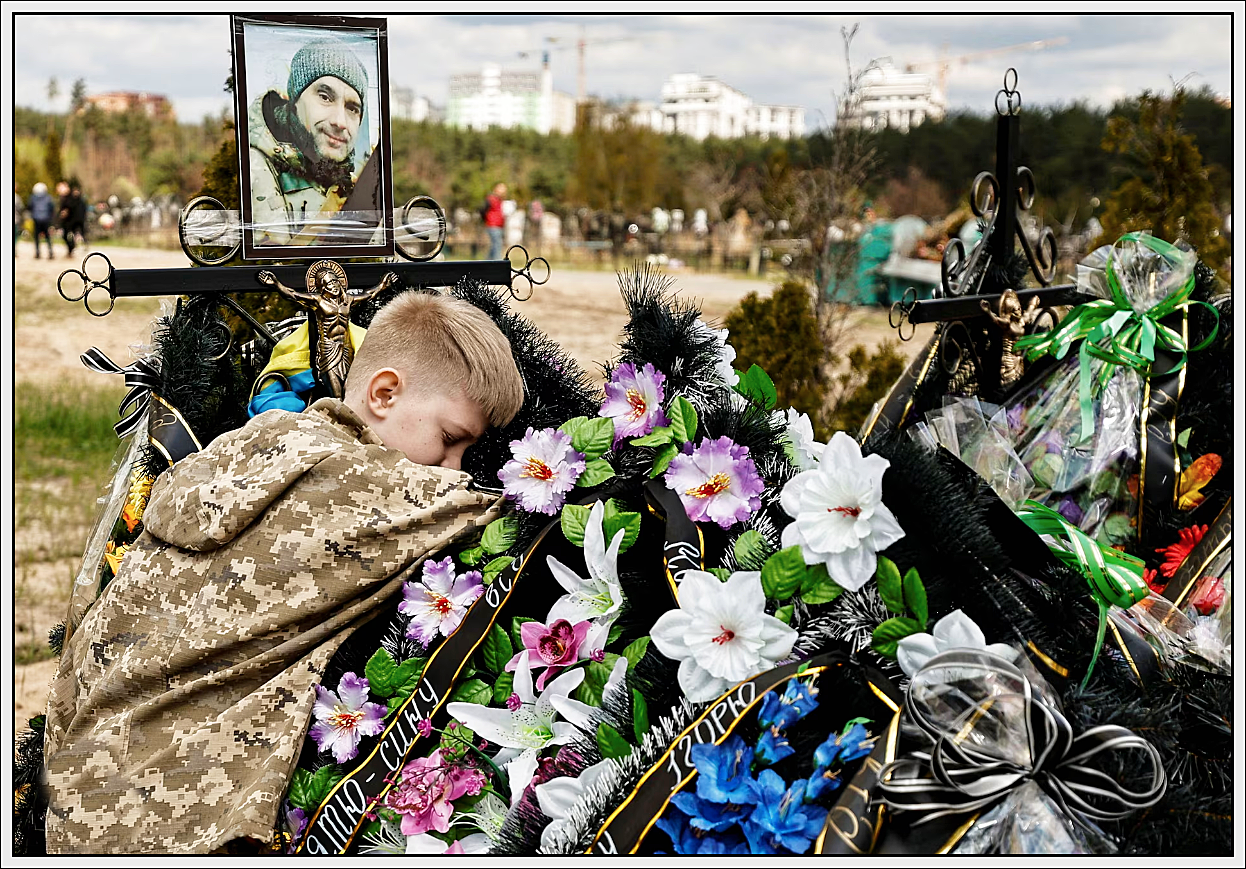

✪ Vladimir Putin doesn’t need to retaliate against the Ukrainian drone strike because he’s already winning the Ukraine War…
▶️ FEATURED ARTICLE: CLICK HERE TO READ

ooo
s of this writing, the world is still waiting for the other shoe to drop. Following Ukraine’s latest long-range drone and bomber raids deep into Russian territory – including an audacious strike on military infrastructure in Tatarstan and symbolic attacks near Moscow; there has been no large-scale Russian retaliation. No carpet bombing of Kyiv. No massed air campaign. No strategic escalation to match the hype swirling in Western media and Telegram channels alike. And so the question remains: Is Putin holding back? Or is he preparing to go big?
Russia’s lack of large-scale retaliation to recent audacious Ukrainian drone strikes deep within its territory does not signify weakness or fear, but rather a calculated confidence in its ongoing attritional strategy.
The answer lies neither in the skies over Belgorod nor in the bombastic statements from Kremlin representatives. It lies in the slow, methodical grinding progress on the ground in Ukraine. That’s where Russia is winning the war – and why it doesn’t need to “go big” in some cinematic show of force.
▶️ 9 Minutes 50 Seconds.
Moscow is reportedly achieving its core, albeit limited, war aims—consolidating control over eastern Ukrainian oblasts, securing the land bridge to Crimea, and ensuring Ukraine’s non-NATO, neutralized status—through methodical ground advances and superior industrial output.
The West, trained by decades of airpower-centric wars, has become obsessed with spectacle. It expects grand escalations: shock and awe, decapitation strikes, dramatic red lines crossed in real time on cable news. But Russia’s strategy in Ukraine has long been the opposite of dramatic. It has been shaped not by a desire to shock, but by a cold, calculating effort to achieve concrete objectives – regardless of whether those efforts play well on Western television or Twitter.
What are those objectives? They haven’t changed much since the first months of the war: the consolidation of control over four key oblasts – Luhansk, Donetsk, Zaporizhzhia and Kherson – and the preservation of the land bridge to Crimea. Add to that a neutralized, de-militarized, and de facto partitioned Ukraine, cut off from NATO integration. That’s the Russian war aim, and that’s the war they’re fighting.
The drone raids and bomber strikes may excite audiences in Warsaw and Washington, but they don’t change the battlefield calculus. They don’t halt Russian advances around Chasiv Yar, or the steady pressure on Kharkiv, or the encirclement tactics grinding down Ukraine’s remaining combat-effective brigades. Russia’s General Staff understands this. They understand, too, that responding with a dramatic but strategically pointless escalation would be playing into Ukraine’s hands, or worse, NATO’s.
Indeed, it’s hard to escape the suspicion that this round of long-range Ukrainian strikes – launched with increasing Western involvement, including targeting intelligence and even approval from Washington – are designed less to achieve battlefield effects and more to provoke a Russian overreaction. The goal: to draw Russia into a cycle of escalatory retaliation that might re-internationalize the war, or at least justify a deeper NATO footprint inside Ukraine.
However, Putin isn’t biting. Not because he’s weak or uncertain. Not because he’s indecisive. But because he doesn’t need to. And he knows it.
For all the high-profile Ukrainian forays into Russian territory, the fundamentals of the war are shifting decisively in Russia’s favor. Ukraine is bleeding manpower at unsustainable rates. The recent mobilization law is floundering. Draft offices are under siege. The conscript pool is aging, and younger men are either fleeing or bribing their way out of service. Meanwhile, NATO is long on rhetoric but short on shells. Promised aid packages are bogged down in legislative gridlock, and the once-optimistic arsenal of democracy is revealing itself to be a boutique industry incapable of sustaining a high-intensity war.
Russia, on the other hand, has adapted. Slowly and clumsily at first – but now with an industrial tempo the West can’t match. It’s not that Russia is holding back from total war out of fear. It’s that Moscow has calculated that total war isn’t necessary. Strategic restraint, not escalation, has been the hallmark of Russian conduct since 2022. Not because Putin is a moderate, but because he’s a realist. He has absorbed the lesson of Clausewitz: war is an instrument of policy, and escalation without strategic gain is wasteful, even dangerous.
So what about “going big?” Could Putin unleash something much more dramatic down the line?
Yes, of course he could. But only if it serves his war aims. If the Ukrainian military somehow managed to break through and threaten Crimea – or if NATO crossed a red line too far – then escalation would become rational. Tactical strikes on NATO supply routes in Poland or Romania, for instance, would be a logical step if Moscow believed it had to raise the costs of Western intervention. But there is no indication that the Kremlin sees such moves as necessary now. Quite the opposite. Putin continues to act like a man who believes he is winning – and wants to keep winning without triggering a broader conflict.
This strategic patience, though frustrating to hawks on both sides, reflects a confidence that is easy to miss in the fog of war. For Ukraine, the longer the war goes on, the worse the odds become. Russia is willing to spend blood and treasure over time. It is betting that the West is not.
None of this is to romanticize Russia’s position. Its economy is warped by wartime distortions. Its demographic base is fragile. And its political system remains vulnerable to shocks. But for now, these constraints are being managed – and the war effort is not only sustainable, but effective. Not flashy. Not triumphant. But effective.
That brings us back to the initial question: will Putin hold off or go big? He will hold off, because he is going big in the only way that matters – by shaping the battlefield, attriting the enemy, and methodically achieving the objectives that drove him to war in the first place. The spectacle may be missing. The dramatic retaliation may never come. But the strategic hammer is falling nonetheless, one kilometer, one brigade, one obliterated position at a time.
The West should worry not about what Putin might do in response to a drone strike on a refinery or a missile factory. It should worry that he doesn’t need to respond at all.
Russia is perceived to be “already winning” this war of exhaustion by fighting “smarter, not harder,” and therefore sees no current need for further dramatic escalations which could play into Western or Ukrainian hands.✪
















▶️ DONATE VIA PAYPAL (DEBIT & CREDIT CARD)
ALL PayPal Transactions Are Encrypted For Card Holder Privacy & Security
▶️ DONATE VIA ZELLE (DIRECT BANK CASH TRANSFER)
ZELLE is the perfect online alternative to PayPal. It’s an incredibly simple, secure, easy, fast and FREE way to send or receive money to recipients directly from your online banking account without a middleman. Best of all, there’s NO fees.
ZELLE is a service provided by your bank and is already built in to your online banking account. You only need to activate it first before using. If you’ve already activated ZELLE in your online bank or credit union account, you can donate to The New Americanist by using our ZELLE address:
vip@thenewamericanist.com
To activate your ZELLE, follow these easy instructions (a simple two minute process):

▶️ DONATE VIA SNAIL MAIL








▶️ CLICK HERE TO VIEW
▶️ 1 Hour 2 Minutes 29 Seconds
▶️ 2 Minutes 50 Seconds
▶️ 11 Minutes 13 Seconds
▶️ 11 Minutes 16 Seconds
▶️ 1 Hour 45 Minutes 12 Seconds
▶️ 5 Minutes
▶️ 5 Minute 20 Seconds
▶️ 5 Minutes 44 Seconds
▶️ 1 Hour 59 Minutes 57 Seconds
▶️ 15 Minutes 8 Seconds
▶️ 22 Minutes 17 Seconds
▶️ 7 Minutes 26 Seconds
▶️ 9 Minutes 20 Seconds
▶️ 7 Minutes 6 Seconds
▶️ 47 Minutes
▶️ 4 Minutes 26 Seconds
▶️ 13 Minutes 1 Second
▶️ 1 Minute ⭐️ WARNING: EXPLICIT LANGUAGE
▶️ 32 Minutes 47 Seconds
⭐️ The NEW LOGICAL SHOW featuring The New Americanist’s very own bet125
PLEASE be certain to LIKE & SUBSCRIBE: Let’s support NEW Conservative media.
