


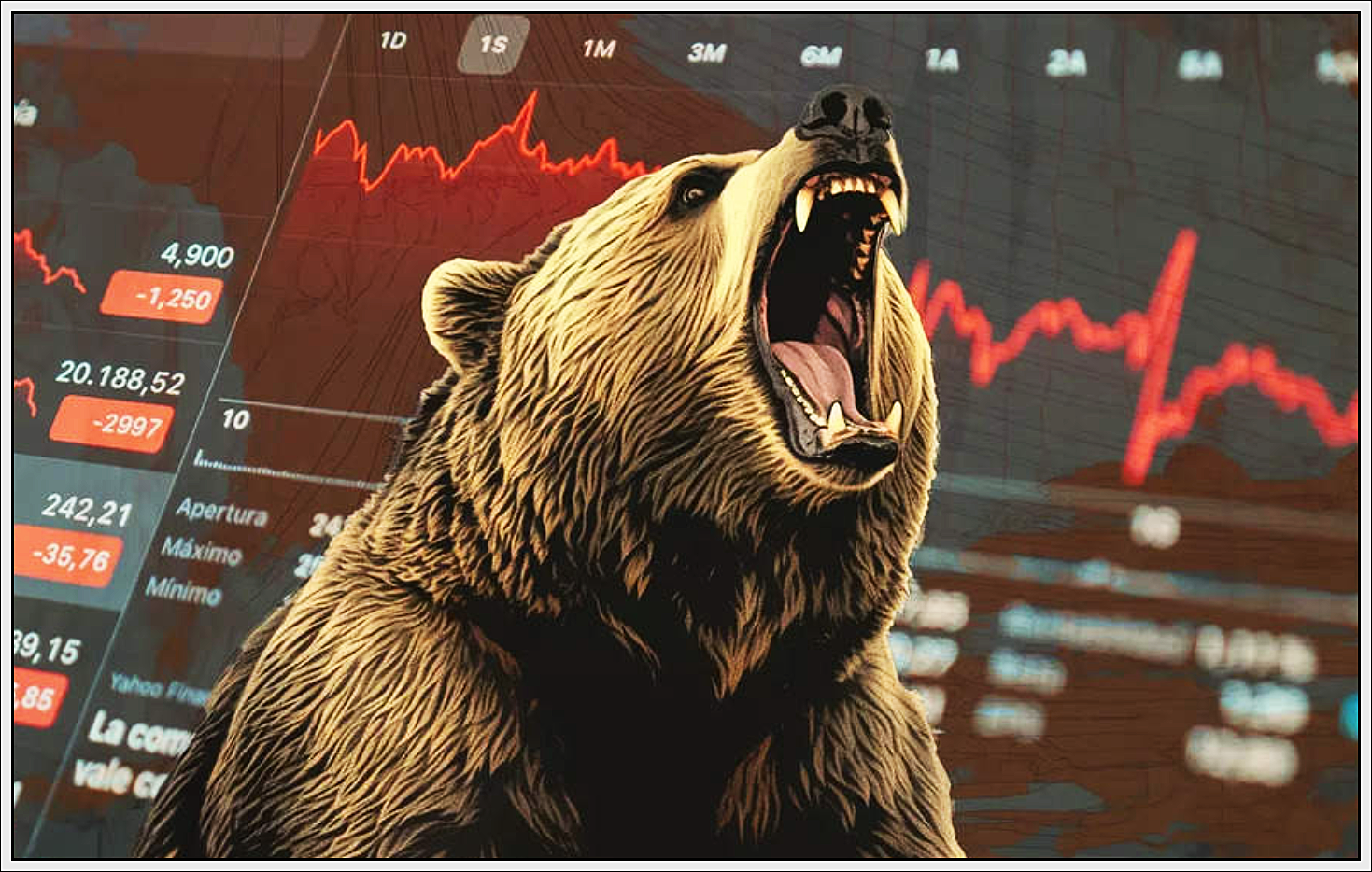

▶️ US STOCKS PLUNGE: CLICK HERE TO READ

US Markets Plunge As Recession Fears Take Hold
lll

ttt
he major stock indexes fell sharply on Monday morning, reflecting heightened fears that the U.S. economy may be headed into a serious economic slump.
The decline highlights the level of worry among investors since economic data released last week showed unemployment rising and job growth slowing more than expected. Surveys of manufacturers also indicated a steep falloff in activity in the sector, which is often a bellwether for the economy.
▶️ 11 Minutes 33 Seconds
The economy added just 114,000 jobs in July, according to the Department of Labor, significantly below the 180,000 forecast. Separate surveys of business executives known as purchasing managers by the Institute for Supply Management and S&P Global both showed that factory activity had contracted in the month.
The Dow Jones Industrial Average fell 2.3 percent after the opening bell. The Nasdaq Composite plunged four percent. The S&P 500 fell by 3.1 percent. The Russell 2000 index of smaller-sized companies fell by 5.1 percent.
The Cboe Volatility Index (VIX)—often called the “fear index”—exploded higher. Prior to a sharp rise in Friday, the VIX had been on a 190-day streak of closing below the historical long-term average of 20, the longest stretch below the average since 2018. On Monday morning, it hit 55, the highest level since the pandemic’s worst days.
The market in federal funds futures, a derivative that allows investors to speculate on Federal Reserve monetary policy, now reflects a nearly 90 percent chance that the Fed’s target will be a half a percentage point lower than the current benchmark after the September meeting. That could imply a larger-than-usual 50 basis point cut at that meeting or an extremely rare cut in August outside the scheduled Fed meeting.
Politics may be playing a role. Vice President Kamala Harris has risen in the polls, with some election forecasts now saying she is slightly favored to win in November. The market had been rising during the months when Trump was seen as the winner. ✪

▶️ NIKKEI TAKES RECORD DROP: CLICK HERE TO READ
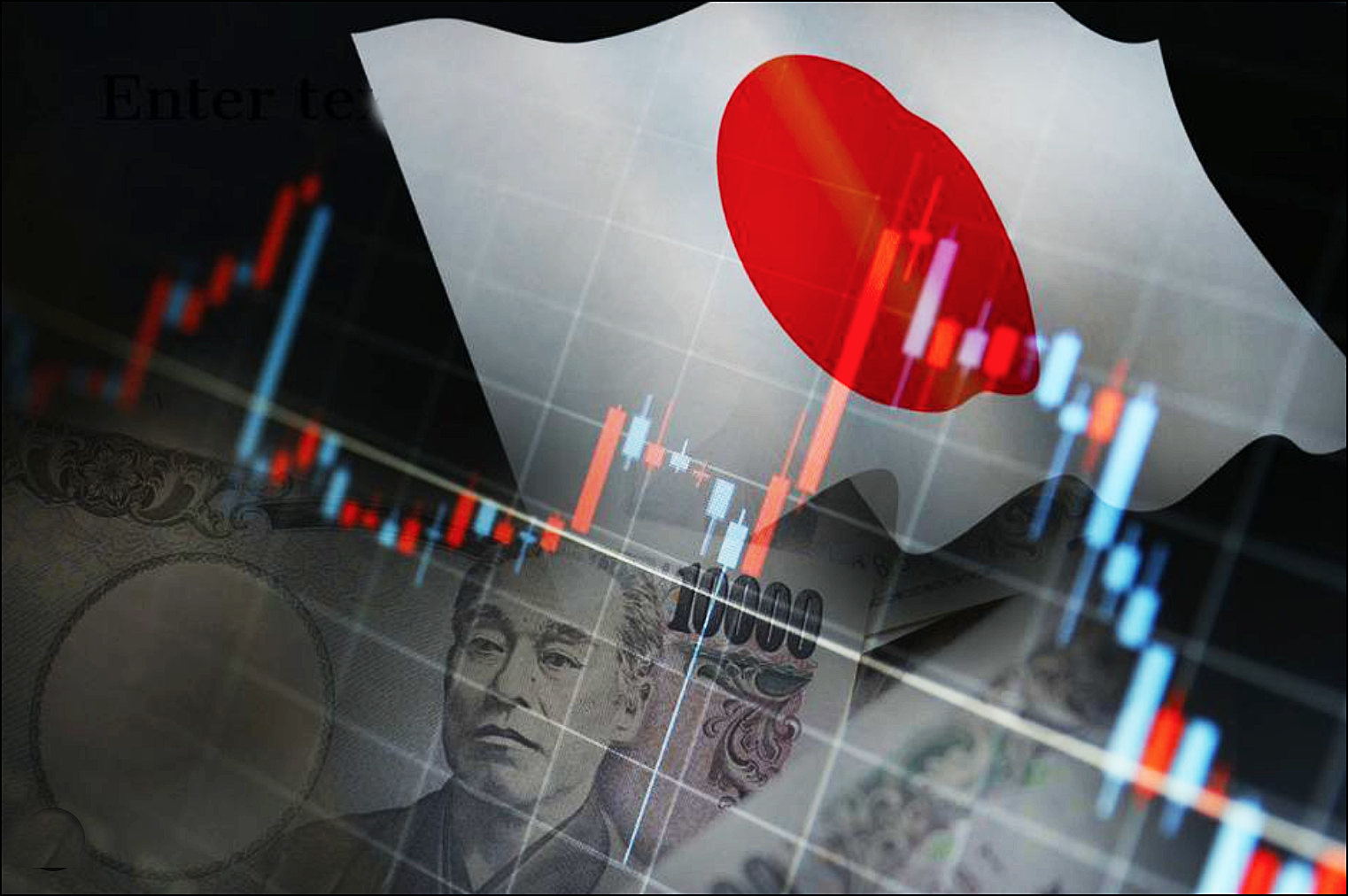
Nikkei Drops More Than 1987 ‘Black Monday‘

hhh
pooked in part by a looming recession under the policies of Joe Biden and Kamala Harris in the United States, the Japanese stock market panicked on Monday and suffered its worst single-day sell-off in history, losing even more points than it did on “Black Monday” in October 1987.
The higher volume of the Nikkei Stock Average meant the dizzying loss of 4,451.28 points was its second-largest fall by percentage, coming in at 12.4 percent to the 14.9 percent drop when the average lost 3,836.48 points on Black Monday.
There were some local factors in Monday’s plunge, such as the Bank of Japan raising interest rates from 0.1 percent to 0.25 percent last week, but market analysts told Nikkei Asia the primary cause of the crisis was mounting fear of an outright U.S. recession in the closing days of Joe Biden’s troubled presidency:
Foreign investors are selling Japanese stocks due to concerns that the U.S. may be heading for a recession, said Naka Matsuzawa, chief strategist at Nomura Securities. “The fall is not really happening due to Japan-specific reasons,” he said. “Markets are still trying to find the bottom.”
He said he is taking a “wait-and-see approach until U.S. tech stocks show some kind of resilience.” He does not foresee a global recession, and said markets will be volatile until the U.S. Federal Reserve lowers rates. Investors are pricing in a cut by September.
The Nikkei plunge was so dizzying that “circuit breakers” were triggered several times on Monday, temporarily locking down trades until the market stabilized.
All of Japan’s big banks lost double digits of value, in some cases roughly 20 percent, which in turn crushed the stock value of big export companies, such as Japan’s automotive giants.
▶️ 3 Minutes 10 Seconds
“It was the first chance for traders in Tokyo to react to Friday’s report showing U.S. employers slowed their hiring last month by much more than economists expected,” the Associated Press (AP) said of Japan’s market slump on Monday.
“That was the latest piece of data on the U.S. economy to come in weaker than expected, and it’s all raised fear the Federal Reserve has pressed the brakes on the U.S. economy by too much for too long through high interest rates in hopes of stifling inflation,” the AP said.
The Taiwanese and South Korean stock markets dropped as well, losing 8.4 percent and 8.8 percent respectively. It was the largest single-day drop in the history of the Taiwanese benchmark exchange.
The Financial Times (FT) said international investors are worried that “the Federal Reserve has been too slow to respond to signs the US economy was weakening, and might be forced to play catch-up with a series of rapid interest rate cuts.”
JP Morgan portfolio manager Priya Misra predicted the U.S. would avoid a full-blown recession, but “the markets will continue to panic until the Fed shows signs of moving.” Some of the more optimistic analysts felt Japan’s market dive could be a healthy market correction after years of heavy borrowing at low interest rates to finance currency trades and tech development.
American markets plunged on Monday as well, with the S&P 500 losing 3.1 percent and the Dow Jones Industrial Average (DJIA) falling 3.6 percent. The AP quoted some analysts who hoped this, too, might be a helpful market correction after a year of artificial highs driven by “a frenzy around artificial-intelligence technology and hopes for coming cuts to interest rates.”
The AP added:
Still, stocks of companies whose profits are most closely tied to the economy’s strength took heavy losses on the fears about a slowdown. The small companies in the Russell 2000 index dropped 4.3%, further dousing what had been a revival for it and other beaten-down areas of the market.
“Markets are a little bit out of control. This is just total panic. It’s not real but it is painful and it could be with us for a few weeks,” Andrew Brenner of National Alliance Securities told the New York Times on Monday.
“The market response is a reflection of the deteriorating U.S. economic outlook. It was a New York sneeze that forced Japanese pneumonia,” Jesper Koll of the Monex Group said.
Some economists held out hope that the weak July jobs report published on Friday – the event that most agree triggered Monday’s worldwide market panic – could have been “an aberration because of Hurricane Beryl,” as the BBC put it. Hurricane Beryl inflicted significant damage when it made landfall in Texas on July 8 after ravaging the Caribbean and parts of Mexico.
“You can pick out evidence to create a positive story, you can also pick out the evidence to create a negative story. I don’t think it universally points to one direction yet,” M&G Wealth chief investment officer Shanti Kelemen told the BBC. ✪


















▶️ CLICK HERE TO VIEW


▶️ CLICK HERE TO VIEW
▶️ 1 Hour 35 Minutes 5 Seconds
▶️ 22 Minutes 44 Seconds
▶️ 5 Minutes 7 Seconds
▶️ 7 Minutes
▶️ 10 Minutes 54 Seconds
▶️ 3 Minutes 22 Seconds
▶️ 2 Minutes 44 Seconds
▶️ 20 Minutes 22 Seconds
▶️ 13 Minutes 32 Seconds
▶️ 5 Minutes 56 Seconds
▶️ 39 Seconds
▶️ 2 Minutes 14 Seconds
