




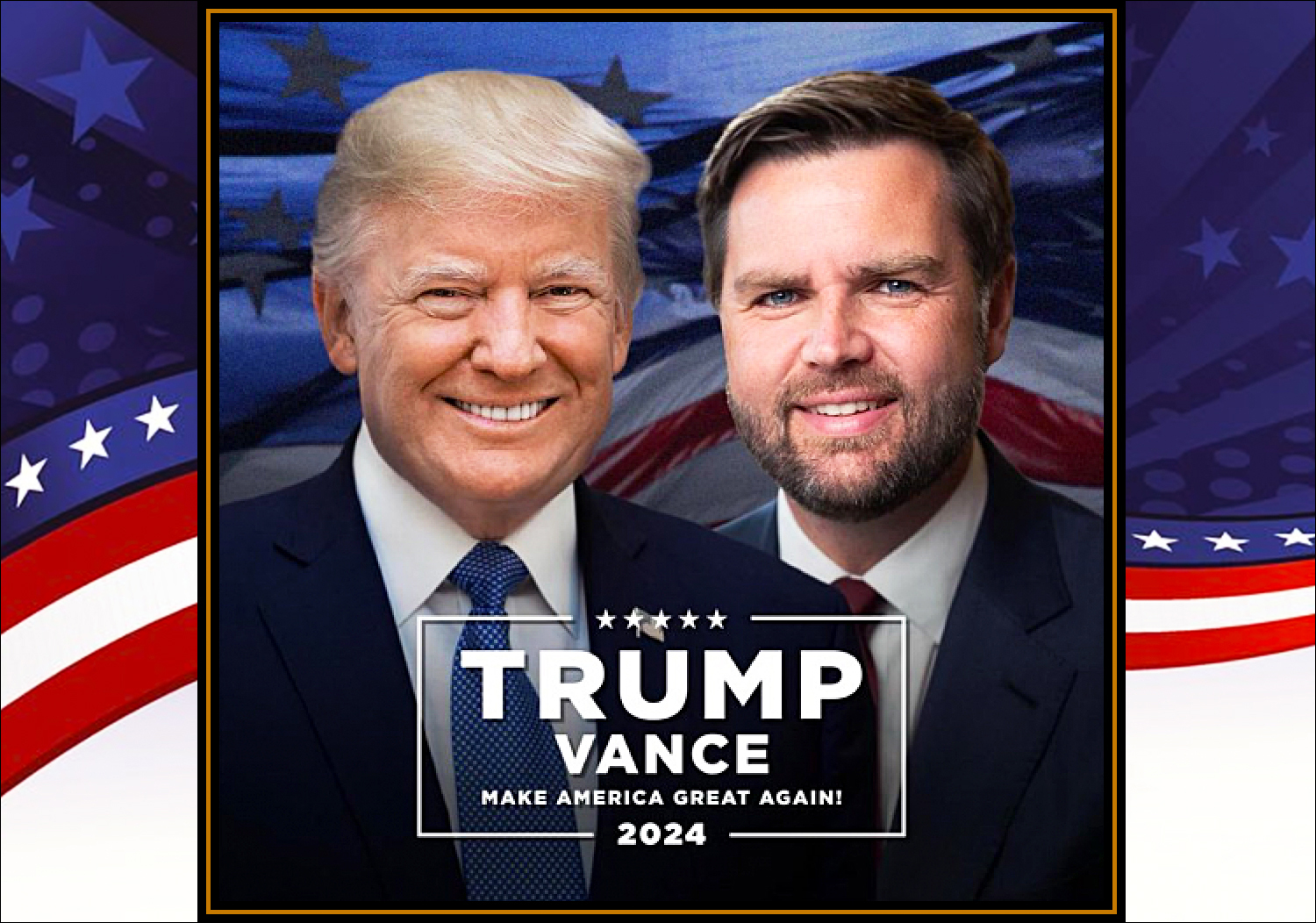
✪ During a campaign stop in Nevada early last month, Republican presidential candidate Donald Trump promised that if elected, there would be no more federal tax on tips...
▶️ CLICK HERE TO READ

mmm
aid Trump: “For those hotel workers and people that get tips, you’re going to be very happy, because when I get to office, we are going to not charge taxes on tips. You do a great job of service. You take care of people, and I think it’s going to be something that really is deserved.”
According to the Internal Revenue Service (IRS), tips are taxable income and must be reported to employers. Four factors determine whether a payment qualifies as a tip:
The customer makes the payment free from compulsion;
The customer must have the unrestricted right to determine the amount;
The payment should not be the subject of negotiations or dictated by employer policy; and
Generally, the customer has the right to determine who receives the payment.
Why The Government Taxes Income
The most important principle underlying taxation is simple and doesn’t involve fancy economics: the government taxes what it can get its hands on. The economists’ analysis of incentives—whereby the government tries to tax in such a way that it does not set off a rush to avoidance, either legal (using complex structures to avoid taxes) or economic (not doing the thing that gets taxed, such as earning income)—comes later. Economists should focus on incentives; our opinion of what’s “fair” is no better than anyone else’s.
With that in mind, why does the government tax income? Because, circa 1913 (the year the 16th Amendment was ratified, giving Congress the right to levy an income tax), income was easier to measure than sales, value added, consumption, or other economically better concepts. When money changes hands, it’s relatively easy for the government to see what’s there and take a share. Tariffs really start from the same concept. It’s not that hard to see what’s going through the port and demand a share—Adam Smith, David Ricardo, and free trade be damned. But the federal government wanted more money than tariffs could provide.
Tips reported to employers are included on employees’ W-2 forms for income-reporting purposes. Tips are simply added to one’s taxable income and are subject to not only income tax but also Social Security and Medicare payroll taxes.
Trump was not clear whether his proposal would exempt tips from payroll taxes, income taxes, or both.
A week after Trump met with congressional Republicans, Senator Ted Cruz (R-Tex.), with cosponsors Senator Steve Daines (R-Mont.), Senator Rick Scott (R-Fla.), and Senator Kevin Cramer (R-N.D.), introduced the No Tax on Tips Act. The relevant text of the bill simply reads: “There shall be allowed as a deduction an amount equal to the cash tips received during the taxable year that are included on statements furnished to the employer.” This would be an above-the-line deduction of tips received (via cash, credit cards, and checks) that reduces taxable income similar to the deductions for student loan interest paid, unreimbursed expenses of teachers, the deductible part of self-employment tax, and contributions to a traditional IRA.
Naturally, industry groups were ecstatic about the bill, including the National Restaurant Association and the Professional Beauty Association. Said Sean Kennedy, Executive Vice President of Public Affairs at the National Restaurant Association: “Tipped employees are a critical part of the restaurant industry, and anything that strengthens their economic condition is a positive for them. The ‘No Tax on Tips Act’ would provide immediate tax relief for more than 2.2 million restaurant employees and their families, putting more money in their pockets at a time when we’re all feeling the squeeze of higher prices.”
However, Elyanna Calle, an organizer with the Restaurant Workers United union, slammed the proposal, calling it a “misguided way of trying to fix a problem of uplifting the lower class.”
Other opponents of Trump’s proposal focused on how much revenue the Federal Government would be losing if tips were no longer taxed.
IRS data from a few years ago indicated that about 6 million taxpayers reported over $38 billion in taxable tip income. Those figures are certainly higher today.
But why limit just certain income from taxation? In addition to income from tips, why not exempt from taxation other forms of income, like interest, gambling winnings, capital gains, dividends, prizes, awards, gig work, side jobs, royalties, and part-time work? Better still, why not exempt all income from taxation?
Although no Americans are old enough to remember it, there was a time in the United States when there was no income tax. The income tax actually began as a modest 1 percent tax on taxable income above $3,000, followed by a series of surcharges of up to 6 percent applied to higher incomes. The maximum rate of 7 percent was applied to taxable income over $500,000. Thanks to generous exemptions and deductions, only a small percentage of the population paid taxes on their income.
That all changed with the advent of U.S. intervention into World War I, when the tax rate in the highest tax bracket increased to 67 percent. After further increases, between 1950 and 1963, the top rate stayed near or above 90 percent. Rates fell under President Ronald Reagan; increased during the presidencies of George H. W. Bush and Bill Clinton; fell again, temporarily, under President George W. Bush; increased under President Barack Obama; and fell again under President Donald Trump. However, many provisions of Trump’s tax cut—the Tax Cuts and Jobs Act (TCJA)—are set to expire at the end of 2025.
The reason why people say that we just can’t eliminate the income tax is that it would deprive the government of revenue it needs to spend. But isn’t that the point? The case could be made that at least 90 percent of what the federal government spends money on is unconstitutional: foreign aid, business subsidies, welfare, education, health care, job training, the war on drugs, public broadcasting, student loans, food stamps, foreign wars, space exploration, and so much more.
The constitutional functions of the U.S. government could be adequately funded without an income tax. Exempting tips from taxation should be a small step toward that end.✪
lll



















▶️ CLICK HERE TO VIEW


▶️ CLICK HERE TO VIEW
▶️ 1 Hour 35 Minutes 5 Seconds
▶️ 22 Minutes 44 Seconds
▶️ 5 Minutes 7 Seconds
▶️ 7 Minutes
▶️ 10 Minutes 54 Seconds
▶️ 3 Minutes 22 Seconds
▶️ 2 Minutes 44 Seconds
▶️ 20 Minutes 22 Seconds
▶️ 13 Minutes 32 Seconds
▶️ 5 Minutes 56 Seconds
▶️ 39 Seconds
▶️ 2 Minutes 14 Seconds
