


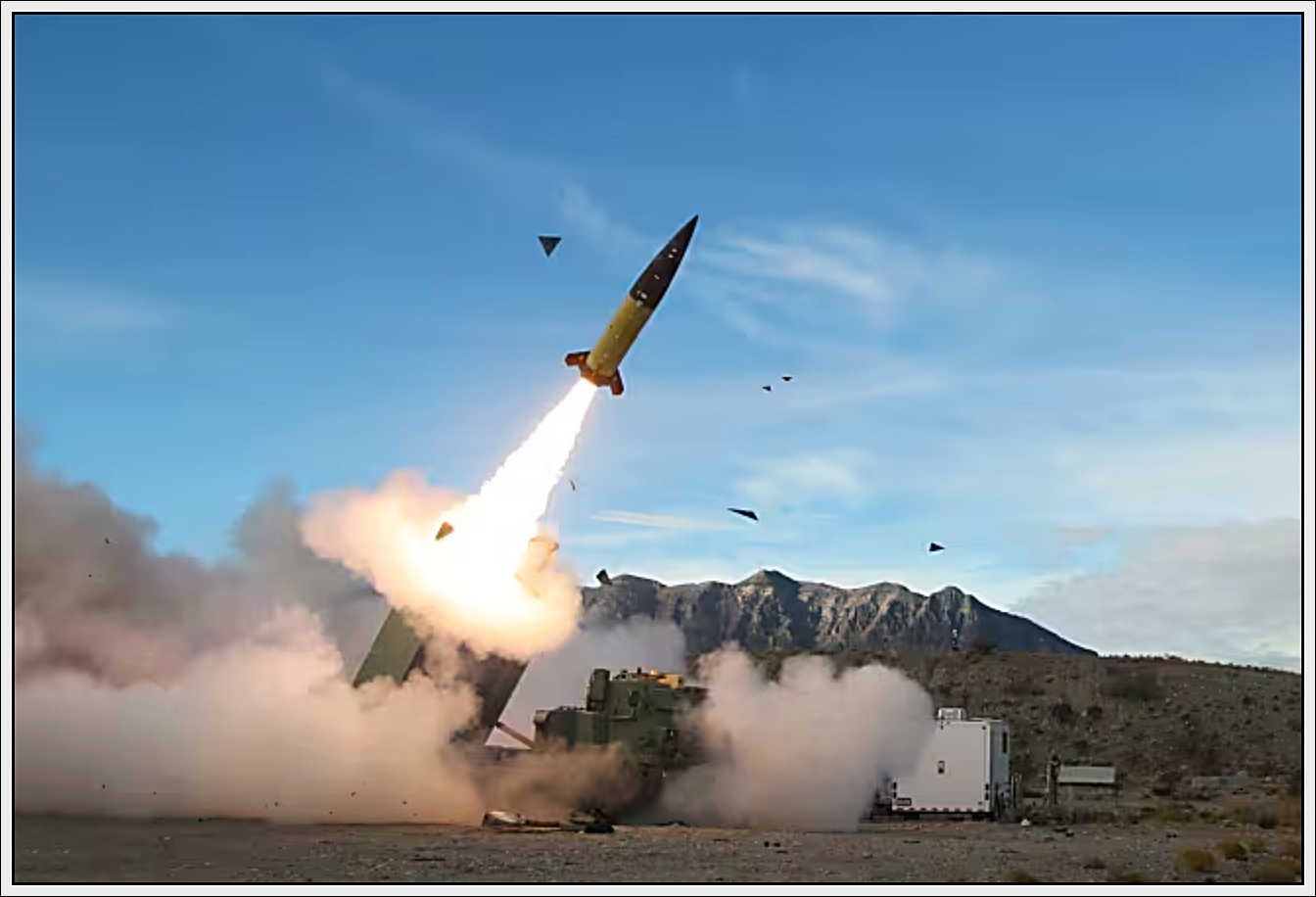

✪ Kremlin figures warned the United States that allowing its long-range tactical missiles to be used by Ukraine to strike targets deep inside Russia for the first time would “inevitably lead to a serious escalation…”
▶️ CLICK HERE TO READ

kkk
ussia warned of dire consequences if Ukraine used long-range U.S.-made ATACMS missiles to strike strategic targets deep inside the Federation, but also confidence it would be able to foil the attacks in the first place. The responses came after claims were published in the beltway-interest newspapers favoured for leaks by the U.S. intelligence community at the weekend that U.S. President Joe Biden would permit Ukraine to use the American Army Tactical Missile System (ATACMS) missiles to strike targets within Russia.
According to reports from the Democrat-aligned Washington Post and New York Times newspapers, both citing unnamed U.S. officials, lame-duck President Joe Biden has lifted restrictions barring Ukraine from using American Army Tactical Missile System (ATACMS) missiles to strike targets within Russia. S move which may escalate the conflict two months before President-Elect Donald Trump comes into office with a mandate to seek a peace settlement.
The Biden White House previously approved the use of ATACMS by Kyiv to strike Russian targets within Ukrainian territory, including Russian-occupied lands such as Crimea, which was illegally annexed by Moscow under the Obama Administration in 2014. The Biden Administration had also approved the use of shorter-range American missiles for limited cross-border strikes within Russia.
However, President Biden had been hesitant to permit the Ukrainians to use ATACMS within Russia for fear of escalating the conflict, with reported concerns over the world’s largest nuclear power potentially using more powerful weapons within Ukraine, Moscow increasing assistance to American adversaries such as the Islamist regime in Iran or to the Houthi terrorists in Yemen in their quest to disrupt global shipping.
The apparent about-face from the Biden Administration may be seen as an attempt to undermine peace efforts by incoming President Donald Trump, who has already embarked upon unofficial diplomatic efforts to fulfil his promise of negotiating an end to the war.
Shortly after securing victory in last week’s elections, Mr Trump held calls with principal players in the conflict, including Ukrainian President Volodymyr Zelensky and German Chancellor Olaf Scholz. Reports also claimed that the present-elect spoke with Vladimir Putin and urged him not to escalate the war before the transition of power in Washington. The Kremlin has denied the call took place.
While Mr Trump has not publicly revealed his negotiating strategy, allies, including Hungarian Prime Minister Viktor Orbán, have suggested that the future 47th President would likely seek to withhold funding for Ukraine to pressure Zelensky to the negotiating table. Zelensky has said that he would be unwilling to agree to any deal which included ceding land that Ukrainian forces have so far failed to recapture from Russian control.
With the expectation of Trump using purse strings to pressure Kyiv into accepting a more realistic compromise, there have been efforts on both sides of the Atlantic to secure funding sources for Zelensky to continue the fight.
Speaking from Brussels on Wednesday, U.S. Secretary of State Antony Blinken said: “President Biden has committed to making sure that every dollar we have at our disposal will be pushed out the door between now and January 20th.”
Meanwhile, over the weekend, the G7 nations of Canada, France, Germany, Italy, Japan, the United Kingdom, and the United States jointly vowed “enduring support for Ukraine” and to back Kyiv for “as long as it takes.”
Until now, the system was permitted for Kyiv to strike Russian targets inside Ukraine, but deeper strikes inside Russia had been prohibited over fears using American weapons to directly attack the Russian Federation would lead to Russia treating the U.S. as a direct combatant in the conflict. Ukraine sees hitting Russia inside Russia as essential as it would theoretically allow them to destroy Russian weapons before they have a chance to join battle.
kkk
Russian state media on Sunday night and Monday morning was quick to highlight the remarks of top Kremlin figures making dark warnings about the alleged change in police. Among them was head of the State Duma Committee on International Affairs Leonid Slutsky, a frequent interlocutor on Russian-Western relations, who said: “American missile strikes deep into Russian regions will inevitably lead to a serious escalation, which threatens to have much more serious consequences.”
A leader of one of Russia’s permitted opposition parties — a systemic, controlled opposition, Russian dissidents point out — Slutsky also played upon the apparent tension between the claimed move by the Biden White House in its final days and the desire to force peace by incoming President Donald Trump. He continued: “The Biden administration cannot help but understand that it leaves the Trump team with the problem of resolving not only the Ukrainian conflict, but also an even more acute one – preventing a global confrontation.”
Slutsky claimed if Biden presaged a broader conflict he would be known in Russia as “Bloody Joe” because, he claimed, the U.S. allowing Ukraine to bomb its attacker directly would mean “direct US participation in the military conflict in Ukraine. Which will inevitably entail the harshest response from Russia, based on the threats that will be created for our country.”
The Russian response had a typically paradoxical flavour in its assertions that while such an escalation would mean war with America, it also would not matter too much because their armed forces could allegedly easily defeat the new weapon. Typical of this tone was former commander in chief of Russia’s air force, now ‘First Deputy Chair of the Federation Council Committee on Defense and Security’ Viktor Bondarev, who claimed Russia had a sophisticated understanding of Ukrainian logistics.
The position is essentially mirroring Ukraine’s professed reason for wanting permission for long-range strikes in the first place, to destroy Russian weapon systems and aircraft on the ground before they have a chance to launch, portending more anti-air duels to come, yet ever-deeper in each other’s territory. Bondarev said on his view, per Kremlin state media: “For the Russian Armed Forces, the logistics of providing and servicing military supplies for the Ukrainian Armed Forces have long been known. Therefore, long-range weapons will become the same target as all other targets that we regularly practice.”
If that fails, the former top general said he believed his country’s armed forces would be able to shoot down ATACMS missiles as they flew to Russia. This, of course, may or may not be true and Ukraine certainly has a history of sneaking past even unsophisticated improvised air strikes deep inside Russia to date.
The most senior Kremlin spokesmen, however, simply referred in their remarks back to Russian Federation President Vladimir Putin’s own comments on what long-range strikes against their nation would mean. Spokesman for the Russian Foreign Ministry Maria Zakharova and Putin’s own spokesman Dmitry Peskov both cited the President’s September 12th remarks, when he had said such strikes would “change the very nature of the conflict” and would “mean that NATO countries, the U.S., European countries, are at war with Russia.”
Peskov had added further context to those words in September, when he said Putin had been “extremely clear, unambiguous and admits of no dual interpretations,” and had been “no doubt” heard by his intended audience, NATO capitals.
While Russia’s response to the claimed ATACMS order is stark, the degree to which Russian warnings are to be taken seriously has been blurred by nearly 1,000 days of conflict where ‘red lines’ have so often been set and then passed without serious consequence. Western nations are now several tranches of ever-more effective military equipment deliveries to Ukraine, including tanks, advanced missiles, and jet fighters, all of which came with their own ‘red line’ warnings of wider war from the Kremlin, and yet it hasn’t happened — yet.
Perhaps the most stark instance of lurid Kremlin rhetoric is that of Dmitry Medvedev, formerly the Prime Minister and President of Russia serving Vladimir Putin, who has repeatedly threatened to drop nuclear bombs on Western cities if Russia isn’t left alone. As reported:
Claiming “beautiful historical places” would be destroyed by Russia’s nuclear weapons, Medvedev suggested it would be better for the forces trying to roll back Russia’s war against Ukraine should stand down “before it’s too late”. Further discussing the consequences of Western-backed Ukraine taking back its legal territory, Medvedev spoke of how losing its newly conquered territory again could push Russia into civil war.
In comments possibly directed at a domestic audience to hammer home the importance of supporting the state’s war effort, Medvedev continued, per Russian state media: “the direct and irreversible collapse of present-day Russia… a violent civil war with the final disappearance of our country from the world map. Tens of millions of victims. The death of our future. The collapse of everything in the world.”
Both the New York Times and Washington Post implied that the decision by Biden to approve ATACMS strikes in Russia was prompted by North Korean troops entering Russia and potentially joining the conflict rather than a desire to impede Trump’s peace efforts.
According to the unnamed U.S. officials, the ATACMS strikes would be initially limited to the Kursk region of Russia, where Ukraine launched a surprise incursion over the summer and where North Korean forces are said to be amassing. However, the reports said President Biden may still approve strikes elsewhere within Russia while he remains in office. ✪























COUNTDOWN TO INAUGURATION DAY 2025






▶️ CLICK HERE TO VIEW


▶️ CLICK HERE TO VIEW
▶️ 6 Minutes 47 Seconds
▶️ 9 Minutes 51 Seconds
▶️ 2 Minutes 51 Seconds
▶️ 1 Hour 6 Minutes 47 Seconds
▶️ 2 Minutes 26 Seconds


