


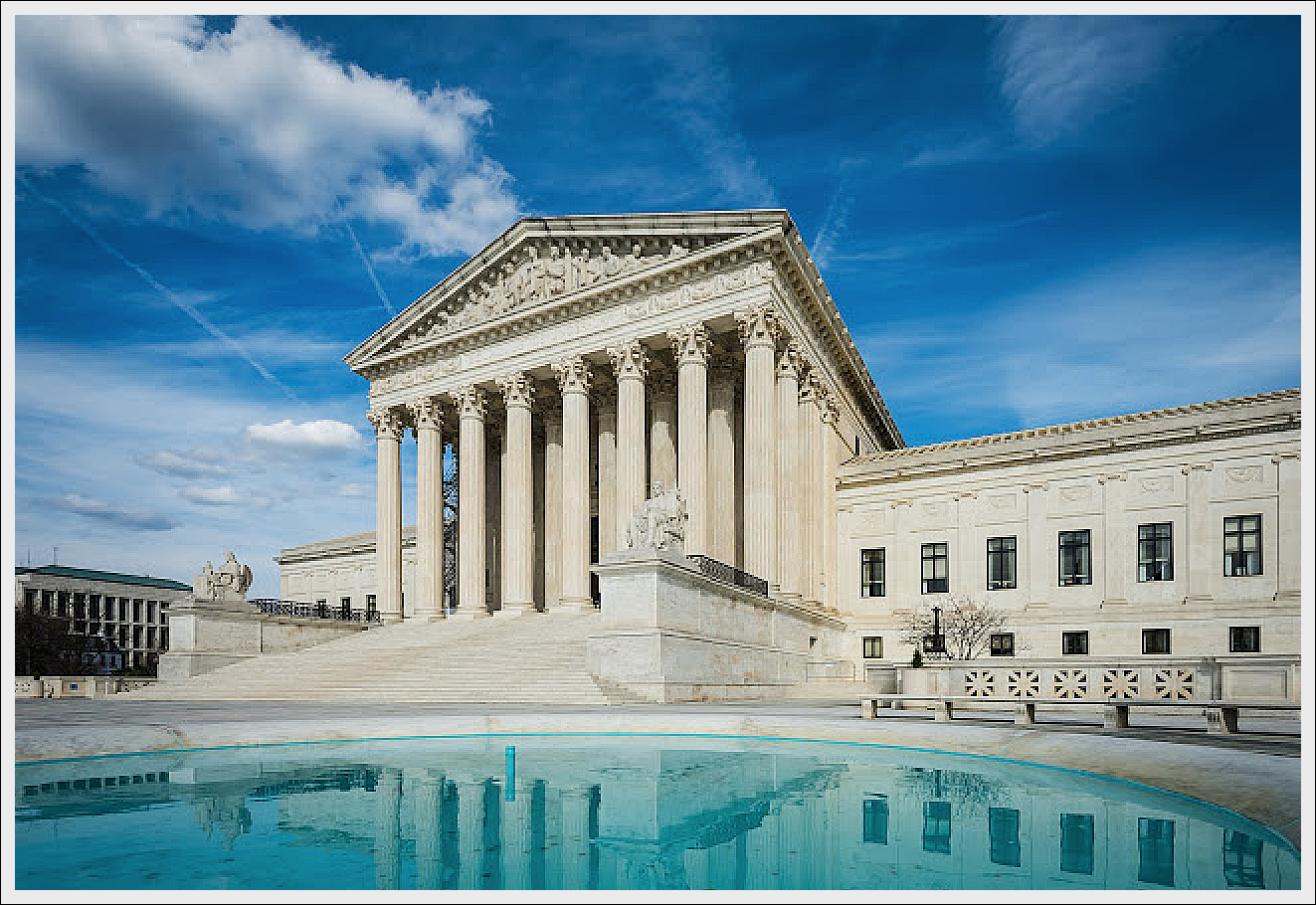

✪ From nationwide injunctions to gender procedures for minors, the High Court issued many consequential rulings during the 2024–2025 term...
▶️ FEATURED ARTICLE: CLICK HERE TO READ

lll
The Supreme Court closed out its 2024–2025 term with a series of high-profile decisions that are affecting major policy areas, as well as the nature of judicial authority itself. Here’s a breakdown of the biggest decisions of the term:
✪ ONE: Nationwide Injunctions
The Supreme Court issued a landmark opinion on June 27 in which it ruled against the practice of judges issuing nationwide injunctions.
These are court orders that block policies for the whole nation rather than just the parties in the lawsuit.The recent proliferation of nationwide injunctions under Presidents Joe Biden and Donald Trump has provoked scrutiny over the nature of judges’ authority and whether they are encroaching on the power of the Executive Branch.
In its 6–3 decision, the Supreme Court ruled that nationwide injunctions exceeded the power that Congress had granted federal courts in the Judiciary Act of 1789.
Justice Amy Coney Barrett’s majority opinion allowed agencies to develop guidance for implementing Trump’s birthright citizenship executive order, but put a 30-day pause on the Federal Government carrying it out.
Barrett’s opinion didn’t completely prevent courts from issuing broad relief, even at a national level, either. As Justices Brett Kavanaugh and Samuel Alito noted in concurring opinions, litigants can still pursue nationwide relief through other legal vehicles such as class actions.
✪ TWO: Gender Procedures for Minors
For years, a culture debate has surrounded the concept of “gender-affirming care,” which includes surgical and pharmaceutical interventions for people who seek to attempt to change their gender.
In June, the Supreme Court released its hotly anticipated decision in United States v. Skrmetti, which involved the Biden Administration’s challenge to Tennessee’s law banning “gender-affirming care” for minors.
This particular case focused on puberty blockers and cross-sex hormones rather than surgical interventions such as mastectomies.The court’s 6–3 majority upheld Tennessee’s law.
The majority also rejected the Biden Administration’s argument that an appeals court had failed to scrutinize the law thoroughly enough when determining whether it violated the equal protection clause of the 14th Amendment.
Contrary to what plaintiffs had argued, the Supreme Court ruled that the state law did not entail a form of sex-based discrimination that would have triggered a more intense review under the equal protection clause.The decision was a win for states seeking to enact laws like Tennessee’s and seemed to bode well for other conservative policies related to gender.
✪ THREE: Deportations
One of the more significant decisions this year arose from a case that didn’t have an oral argument before the Supreme Court. In April, the justices weighed in on the first of a series of cases that challenged Trump’s attempts to deport alleged Venezuelan gang members under the Alien Enemies Act.Trump scored an initial win when the Supreme Court removed two blocks that a federal judge in Washington had imposed on the deportations.
However, part of the ruling also stated that Trump must provide an opportunity for deportees to seek habeas relief, which is a legal mechanism for challenging one’s detention. As multiple cases played out in lower courts, the Supreme Court, in orders issued in April and May, ultimately blocked some of the deportations. It also said that Trump had not been providing enough notice of the deportees’ right to seek relief.
The issue has become a flashpoint between courts and the government, which has alleged that judges are intruding on executive authority. It is possible that the issue could reach the Supreme Court again, as it hasn’t yet weighed in on lower court decisions holding that Trump’s invocation of the Alien Enemies Act was invalid.
✪ FOUR: TikTok Divestiture or Ban
In 2024, Congress passed the Foreign Adversary Controlled Applications Act. It required TikTok’s Chinese parent company to either divest its U.S. business or cease operations within the United States because of data privacy and national security concerns. Congress set a deadline of Jan. 19 for TikTok to make that choice.
As the deadline approached, TikTok sued, and the case made its way through the federal court system.The Supreme Court ultimately upheld the law on Jan. 17.
In a unanimous decision, the court said that the law satisfied a standard known as “intermediate scrutiny,” noting that it served the important government interest of preventing TikTok’s Chinese parent company from capturing the personal data of American users. The high court noted that while data collection is common in the digital age, TikTok was different.
“TikTok’s scale and susceptibility to foreign adversary control, together with the vast swaths of sensitive data the platform collects, justify differential treatment to address the Government’s national security concerns,” the Supreme Court stated in an unsigned opinion. Since then, Trump has delayed enforcement of the law in ways that critics say are legally questionable. The president recently said that he had found a buyer for TikTok, potentially salvaging the platform for its U.S. users.
✪ FIVE: Mexico Gun Lawsuit
U.S. gun makers successfully avoided liability in a lawsuit that the Mexican government brought over the flow of U.S. firearms to cartels.
Under the Protection of Lawful Commerce in Arms Act, gun companies can usually avoid liability for how people use their firearms.
However, the U.S. Court of Appeals for the First Circuit said this lawsuit was unique in that the allegations fell under an exception made by that law. When the Supreme Court intervened, it unanimously reversed the First Circuit’s decision, stating that the companies were not liable under the law. Writing for the majority, Justice Elena Kagan said that Mexico’s lawsuit did not plausibly allege that the gun companies “aided and abetted unlawful sales routing guns to Mexican drug cartels.”
✪ SIX: Straight Woman Wins Discrimination Case
A heterosexual woman’s win at the Supreme Court established that non-minorities may sue on an equal footing with minorities in employment discrimination lawsuits.
After 13 years at the Ohio Department of Youth Services, Marlean Ames began reporting to a manager who was a lesbian. She applied for a promotion but lost it to an allegedly unqualified person.
The department then took her program administrator position away, allowing her to choose between termination and demotion. The department ignored its own policies to hire an unqualified gay man for the post, Ames alleged in the employment discrimination lawsuit that she brought.
A federal appeals court ruled that because Ames was not a member of a minority group, she had to take the extra step of proving that there were “background circumstances” supporting her claim that the department was discriminating against her.
The high court unanimously ruled on June 5 that this additional requirement violated the federal Civil Rights Act and Supreme Court precedents. Federal lawmakers established protections for individuals without regard to whether they belong to a majority or a minority group, leaving “no room for courts to impose special requirements on majority-group plaintiffs alone,” Justice Ketanji Brown Jackson wrote.
✪ SEVEN: Opting Out Of LGBT Storybooks
Parents won the right to sue to opt their young children out of school storybooks that promote LGBT lifestyles in a Supreme Court ruling on June 27.
The case goes back to 2022, when the Montgomery County, Maryland, Board of Education mandated new “LGBTQ-inclusive” storybooks for elementary school students that promote gender transitions, Pride parades, and same-sex romance between young children.
Parents were initially told that they could opt out their children when the storybooks were read, but the school board later took away that option.
Parents who said the mandatory exposure of their children to the books violated their religious faiths sued, arguing that the board policy interfered with their constitutional right to freely exercise their religion.
A federal appeals court held that the parents failed to show that the board’s policy infringed on their rights, and it denied their claims.The Supreme Court held 6–3 that the parents were entitled to a preliminary injunction to block the board’s policy not to grant opt-outs, and that the policy itself may undermine their religious beliefs.
The storybooks are “clearly designed to present certain values and beliefs as things to be celebrated and certain contrary values and beliefs as things to be rejected,” Justice Samuel Alito said.
✪ EIGHT: Porn Age-Verification Laws
State laws requiring pornography websites to verify the age of users will remain in place following a Supreme Court ruling on June 27.The court, in a 6–3 vote, upheld a Texas law requiring age verification to access pornographic websites.
The state law fines website operators $10,000 per day for not verifying users’ ages and $250,000 if any minors access sexual material covered by the law.
The U.S. Court of Appeals for the Fifth Circuit previously overturned a lower court’s injunction blocking the verification provision.
Justice Clarence Thomas, writing for the majority, said the law interferes with the right of adult visitors to access porn websites but is still consistent with the free speech clause of the First Amendment.
“The power to require age verification is within a state’s authority to prevent children from accessing sexually explicit content,” Thomas wrote.
In addition to Texas, at least 21 other states have enacted similar laws requiring age verification “to access sexual material that is harmful to minors online,” Thomas wrote. The Age Verification Providers Association stated on its website that the figure is higher, at 24 states.More states may pass similar laws now that their constitutionality has been established.
✪ NINE: South Carolina Defunds Planned Parenthood
States have greater leeway to defund Planned Parenthood, the nation’s largest abortion provider, following a Supreme Court decision on June 26.
South Carolina had blocked Planned Parenthood from receiving funding from the state’s Medicaid program. Medicaid is a joint federal–state program that offers health insurance coverage to low-income Americans.
A federal appeals court decision previously allowed the lawsuit to move forward and blocked South Carolina from excluding Planned Parenthood from the program.However, the Supreme Court ruled 6–3 that the patient’s lawsuit should not have advanced because patients don’t have a clear right to sue over the choice of provider under the Medicaid Act.
If Congress wants to allow patients to sue over the choice of provider, it needs to make it clear that they may do so, Justice Neil Gorsuch wrote.
These matters should be decided by “the people’s elected representatives, not unelected judges charged with applying the law as they find it,” Gorsuch said.
Four other states previously banned Planned Parenthood from their Medicaid networks. More states may do so in light of the new ruling. ✪














▶️ DONATE VIA PAYPAL (DEBIT & CREDIT CARD)
ALL PayPal Transactions Are Encrypted For Card Holder Privacy & Security
▶️ DONATE VIA ZELLE (DIRECT BANK CASH TRANSFER)
ZELLE is the perfect online alternative to PayPal. It’s an incredibly simple, secure, easy, fast and FREE way to send or receive money to recipients directly from your online banking account without a middleman. Best of all, there’s NO fees.
ZELLE is a service provided by your bank and is already built in to your online banking account. You only need to activate it first before using. If you’ve already activated ZELLE in your online bank or credit union account, you can donate to The New Americanist by using our ZELLE address:
vip@thenewamericanist.com
To activate your ZELLE, follow these easy instructions (a simple two minute process):

▶️ DONATE VIA SNAIL MAIL




▶️ CLICK HERE TO VIEW
▶️ 1 Hour 13 Minutes 23 Seconds
▶️ 51 Minutes 40 Seconds
▶️ 33 Minutes 17 Seconds
▶️ 10 Minutes 19 Seconds
▶️ 1 Hour 4 Minutes 9 Seconds
▶️ 16 Minutes 37 Seconds ⭐️ HelloKitty’sGotAHairTrigger
▶️ 8 Minutes 02 Seconds
▶️ 8 Minutes 29 Seconds
▶️ 1 Hour 32 Seconds
▶️ 2 Hours 55 Minutes 48 Seconds
▶️ 20 Minutes 06 Seconds
▶️ 1 Hour 21 Minutes 44 Seconds
▶️ 1 Hour 52 Minutes 18 Seconds
▶️ 13 Minutes 56 Seconds
▶️ 9 Minutes 39 Seconds ⭐️ Bosun Higgs
▶️ 5 Minutes 49 Seconds
▶️ 5 Minutes 17 Seconds
▶️ 1 Minutes 13 Seconds
▶️ 6 Minutes 6 Seconds
⭐️ The NEW LOGICAL SHOW featuring The New Americanist’s very own bet1125
PLEASE be certain to LIKE & SUBSCRIBE: Let’s support NEW Conservative media.
