
⭐️ HelloKittysGotAHairTrigger


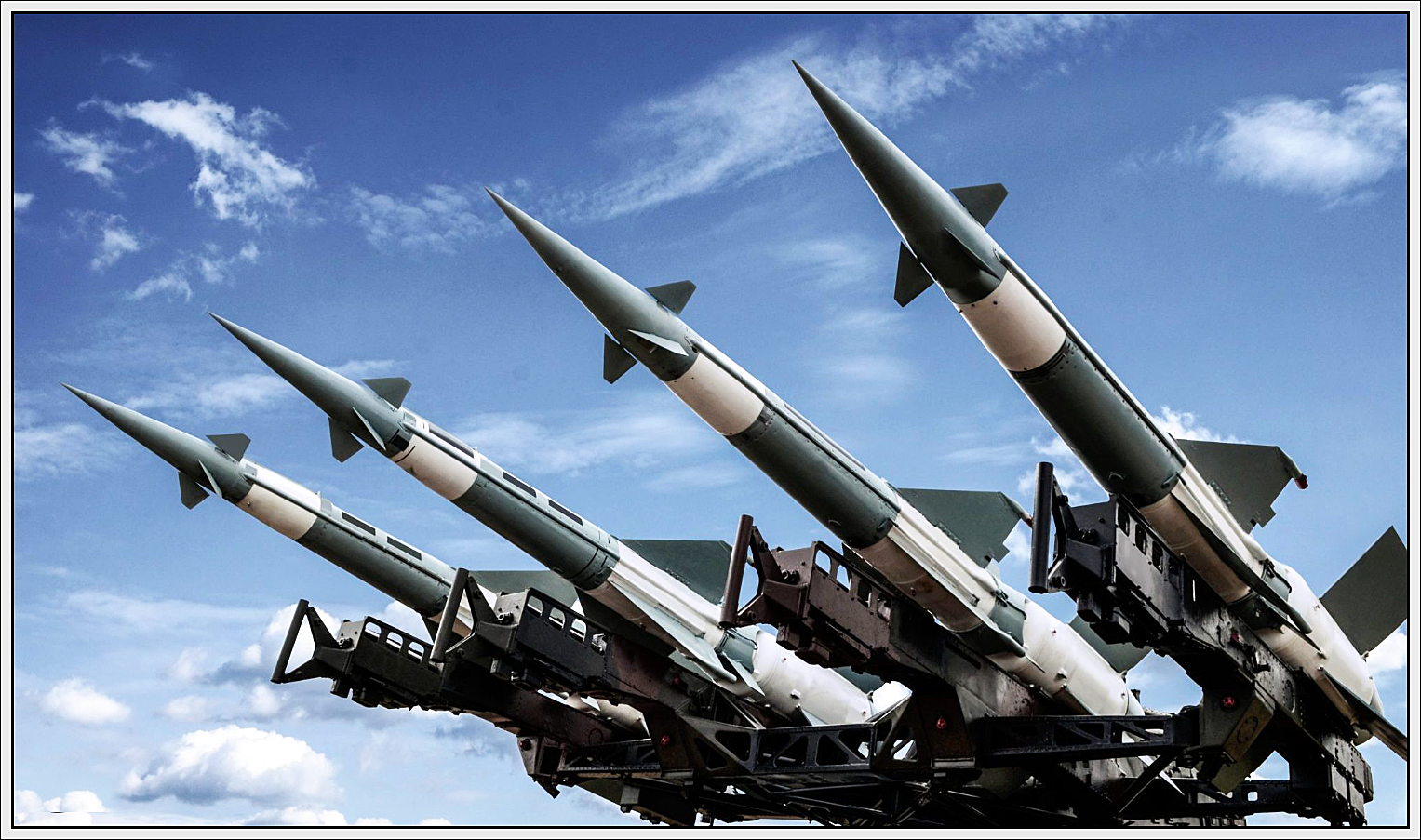

✪ The decay of the post–Cold War bilateral nuclear order has made nuclear escalation in the current Ukrainian war a risky prospect…
▶️ CLICK HERE TO READ

gggg
kraine has been lobbying hard for the lifting of all restrictions on weapons use. During the recent visit, Ukraine’s Defense Minister Rustem Umerov identified a number of Russian airfields within range of U.S. and European supplied long-range weapons; and Kiev is now seeking the green light to take the conflict to the next level. Zelensky himself will travel to Washington this month to present Biden with a “victory plan” that will reportedly outline Kiev’s path to achieving its war aims. Such a plan will undoubtedly include the acquisition and use of more long-range weaponry with offensive capabilities for striking Russia proper.
However as of right now, it hasn’t happened. The likely reason is that even our otherwise myopic policy makers understand that Kiev’s dire situation on the battlefield leaves it with one strategic option: getting the United States more involved. While Moscow has subsequently been signaling that the threshold between proxy war and open engagement has been reached. Whether this threshold will be crossed is dependent on the decisions arrived at in the halls of Washington (and perhaps Brussels) over the next several weeks.
The present peril has been significantly exacerbated in the past several weeks by reported changes to the respective nuclear strategies of both Russia and the United States.
As Ukraine has lobbied for further long-range capacities, Russia’s Foreign Minister Sergey Lavrov took the occasion to further chide the West for “playing with fire.” The United States was “asking for trouble” by allowing for strikes on Russian territory, he stated, and it would be irresponsible of those “entrusted with nuclear weapons” to engage in such reckless brinkmanship.
Russian media also reported, following Lavrov’s announcement, that the Kremlin had now decided to “refine” the country’s nuclear doctrine in light of such provocative and escalatory behavior. Deputy Foreign Minister Sergey Ryabkov confirmed the ongoing changes as well, citing Russia’s “Western adversaries’ escalation course in regards to the special military operation.”
Current Russian nuclear doctrine states that nuclear weapon use is allowed either in retaliation for a first strike by an enemy or if there is an existential threat to the Russian state. The doctrine also states that an attack on Russian facilities responsible for a nuclear response are treated as acceptable justification for nuclear deployment. Kiev has already launched drone strikes against nuclear EWS (early warning system) assets in Russia’s southwest in the recent past. Given the prospect of Western-supplied long range weaponry, it seems reasonable that the Kremlin is signaling a heightened readiness to respond in case such attacks should continue to expand in both frequency and intensity.
As a part of his statements on nuclear doctrine, Lavrov subsequently ridiculed Washington’s belief that it can maintain an open-ended proxy war with the express intention of weakening the Russian state, degrading its military capabilities, and encouraging regime change while still pretending to “sit on the sidelines.”
As things currently stand the Ukrainian fighting position in the east appears increasingly precarious. Kiev is in desperate need of changing the strategic dynamics of the conflict, which currently favor Russia’s industrial production capacities and its ability to keep fresh men cycling into frontline units. One of the intentions behind Kiev’s ongoing Kursk offensive is to reassure its allies in their support of the Ukrainian war effort, and subsequently use any alleged success to lobby for the expanded use of Western-supplied weapons. For instance, Ukraine’s former Foreign Minister Dmytro Kuleba recently stated that the “biggest problem” facing Ukraine was the role of “the concept of escalation in decision-making processes among our partners.” Zelensky himself has regularly argued that Putin’s “redlines” are mere bluffs designed to scare the United States from providing Ukraine with enough means to win the war.
But this is only logical if Russia views the commitment to its newly annexed territories and the neutrality of Ukraine as negotiable positions, rather than existential considerations for the Russian state. All signs point to the latter being the case. Putin has continually referred to his readiness to use “all available means” to protect Russia and its territory, including, in October 2022, at the state ceremony formalizing the annexation of the four eastern oblasts—Donetsk, Lugansk, Zaporizhzhia and Kherson.
Betting on a Russian bluff is a very risky gamble. It is no coincidence that Russian media is seizing on recently released reports of the Biden Administration’s “Nuclear Employment Guidance” to warn that the U.S. is seeking to “increase its deployment of nuclear weapons after existing limitations under a bilateral reduction treaty with Russia expire in February 2026.”
Some of the details of this NEG were also recently covered in the New York Times as well. Washington’s recalibrated “deterrent strategy to focus on China’s rapid expansion in its nuclear arsenal” is intended to address a world in which the nation’s enemies are coordinating to undermine America’s international position. China, Russia, North Korea, and Iran are all identified as nuclear-armed states that could pose a unified threat to the United States. The new strategy therefore aims to provide a framework for effectively responding to coinciding crises across multiple regional theaters that include the potential use of both nuclear and nonnuclear weapons. Yet it is of course Russia—the country with the most nuclear warheads in the world—that is singled out as the most irresponsible actor in international politics.
The Times quotes foreign policy pundit Richard Haass, who stated that the West is “dealing with a Russia that is radicalized,” and that it is therefore no longer safe to discount the use of nuclear weapons in a conventional conflict. The operative term in this statement is, of course, “radicalized,” implying a normative framework for right—rational, even—action from which Russia has subsequently departed. Quoting a nuclear strategist from MIT, the Times reports that it is now the West’s “responsibility to see the world as it is, not as we hoped or wished it would be… It is possible that we will one day look back and see the quarter-century after the Cold War as nuclear intermission.”
While both countries played their role in this process, the United States certainly took advantage of its position of relative strength following the Cold War to increase tensions. This was a missed opportunity, as that same position could have allowed for it to take a very different track in promoting international security and non-proliferation.
One of the first truly provocative actions that had important implications for nuclear doctrine was the decision by the Bush Administration to withdraw from the Anti-Ballistic Missile Treaty in 2002. Despite the fact that it had been in place since 1972, the White House argued at the time that the treaty was no longer workable since “longer-range ballistic missiles” were being used as tools of “blackmail and coercion” against the United States by rogue actors. Russia was explicitly not included in the latter category, since it was assumed that they too were undergoing the process of surrendering their rights of national self-defense and political sovereignty.
Anti-ballistic missile (ABM) systems provide defense against the second-strike capabilities of other nuclear armed states; this is of paramount consideration particularly for Russian defensive doctrine, since not only does the U.S. maintain a massive military presence on the European continent, but any such outbreak of hostilities would inevitably carry the risk of bringing the full weight of NATO against the Russian state as well. In other words, the guarantee of second-strike capabilities on the part of Moscow ensured equilibrium, since it provided a means of responding to—and thus deterring—a Western first strike. This is also particularly important because the United States continues to maintain a first-strike option as a part of its own nuclear doctrine.
For its part, the United States argued that its abrogation of the treaty was actually in Russia’s interest, too. To quote the official justification provided in 2002, “The Cold War is over.” Moscow would now be expected to work with the United States in confronting the rogue actors of the world. While this may have made sense at the time, it quickly became apparent that it would be the transatlantic elite alone led by Washington who get to define what constitutes a “rogue actor.” The latter turns out to be an inherently expansive category and is largely qualified by a refusal to integrate into the supranational framework of globalized liberal democracy. This reaffirms the line of reasoning and conclusion mentioned above: Moscow’s concern with nuclear deterrence was no longer to be considered as legitimate or reasonable.
The ABM treaty withdrawal was then followed by the planned construction of the ballistic missile defense systems in Poland under the Aegis Ashore program, a part of the Aegis Ballistic Missile Defense framework run by the U.S. Missile Defense Agency. After a temporary delay, Aegis Ashore was made operational in Poland as a part of the “larger NATO missile shield” in July 2024. Despite initial assurances provided to Moscow that the missiles were intended to protect Europe from threats emanating out of countries such as Iran and North Korea, diplomatic cables released by WikiLeaks revealed that—unsurprisingly—Poland was primarily concerned with Russia.
Another Aegis Ashore system has also been operational in Romania since 2016, located at the Deveselu Air Base. The strategic importance of the Black Sea to Russia both militarily and economically cannot be understated, as the current war with Ukraine makes only too clear.
Given their locations, Moscow has also consistently expressed concern at the ability for such weapons systems to provide offensive strike capabilities, including with the use of nuclear-tipped missiles.
In conjunction with the abandonment of the ABM treaty and the subsequent development of defense concepts such as the Aegis missile defense program was the U.S. withdrawal in 2019 from its INF treaty with Russia. The latter banned ground-launched missile systems with ranges between about 300 and 3,500 miles, and, given the strategic dynamic outlined above, was perceived by Moscow as yet another major escalatory step contributing to a less secure security environment. NATO live-fire exercises such as “Rail Gunner Rush” in Estonia in 2020 and “Fires Shock” in 2021 also set off alarms in Moscow; for instance, the former utilized “long-range precision fire assets” with ranges up to about 200 miles, while the latter included M270 multiple launch rocket systems simulating attacks on Russian targets.
Russia has of course also had a hand in raising temperatures. Its “Zapad” (Russian for West) military exercise took place most recently in 2021, and included the simulation of similar long range strikes on NATO targets. While the event occurs every four years, the scope of the exercises has expanded significantly in the past decade or so, from about 20,000 participants in 2009 to around 200,000 in 2021.
And as for the the withdrawal from the INF in 2019, the Trump Administration justified the move due to Russia’s alleged failure to abide by its terms, specifically concerning its deployment of an intermediate-range missile in 2018. Secret Russian military documents leaked earlier this year additionally discuss operating principles for the deployment of tactical nuclear weapons at a threshold below anything previously revealed. The latest report from the same cache of files was released in early August, and revealed that the Russian navy was also identifying targets across all of Europe (although it was allegedly also playing out scenarios for hostilities with other non-European countries like China and Iran). The files are from the years 2008 to 2014, but one would expect that the information around standards for nuclear weapons use remain pertinent.
Still, a great deal of this can nonetheless be traced back to the evaluation of Russian behavior as “radical.” Whereas the provocatory Western actions taken above are presented as in service of ensuring international security, those committed by Russia—whether provocatory themselves or simply responding to NATO and U.S. moves—are seen as fundamentally irrational. ✪























▶️ CLICK HERE TO VIEW


▶️ CLICK HERE TO VIEW
▶️ Cued to begin @ 00:05:29
▶️ 1 Hour 20 Minutes 46 Seconds
▶️ 1 Hour 4 Minutes 9 Seconds
▶️ 1 Hour 14 Minutes 37 Seconds
▶️ 26 Minutes 45 Seconds
▶️ 1 Hour 36 Minutes 23 Seconds
▶️ 9 Minutes 27 Seconds
▶️ 4 Minute 37 Seconds
▶️ Premiere
▶️ 2 Minutes 1 Second
